
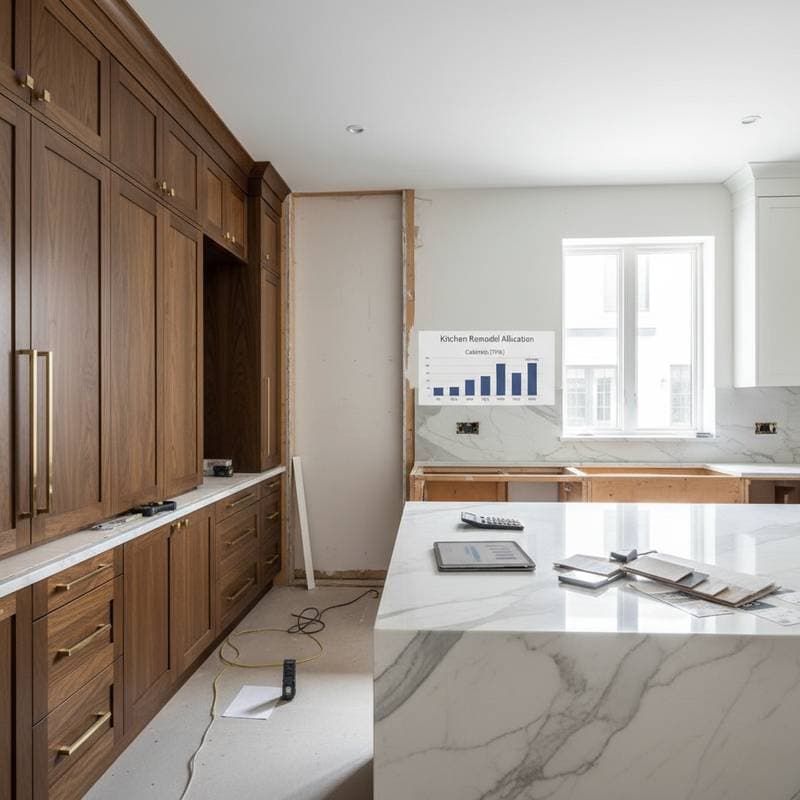
Cabinets Versus Countertops: Analyzing Kitchen Remodel Expenses
Homeowners frequently contemplate their kitchen's dated elements and seek to determine the most impactful use of renovation funds. The central dilemma involves selecting between cabinet renewal and countertop upgrades. Each option alters the kitchen's appearance and performance significantly, yet they differ in expense, installation demands, and future returns.
Grasping the Expense Distribution
Kitchen renovation allocations typically divide between cabinetry and countertops, with cabinets claiming the majority. Cabinet renewal expenses generally span $4,000 to $15,000, varying by material selection, configuration complexity, and personalization level. Countertop placement costs fall between $2,000 and $6,000, affected by material type and surface area.
When funds remain limited, identify the component that appears most worn. Cabinets occupy prominent visual areas, so their update yields the most evident change. Countertops, by contrast, immediately improve operational efficiency and sophistication.
Prioritizing Cabinets for Structural Renewal
Cabinets form the foundation of kitchen design. They dictate arrangement, storage capacity, and appliance integration. If existing cabinets show signs of damage such as warping or peeling, or if their setup hinders efficiency, countertop changes alone will not address underlying issues. Renewing cabinets initially allows for precise subsequent countertop fitting.
Consider these primary cabinet update approaches:
- Refacing or repainting: This economical method costs $1,500 to $4,000 and preserves original structures while modernizing doors and surfaces.
- Semi-custom cabinets: Priced at $6,000 to $10,000, this choice provides adaptable dimensions and aesthetics to suit specific spaces.
- Custom cabinetry: Ideal for enduring designs, this option exceeds $12,000 and incorporates bespoke storage solutions with premium materials.
Prior to proceeding, perform accurate measurements and evaluate spatial requirements. If daily tasks feel inefficient, seize this opportunity to redesign the layout before selecting surface materials.
Elevating Countertops for Surface Enhancement
When cabinets remain sturdy but countertops exhibit wear like scratches or obsolescence, focus on surface renewal first. Countertops affect both visual appeal and daily utility. Available materials present diverse characteristics:
- Laminate: Budget-conscious at $1,000 to $2,500, it offers simple maintenance and extensive pattern options.
- Quartz: Valued for resilience and minimal upkeep, it ranges from $3,000 to $5,000.
- Granite or marble: These natural stones provide distinctive veining and elegance, costing $3,500 to $6,000, though they demand regular sealing.
- Butcher block or concrete: Both deliver contemporary flair for $2,500 to $4,000, yet require ongoing conditioning to prevent damage.
Countertop renewal typically concludes within two to three days, offering swift aesthetic and functional gains.
Integrating Design Appeal with Investment Returns
Cabinets often yield greater resale advantages by reshaping storage and flow. Upgraded countertops, however, enhance attractiveness to potential buyers through refined finishes. For long-term residents, select robust materials that accommodate cooking routines and maintenance tolerances. In resale-oriented renovations, opt for subdued colors and classic styles to preserve broad appeal.
To maximize returns, assess how each element influences overall kitchen harmony. For instance, high-quality cabinets paired with durable quartz countertops can increase home value by 5 to 10 percent, according to industry benchmarks. Balance personal preferences with market trends to ensure the investment aligns with both immediate enjoyment and future profitability.
Practical Strategies for Effective Implementation
Sequence installations thoughtfully to prevent complications. When updating both components, complete cabinet work before countertops to safeguard new surfaces from construction impacts.
Examine material samples in person at supplier locations. This hands-on evaluation reveals texture differences and color shifts under various lighting conditions, aiding informed decisions.
Factor in supplementary expenses such as fittings, edging, and skilled labor, which may increase the total by 20 percent or higher. Develop a detailed budget that includes these elements from the outset.
Evaluate DIY feasibility realistically. Simple tasks like cabinet painting suit weekend efforts, but countertop placement usually benefits from expert installation to ensure precision and safety.
Consult local professionals for quotes tailored to your region, as labor rates vary. Document your vision with sketches or photos to communicate expectations clearly during consultations.
Advancing Your Kitchen Renewal
Establish a clear budget and hierarchy of needs to guide decisions. Pursue cabinet renewal for comprehensive overhaul if transformation ranks highest. Select countertop upgrades for polished refinement when structure suffices. Through deliberate choices, achieve a kitchen that integrates freshness, utility, and harmony with your lifestyle and financial parameters.