
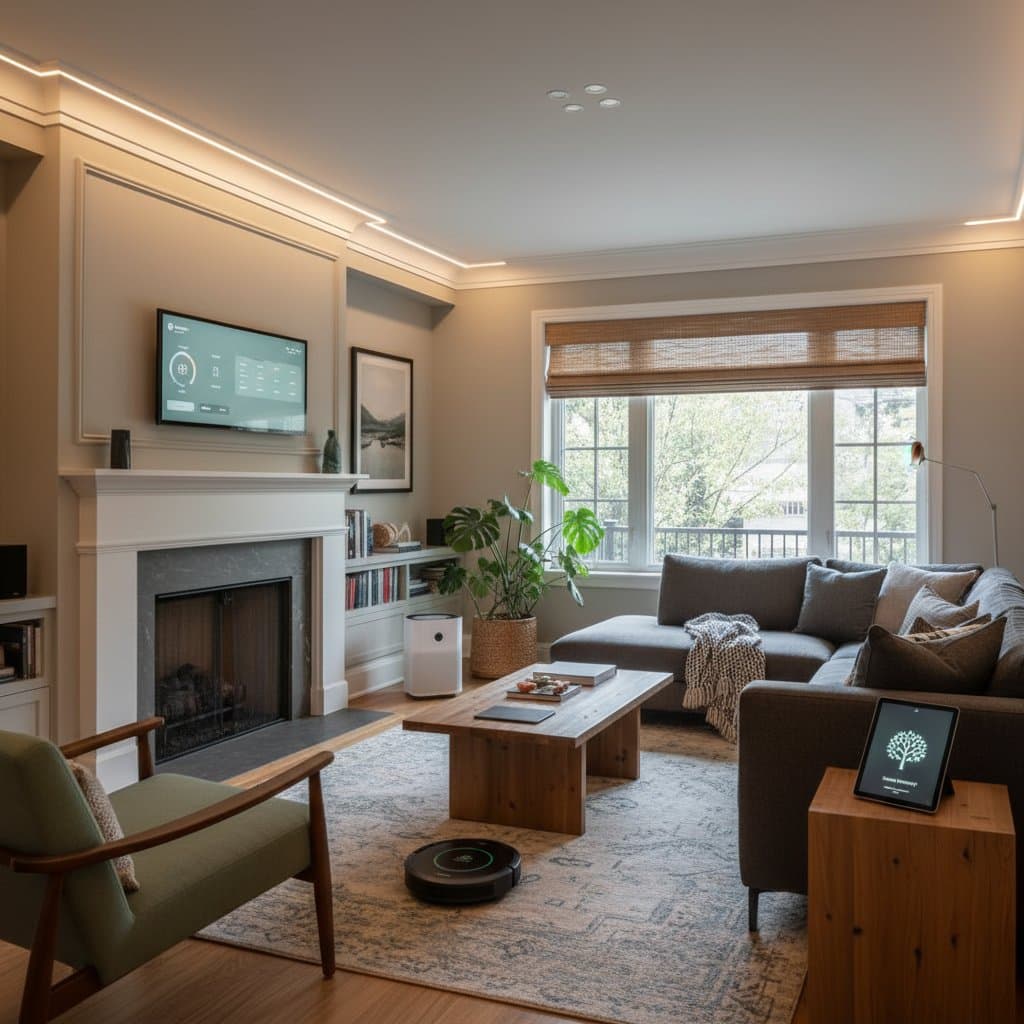
Integrating Without Overwhelming
A frequent error in smart retrofits involves cluttering the home with incompatible apps and devices. Unity emerges when systems coordinate seamlessly. Select a central control platform that manages lighting, climate, and security components.
Build routines to guide the process rather than amassing devices. For instance, establish a morning scene that gradually increases light levels, sets the ideal temperature, and initiates a preferred playlist. Subtle coordination frees you to live without constant technological oversight.
Sustainable Choices for the Smart Home
Smart retrofits offer substantial sustainability benefits. Energy-efficient devices lower bills and reduce ecological impact. Smart thermostats decrease heating and cooling use by up to 10 percent, while connected plugs and power strips eliminate phantom energy from idle electronics.
Opt for products with recyclable materials and from companies committed to long-term software support. Regular updates extend functionality and minimize electronic waste. Incorporate smart irrigation for outdoor spaces, solar-powered sensors, and LED lighting to amplify environmental advantages. Thoughtful design harmonizes sustainability with intelligence.
Design Harmony and Aesthetic Integration
Preserving aesthetic integrity poses a primary challenge in smart retrofits. Technology must enhance surroundings without overpowering them. Select devices with finishes that complement existing decor, such as matte black switches for contemporary settings or brushed nickel for classic ones.
Conceal cables and hubs as much as possible. Employ recessed mounts for sensors and choose smart speakers with fabric covers that match your color scheme. Intentional placement transforms technology into an architectural element rather than scattered gadgets.
Troubleshooting Common Retrofit Issues
Well-planned systems occasionally face setbacks. Weak Wi-Fi often causes connectivity issues, particularly in large homes with thick walls. Install a mesh network to distribute signals evenly across the space.
Compatibility challenges arise frequently. Verify that devices share protocols like Matter, Zigbee, or Z-Wave before purchase. A unified ecosystem streamlines control and reduces reliance on multiple apps.
Unpredictable automation routines stem from complex rules or conflicting schedules. Examine trigger settings in the app to simplify operations. Streamlining automations typically restores dependability.
Safety and Security Considerations
Each connected device creates a potential entry to your home network, so address cybersecurity from the outset. Establish strong, unique passwords for all accounts and activate two-factor authentication. Update firmware regularly to counter vulnerabilities, and select brands with clear privacy policies.
For physical safety, adhere to manufacturer instructions on electrical work. Consult a licensed electrician if wiring raises concerns. Smart systems aim to foster security, not introduce hazards.
Timing Your Retrofit for Maximum Efficiency
Implement smart retrofits alongside other home improvements for optimal results. During painting, flooring replacement, or fixture upgrades, embed sensors, wiring, or conduit paths behind surfaces. Seasonal considerations enhance efficiency as well. Tackle heating and cooling before peak weather, and address lighting and insulation during milder transitions.
View each retrofit as an element of ongoing home development. Incremental changes often outperform hasty comprehensive overhauls.
Maximizing Return on Investment
Smart retrofits extend beyond convenience to elevate property value. Prospective buyers seek connected features that enhance comfort and efficiency. A cohesive system can recover 40 to 60 percent of costs through increased resale appeal.
Energy savings deliver enduring benefits. Automated lighting and climate control trim utility expenses by hundreds of dollars each year. Over time, these efficiencies offset the upfront investment substantially.
Experiencing Daily Life with Smart Integration
After installation, observe how subtle enhancements smooth routines. Lights respond to movement, and entertainment adapts to preferences, creating an intuitive environment. Experiment with adjustments to personalize the system further, revealing additional efficiencies over time.
Essential Strategies for Retrofit Success
- Plan meticulously before buying. Sketch the home layout and pinpoint rooms primed for automation.
- Favor open platforms. Choose devices compatible with various ecosystems to avoid future conflicts.
- Emphasize reliability. Prioritize stable connections and responsive sensors over novel features.
- Maintain equilibrium. Integration should streamline life without requiring frequent tweaks.
- Adopt a forward-looking approach. Select products with modular components and sustained software backing to prolong utility.