
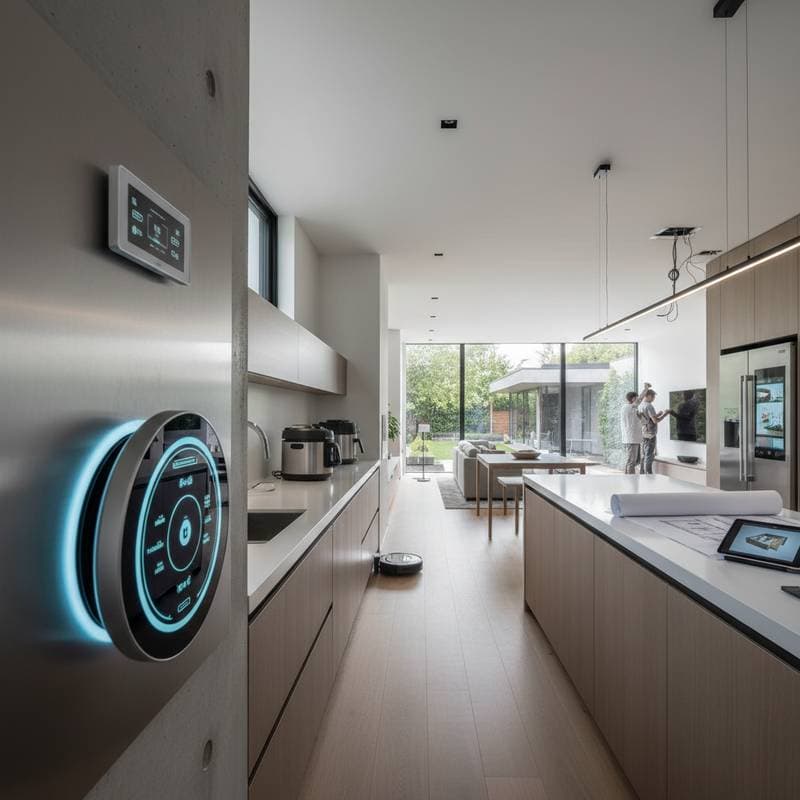
Essential 2026 Smart Technology for Seamless Remodels
Homeowners no longer need to wait for a major renovation to integrate smart technology. The latest generation of connected devices integrates seamlessly into remodels of any scale, from kitchen updates to complete home transformations. These systems provide more than convenience; they assist in cost management, energy monitoring, and property future-proofing for resale. Understanding the smart technology landscape enables informed decisions on design, budgeting, and safety during projects of any size.
Key Benefits
- Smart home systems integrate directly into building materials and appliances, simplifying installation during remodels.
- Initial costs range from approximately $200 for basic automation to over $10,000 for comprehensive home integration.
- Smart technology enhances property value through improved energy efficiency and security features.
- Professional installation proves necessary for electrical and HVAC integrations, whereas lighting and monitoring systems often suit do-it-yourself approaches.
Planning a Smart Remodel
Map the smart home ecosystem before demolishing walls or purchasing devices. Determine the elements to control, such as lighting, temperature, security, or entertainment. Select a central platform that accommodates multiple brands to avoid ecosystem lock-in, and ensure compatibility with major voice assistants as the primary command centers.
Prioritize infrastructure upgrades, including wiring, outlets, and routers, prior to device installation to prevent costly revisions. For instance, smart switches require neutral wires, which older homes may lack; addressing this during a remodel conserves time and labor expenses. Planning costs typically span $300 to $600 for consultations and system mapping, a step that mitigates compatibility problems and potential budget overruns.
Energy and Climate Control as the Foundation
Heating and cooling account for the largest energy consumption in households, positioning smart climate systems for strong returns on investment. Advanced thermostats employ geofencing and occupancy sensors for automatic temperature adjustments, with some models anticipating weather shifts to optimize comfort and efficiency.
Quality thermostats cost between $150 and $350, with professional installation adding $100 to $300 if wiring modifications arise. Annual energy savings average 10 to 15 percent, allowing most homeowners to recover costs within two years. In extensive remodels, incorporate smart vents or zone controls to heat and cool home sections independently, enhancing comfort and minimizing waste; these systems range from $2,000 to $4,000 for mid-sized homes and yield substantial long-term savings.
Adaptive Lighting Solutions
Smart lighting ranks among the simplest remodel upgrades, delivering immediate aesthetic enhancements, easy installation, and versatile control. Program lights to dim automatically, shift colors, or emulate natural daylight cycles, which supports mood improvement, circadian rhythm regulation, and energy reduction.
Wireless smart bulbs begin at $15 each, while wired smart switches cost $40 to $70 per unit. Full-room setups require $200 to $400 in materials, plus $150 to $300 for professional wiring if applicable. Homeowners appreciate this upgrade for modernizing spaces and elevating functionality with minimal effort.
Design lighting zones by function: task lighting for kitchens, ambient options for living areas, and accent illumination for artwork or architectural elements. Smart systems facilitate programming from mobile devices, streamlining customization.
Functional Kitchen Enhancements
Smart kitchen technology simplifies cooking by managing timers, recipes, and appliance settings. Refrigerators equipped with cameras monitor expiration dates and generate shopping lists, while connected ovens link to recipe applications for precise temperature adjustments. Voice-activated faucets dispense exact water volumes on command.
These appliances range from $800 to $4,000 based on brand and connectivity. Such features boost resale appeal, as buyers seek energy-tracking and remote-monitoring capabilities in kitchens. For modest remodels, begin with plug-in smart plugs or countertop devices under $100 each to evaluate functionalities before broader commitments.
Advanced Security and Safety Measures
Contemporary smart security extends beyond basic sensors to encompass cameras, environmental detectors, and AI alerts for comprehensive safety oversight. Receive immediate notifications for leaks, smoke, or unauthorized access via mobile applications, regardless of location.
High-definition cameras with two-way audio cost $100 to $250 each, with cloud storage subscriptions at $50 to $150 annually. Smart locks enable smartphone or code-based access, eliminating traditional keys. Integrate smart smoke and carbon monoxide detectors at about $100 per unit, which connect to apps for direct alerts; many insurers provide premium reductions for these installations, adding financial advantages.
Integrated Entertainment and Network Systems
Entertainment setups represent a prominent smart home element while offering practical benefits through reduced clutter and unified control. During remodels, install concealed conduits or wiring to accommodate future expansions, even if full systems install later.
Whole-home audio begins at $1,000 and reaches $10,000 for premium configurations. Focus on scalable infrastructure, as pre-wired networks and connections behind walls cut future expansion costs significantly. For remote workers, emphasize mesh Wi-Fi systems costing $200 to $600 to guarantee reliable coverage across floors; a robust network forms the essential backbone of connected homes.
Deciding Between Professional and Do-It-Yourself Installation
While not all smart upgrades demand experts, distinguishing appropriate scenarios proves crucial. Do-it-yourself methods suit plug-in devices, smart bulbs, and app-controlled systems without wiring involvement. Engage professionals for integrations with electrical panels, HVAC, or plumbing to ensure safety and compliance.
Certified installers charge $75 to $150 hourly, with manufacturer websites listing approved specialists to maintain warranties. If the remodel involves structural or electrical alterations, verify local permitting needs; certain areas mandate inspections for smart systems linked to vital utilities.
Sustaining Smart Systems Over Time
Smart technology requires ongoing attention beyond initial setup, including firmware updates, battery changes, and network upkeep. Conduct quarterly checks to verify device connectivity and software currency, averting disruptions in security or efficiency.
Maintain a digital log of all devices, capturing purchase records and warranty details for resale, insurance, or upgrades. Annual maintenance budgets range from $100 to $200, scaling with the number of connected components.
Implementing Your Vision
Incorporate smart technology into remodels to foster an efficient, energy-conserving, and adaptable living space. Commence with modest changes, such as connected lighting or a thermostat, to refine routines and inspire further enhancements. Envision mornings with kitchens attuned to preferred lighting, rooms self-adjusting temperatures, and security monitored remotely; this defines effective remodeling in a connected world, prioritizing enduring functionality.