
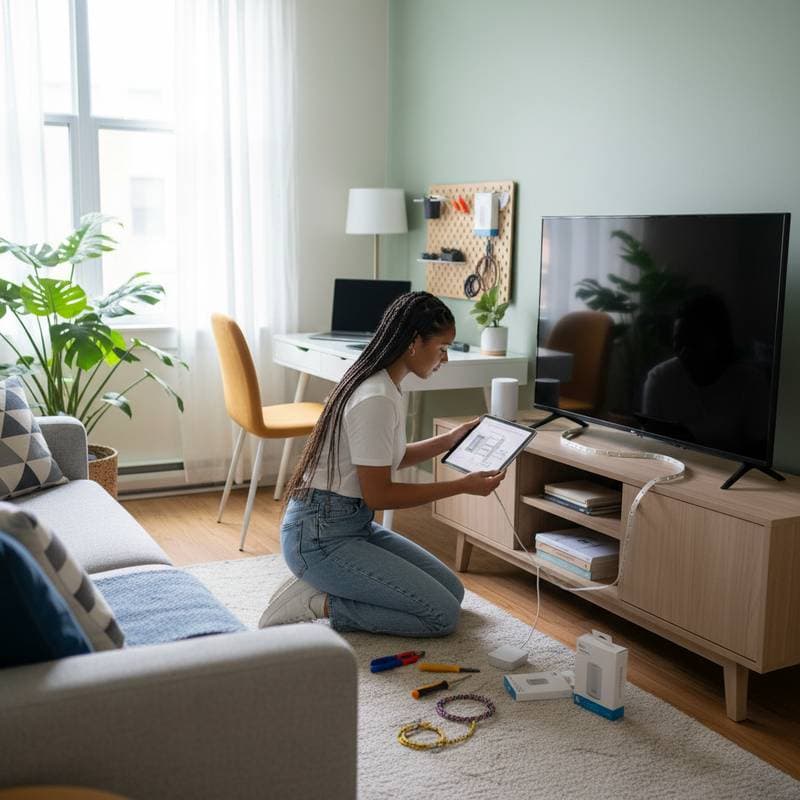
Gen Z's DIY Secrets for Seamless Smart Home Tech
If your living space resembles a collection of tangled cords and mismatched gadgets rather than the connected home you envision, you share a common challenge. Many homeowners desire the convenience of smart living yet fear the complexity of installation. Gen Z changes this narrative by simplifying home tech setup, making it affordable and enjoyable through a generation shaped by online tutorials and experimentation.
This approach transforms potential frustration into a rewarding project. No advanced technical knowledge is required; curiosity, basic tools, and a step-by-step mindset suffice.
Choosing the Right Smart Devices for a DIY Setup
Navigating product options can overwhelm even seasoned shoppers. Gen Z focuses on devices that integrate effortlessly and deliver clear returns in time savings, convenience, or energy efficiency.
Smart Lighting: Affordable and Transformative
Smart lighting serves as an ideal entry point to connected living. Wi-Fi-enabled bulbs cost between 10 and 25 dollars each and install in under five minutes by screwing them into existing fixtures. Begin with high-traffic areas such as the kitchen or bedroom to control brightness, color, and schedules via an app.
Select bulbs that work with major platforms like Alexa, Google Home, or Apple Home for seamless expansion. This compatibility prevents compatibility issues as your system grows.
Smart Plugs and Outlets: Instant Automation
Smart plugs convert ordinary appliances into controllable devices. Connect your coffee maker, fan, or lamp, then manage them remotely or by voice. These units range from 12 to 30 dollars and require only plugging in and app pairing, often completed in minutes.
Verify wattage limits to avoid overloads, and pair high-power items with surge protectors. Position plugs near outlets for easy access during initial setup.
Smart Thermostats: Saving Energy with Style
A smart thermostat installation involves connecting wires to your HVAC system, guided by an app's step-by-step instructions. Reliable models cost 100 to 250 dollars, with many users seeing energy reductions that recoup the investment within a year.
For unfamiliar wiring or older systems, hire a professional for the final steps to ensure safety. Test the unit immediately after installation to confirm proper operation.
Budget Breakdown for a Starter Smart Home
A connected home setup remains accessible without excessive expense. Consider this breakdown for essential components:
- Smart bulbs (four-pack): 40 to 80 dollars
- Smart plugs (two-pack): 25 to 50 dollars
- Smart hub or speaker: 50 to 150 dollars
- Smart thermostat: 100 to 250 dollars
- Optional accessories (cables, mounts): 20 to 60 dollars
Total estimate: 235 to 590 dollars. Purchase items over several months to manage costs. Gen Z often monitors sales via shopping apps or opts for certified refurbished options to extend value.
Safety and Privacy in a Connected Home
Smart devices enhance daily life but raise valid concerns about security and data exposure. Gen Z addresses these through deliberate practices that safeguard personal information.
Secure Your Network
Implement strong, unique passwords for all accounts and enable two-factor authentication wherever available. Access your router's security interface to scan for and block unauthorized devices.
Limit Permissions
During app setup, scrutinize each requested access. Grant only essential permissions; for instance, a lighting app requires no camera or location data beyond basic connectivity.
Update Regularly
Apply firmware updates promptly, as they address security flaws. Set devices to auto-update when possible to maintain protection against emerging threats.
Separate Guest Networks
Establish a dedicated guest Wi-Fi for visitors. This isolates external connections from your primary network, reducing risks while providing easy access.
Real-Life Examples of Gen Z Smart Home Wins
The Budget Apartment Upgrade
One renter equipped their space with smart plugs, bulbs, and an air quality sensor for less than 150 dollars. Through app-based grouping, they automated evening routines for lighting and ventilation. The portable setup moved effortlessly to a new location, demonstrating adaptability for non-owners.
The Shared House Solution
Roommates in a multi-occupant rental deployed individual smart plugs for shared areas. Automated schedules for kitchen lights and media systems reduced energy use by approximately 15 percent, fostering equitable cost savings.
The Eco-Friendly Townhouse
A new homeowner integrated a smart thermostat, motion sensors, and leak detectors to monitor efficiency. Utility bills dropped sufficiently to cover the setup costs within months. Alerts for anomalies, like irregular water usage, avert damage and promote sustainability.
Building on Your Skills
After basic installations, advance to integrated automations that enhance functionality. Gen Z leverages experimentation to create personalized systems.
Experiment with Voice Customization
Develop custom voice commands for efficiency. Phrase a routine as "Initiate evening mode" to dim lights, adjust temperature, and secure doors simultaneously. This personalization streamlines interactions and adds a tailored touch.
Explore Smart Sensors
Incorporate motion, temperature, or humidity sensors to respond to environmental shifts. A humidity sensor, priced at 15 to 40 dollars, can trigger a fan post-shower without manual input. Place sensors strategically for optimal coverage.
Combine Smart Tech with Aesthetics
Integrate devices discreetly to preserve design. Conceal hubs in furniture or route cables along walls using management kits under 20 dollars. This maintains visual appeal while supporting robust performance.
Add Smart Security Gradually
Begin with a video doorbell or indoor camera for monitoring. These connect to existing hubs and offer remote viewing. Progress to outdoor sensors and locks as needs evolve, building comprehensive protection.
Maximizing Long-Term Value
Sustained smart home benefits arise from ongoing attention. Regular maintenance optimizes efficiency and extends device lifespan.
Schedule Routine Checks
Conduct monthly reviews of automations. Adjust timings to prevent overuse, such as extending light-off delays only for occupied rooms.
Monitor Energy Reports
Utilize app analytics to track consumption patterns. Shift high-use periods to off-peak hours, supporting both environmental and financial goals.
Keep Learning
Stay informed through online forums and video guides. Discover emerging features, like advanced integrations, to evolve your setup dynamically.
Sustaining Your Connected Home
A thoughtfully managed smart home delivers enduring convenience and savings. By starting small and iterating, you create a space that adapts to your lifestyle, proving that innovative tech belongs in every modern residence.