
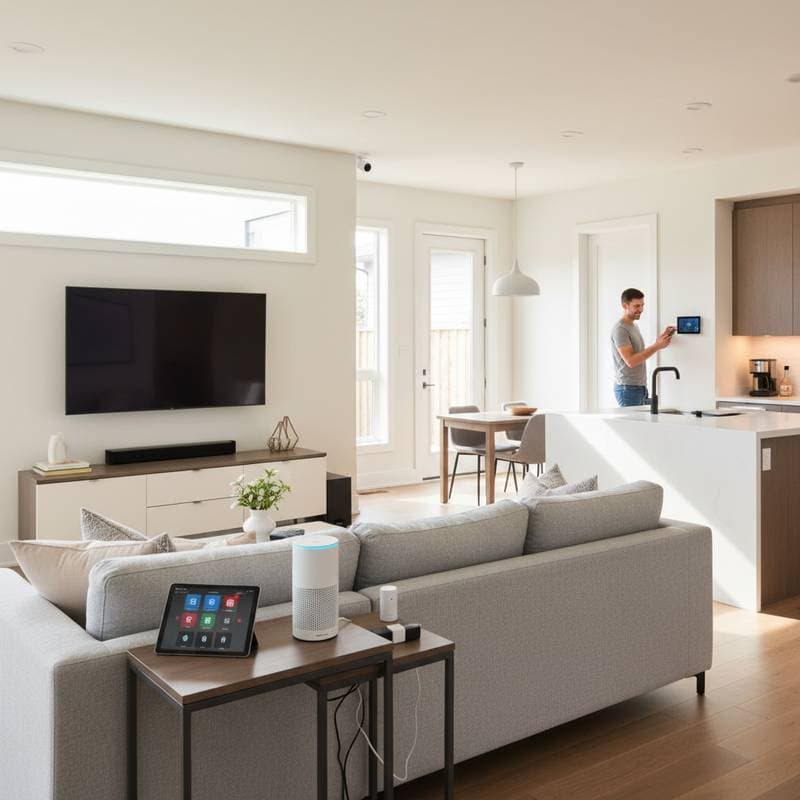
Introduction to a Rewiring-Free Smart Home Upgrade
Transforming a home into a smart environment requires thoughtful selection of devices that integrate with existing infrastructure. Focus on wireless options compatible with standard Wi-Fi networks to avoid complex electrical work. Begin by assessing current outlets, internet strength, and daily routines to identify high-impact areas such as lighting, climate control, and security.
Plan the weekend project in phases: Saturday for purchases and basic setups, Sunday for testing and customization. Gather tools like a screwdriver, ladder, and smartphone for app downloads. This approach ensures a stress-free process that yields immediate benefits in convenience and energy efficiency.
Step-by-Step Planning for Success
Start with a room-by-room evaluation to prioritize devices. List appliances that could benefit from remote control, such as lights or fans. Verify Wi-Fi coverage extends to all target areas; extenders cost under $50 if needed.
Create a shopping list based on your ecosystem preference, such as Amazon Alexa, Google Home, or Apple HomeKit, to ensure compatibility. Allocate time for unboxing, app pairing, and routine programming. Test each device individually before linking them into automated scenes.
1. Smart Lighting Solutions
Smart bulbs and switches offer instant ambiance control without altering wiring. Replace incandescent bulbs with Wi-Fi-enabled versions or add plug-in lamps for flexibility.
Installation steps:
- Turn off power at the breaker for safety.
- Unscrew old bulbs and insert smart ones.
- Download the manufacturer app and connect via Bluetooth or Wi-Fi.
- Group lights by room for scene creation, like "evening glow" or "work focus."
Average cost: Bulbs range from $15 to $30 each; starter kits with a hub cost $50 to $100.
Energy insight: Programmable schedules reduce usage by dimming lights during low-activity periods, potentially saving 15 percent on electricity bills.
2. Smart Thermostats
A smart thermostat optimizes heating and cooling based on occupancy and weather data. Select models that mount on existing wall plates for plug-and-play installation.
Setup process:
- Remove the old thermostat and note wire labels.
- Attach the new base and snap the display into place.
- Use the app to connect to Wi-Fi and input home details like square footage.
- Set geofencing to adjust temperatures when you arrive or leave.
Average cost: Basic models start at $130, with advanced features up to $250.
If your system uses high-voltage wiring or you are unsure about compatibility, schedule a quick consultation with an HVAC technician before proceeding.
3. Smart Plugs and Power Strips
Smart plugs provide automation for any standard outlet device. Insert them between the wall and your appliance for app-based scheduling and monitoring.
Best uses:
- Control lamps or fans remotely.
- Automate coffee makers for wake-up routines.
- Manage seasonal decorations with timers.
Average cost: Individual plugs cost $10 to $25; multi-outlet strips range from $40 to $70.
Energy insight: Automate shutoffs to eliminate vampire power draw, which can reduce overall consumption by up to 10 percent.
4. Smart Security Devices
Enhance protection with devices that alert your phone to activity. Most require minimal tools and mount via adhesive or screws.
Options to consider:
- Video doorbells featuring two-way audio and motion detection.
- Smart locks enabling keyless entry and guest codes.
- Indoor cameras equipped with night vision and privacy modes.
Average cost: Doorbells from $100 to $200, locks from $120 to $250, cameras from $60 to $150.
Safety and privacy: Activate two-factor authentication for all linked accounts. Update passwords frequently and review app access to safeguard video feeds.
5. Smart Speakers and Voice Assistants
These hubs serve as the orchestration point for your network. Position them centrally for optimal voice recognition and multi-room audio.
Setup plan:
- Select a unified platform like Google Assistant, Amazon Alexa, or Siri.
- Plug in and pair with Wi-Fi through the app.
- Program routines such as "good morning" to activate lights and news.
- Integrate compatible devices for voice commands across the system.
Average cost: Basic speakers begin at $50; models with screens cost $100 to $200.
Quick win: Configure a "movie night" routine that adjusts lights, temperature, and entertainment with a single phrase.
Budget Planning and Realistic Expectations
Tailor your upgrade to available funds by starting with essentials like plugs and bulbs. Track expenses to stay within limits while maximizing utility.
Budget breakdown examples:
| Project Type | Entry Level Setup | Mid-Range Setup | Premium Setup |
|---|---|---|---|
| Lighting | $100 | $250 | $400+ |
| Thermostat | $150 | $200 | $300+ |
| Security | $150 | $350 | $600+ |
| Voice Control | $50 | $120 | $200+ |
| Total Estimated Cost | $450 | $920 | $1,500+ |
Energy reductions from thermostats and lights often recoup investments within 12 months. Security additions may qualify for insurance reductions, boosting long-term value.
ROI insight: Prioritize thermostats and lighting for direct bill savings; security enhances marketability for future sales.
Integrating Style with Smart Function
Seamless design ensures technology complements rather than dominates your space. Select devices in neutral finishes or customizable covers.
Design integration tips:
- Conceal cables with paint-matched organizers.
- Opt for bulbs resembling classic shapes in traditional settings.
- Position displays ergonomically for daily interaction.
- Coordinate hardware colors with room accents.
Lighting design insight: Combine overhead, task, and ambient sources into smart groups. Adjust settings by function, from bright task lighting for meals to soft hues for evenings, all via app or voice.
Daily Operation and Maintenance
Once installed, monitor device performance through apps to refine automations. Update firmware regularly for security patches and new features.
Troubleshoot connectivity by restarting routers or repositioning hubs. Expand gradually, adding sensors for advanced scenarios like leak detection. Enjoy sustained efficiency as routines adapt to your lifestyle, delivering ongoing comfort and savings.