
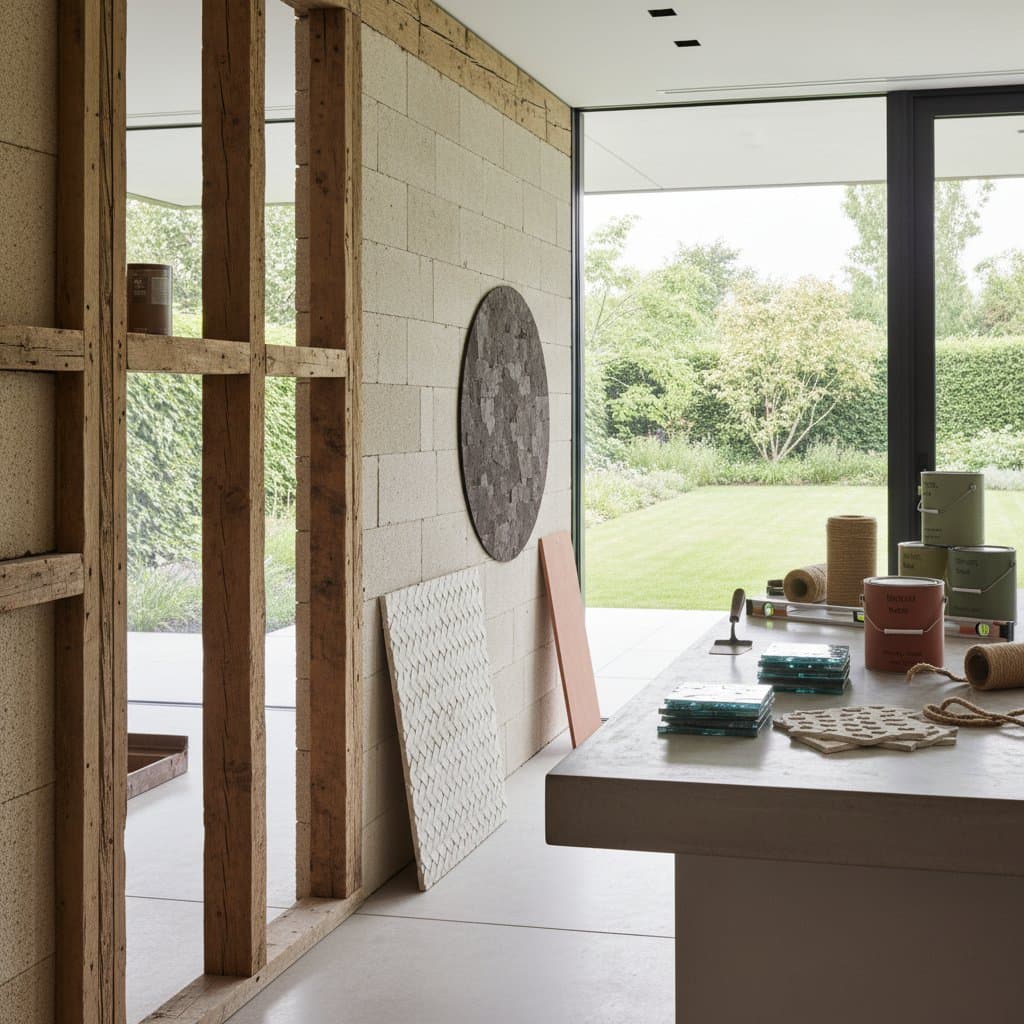
2026's Essential Eco-Materials for Sustainable Remodels
Homeowners increasingly seek renovations that align with environmental values. The process involves selecting materials that offer durability, aesthetic appeal, and reduced ecological impact. Sensory experiences, such as the texture of reclaimed wood or the subtle scent of lime paint, highlight the appeal of these choices. This approach transforms remodels into purposeful investments that benefit both living spaces and the planet.
Eco-materials stand out for their ability to deliver high performance without compromising responsibility. They minimize resource depletion and waste while enhancing home functionality. For those embarking on a remodel, focusing on these options ensures a balance of cost-effectiveness and sustainability.
Reclaimed Wood: Timeless Appeal and Environmental Benefits
Reclaimed wood transcends traditional rustic designs, finding its place in contemporary settings like urban lofts, modern kitchens, and sleek bathrooms. Sourced from salvaged structures such as old barns or factories, each piece carries unique patina and history. This material provides warmth and depth that new lumber cannot match.
Average cost: $5 to $15 per square foot, varying by wood type and preparation.
Ideal uses: Flooring, feature walls, shelving units, and custom cabinetry.
Sustainability factor: Decreases reliance on virgin timber, diverts waste from landfills, and demands lower energy for processing.
To ensure quality, select suppliers that kiln-dry the wood to eliminate insects and excess moisture. Apply a natural oil finish after light sanding to safeguard the surface and maintain its character. This preparation extends the material's lifespan and preserves its visual integrity.
Hempcrete: Innovative Insulation from Natural Sources
Hempcrete consists of hemp hurds, lime binder, and water, forming a lightweight, permeable composite. It excels in moisture regulation and offers inherent resistance to mold and insects. Although unsuitable as a load-bearing element, hempcrete provides superior thermal insulation for non-structural applications.
Average cost: $12 to $18 per square foot for installed wall systems.
Ideal uses: Non-load-bearing walls, insulation layers, and interior dividers.
Sustainability factor: Achieves carbon-negative status by sequestering CO2 during production and throughout its service life.
Installation demands careful mixing and extended curing time, making it suitable for projects with flexible timelines. The result is an interior that maintains consistent humidity levels and promotes energy savings. Professional guidance can optimize its integration into broader remodel plans.
Recycled Glass Surfaces: Vibrant Reuse in Design
Recycled glass surfaces feature embedded fragments of post-consumer glass bound with resin or cement, creating slabs that reflect light dynamically. No two pieces are identical, adding artisanal flair to functional areas. This material elevates everyday spaces with its subtle shimmer and color variations.
Average cost: $60 to $120 per square foot, including fabrication and installation.
Ideal uses: Kitchen countertops, wall backsplashes, and vanity tops.
Sustainability factor: Repurposes landfill-bound glass and avoids extraction of raw minerals for stone alternatives.
These surfaces withstand daily use when cleaned with mild, non-abrasive solutions. Sealing edges during installation prevents staining and ensures longevity. Incorporating recycled glass supports circular principles, turning waste into enduring design elements.
Cork Flooring: Resilient Comfort from Renewable Bark
Cork flooring, derived from the renewable bark of cork oak trees, regenerates without tree removal. Its natural elasticity cushions footsteps, while antimicrobial properties suit high-use areas. The material maintains a comfortable temperature year-round.
Average cost: $3 to $8 per square foot for materials and basic installation.
Ideal uses: Bedrooms, kitchens, playrooms, and office spaces.
Sustainability factor: Harvested sustainably from protected forests, fully biodegradable, and requires minimal processing.
Apply low-VOC sealants to enhance water resistance, particularly in moist environments. Opt for interlocking plank systems that install over existing subfloors without adhesives. This method simplifies updates and allows for easy removal at project end.
Mycelium Panels: Biodegradable Innovation in Interiors
Mycelium panels grow from fungal networks combined with agricultural byproducts, molded into versatile forms. They provide natural sound absorption and resist fire without chemical treatments. At the end of use, these panels decompose naturally.
Average cost: $8 to $14 per square foot for custom-sized panels.
Ideal uses: Sound-dampening walls, room dividers, and ornamental features.
Sustainability factor: Completely biodegradable, low-energy production, and zero waste in disposal.
Cultivation occurs in controlled environments, yielding panels ready for immediate integration. Pair them with other eco-materials for cohesive designs that prioritize acoustics and aesthetics. This technology advances biomimicry, drawing directly from natural processes.
Low-VOC Finishes: Enhancing Air Quality in Remodels
Low-VOC finishes, including paints, varnishes, and sealers, release minimal volatile organic compounds. They preserve the eco-credentials of underlying materials by avoiding indoor pollution. Health benefits extend to reduced irritation and allergies for occupants.
Average cost: $25 to $50 per gallon, aligned with standard market rates.
Ideal uses: Wall coatings, wood treatments, and surface protections.
Sustainability factor: Lowers emissions that contribute to smog and supports healthier indoor environments.
Seek products certified by independent organizations for verified low emissions. Test small areas first to confirm color and adhesion. These finishes dry quickly, minimizing disruption during application.
Strategies for Effective Implementation
- Integrate sustainability early in planning. Assess energy use, water efficiency, and sourcing options to guide material selections from the outset.
- Blend reclaimed and new elements. Pair salvaged items with innovative products to achieve layered visuals and maximize resource efficiency.
- Source locally to cut emissions. Partner with regional providers to shorten supply chains and lower the carbon footprint of delivery.
- Emphasize long-term performance. Select treatments that resist wear, ensuring materials deliver ongoing value without frequent replacement.
Realizing Lasting Environmental Impact
Sustainable remodels foster homes that evolve with their inhabitants. Reclaimed wood gains deeper hues over years, hempcrete adapts to seasonal shifts, and cork provides enduring softness. These elements create environments that nurture well-being.
Choices in materials reflect intentional stewardship. They build residences that withstand time while contributing positively to ecosystems. This philosophy elevates remodeling beyond aesthetics, grounding it in principles of renewal and respect.