
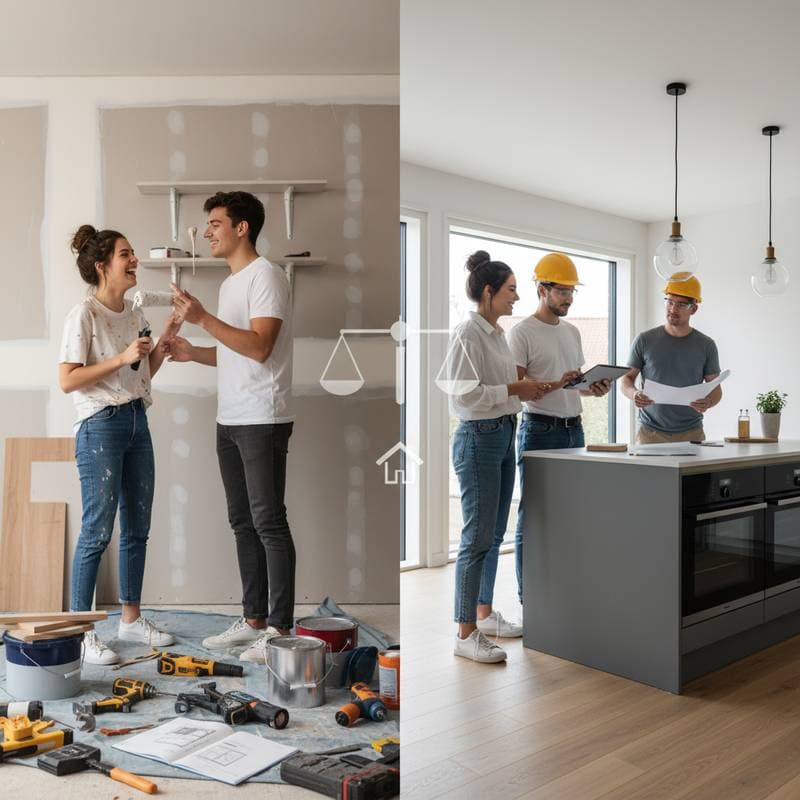
Gen Z Home Renovation Dilemma: Tackle DIY Projects or Hire Professionals?
First-time homeownership brings a mix of excitement and apprehension. You may have gathered paint samples, examined power tools, or saved design ideas online. Soon, the appeal of your chosen property reveals its needs, such as refreshed flooring, modernized plumbing, or a bathroom update. The central decision emerges: undertake the work personally or engage skilled experts?
For Gen Z and younger millennial buyers, the DIY approach offers a sense of accomplishment. Exposure to online guides fosters confidence in personal execution, while financial benefits attract attention. However, projects often prove more complex than anticipated. Savvy renovators discern appropriate moments for hands-on involvement versus expert assistance.
Assessing Financial Implications
New owners gravitate toward DIY to minimize expenses. Actual costs hinge on materials, equipment, and personal time investment.
Consider a bathroom floor tiling project as an illustration. Materials alone may total $400 for basic ceramic tiles and adhesive. Ownership of a tile cutter proves advantageous; otherwise, rental fees range from $50 to $75 for a day. A novice dedicates an entire weekend to preparation and layout, followed by additional days for installation and finishing. Errors, such as irregular grout or damaged tiles, incur extra costs exceeding $200 in repairs and replacements.
In contrast, a professional contractor charges $1,200 to $2,000 for comparable work, influenced by tile quality and area size. Completion occurs within two days, with reduced disruption and error correction. Although initial savings tempt DIY, evaluate the worth of your time and risk tolerance. Full schedules or aversion to detailed tasks render professional services more economical overall.
Extend this evaluation to larger endeavors, like kitchen cabinet installation. DIY demands $800 in materials and tools, plus 40 hours of effort, potentially leading to alignment issues requiring fixes. Professionals quote $3,000 to $5,000 but deliver precise results, warranties, and compliance with building standards, preserving property value.
Prioritizing Safety in Every Project
Engaging in DIY activities demands unwavering attention to safety protocols. Review all product manuals thoroughly and adhere to specified guidelines. Equip yourself with essential protective items, including safety goggles, durable gloves, and respiratory masks during tasks like sanding, painting, or material cutting.
Exercise extreme caution with electrical or gas systems. Verify circuit deactivation with a tester rather than assumption; consult a licensed electrician for any doubt. Structural modifications necessitate permits and official inspections in nearly all jurisdictions. Neglect of these requirements risks insurance invalidation or diminished future marketability.
Further, assess physical demands. Lifting heavy loads without proper technique invites injury. Secure ladders firmly and work with a partner for overhead operations. Maintain a clean workspace to prevent slips or tool mishaps. These practices not only protect you but also ensure project integrity.
Developing Skills for Future Projects
Home improvement journeys commence modestly. Begin with straightforward repairs, such as securing a cabinet hinge or replacing a fixture bulb. Progress builds competence gradually. Maintain a project record through notes or photographs to track achievements and lessons learned.
Acquire essential, high-quality tools selectively. A versatile cordless drill, accurate measuring tape, and multi-purpose wrench form a strong foundation. As proficiency increases, incorporate specialized items like a level or stud finder. For unfamiliar challenges, view diverse instructional videos, assess tool feedback from users, and verify adherence to local regulations.
Join community forums or attend in-store classes to refine techniques. Practice on scrap materials minimizes waste. This methodical approach transforms initial uncertainties into reliable expertise, enabling independent handling of routine maintenance.
Essential Strategies for Effective Renovations
- Select beginner-friendly tasks completable within a single weekend to foster early success.
- Allocate budgets with a 20 percent buffer for unforeseen expenses.
- Deactivate electricity at the main breaker prior to any wiring involvement.
- Emphasize thoroughness over haste to achieve durable outcomes.
- Seek guidance from hardware retailer staff through complimentary sessions or advice.
Incorporate hybrid methods for optimal results. Delegate complex elements, like wiring or load-bearing adjustments, to experts while managing cosmetic updates personally. This balance combines personal involvement with professional assurance.
Choosing the Best Path Forward
Renovation decisions shape your living space and financial well-being. Weigh personal goals against project demands to select DIY or professional routes wisely. With informed planning, safety focus, and skill development, transform challenges into opportunities for a personalized, resilient home. Embrace this process to cultivate lasting satisfaction and capability in homeownership.