
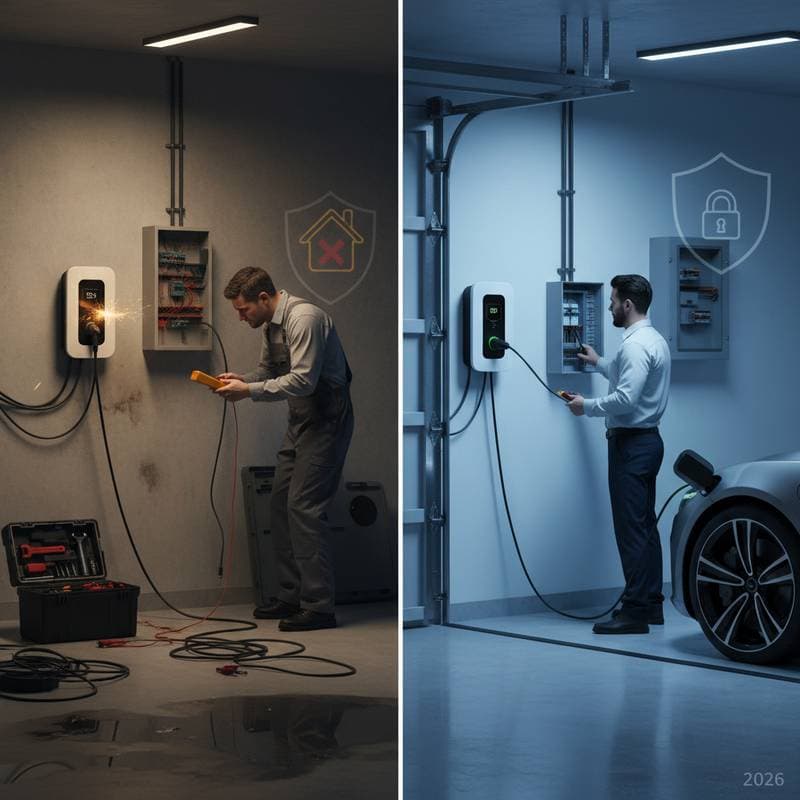
The Real Risks of DIY EV Charger Installations
Purchasing an electric vehicle marks an exciting shift toward sustainable driving. Homeowners often plan to install a charging station next, drawn by the appeal of overnight charging for a full battery each morning. While basic electrical tasks might seem manageable, EV charger installations involve high-voltage systems that demand precision. Attempting this project without expertise can result in severe safety issues, financial losses, and legal complications.
This article examines the specific dangers of DIY approaches to EV charger setups. It highlights electrical hazards, insurance pitfalls, and code requirements. Readers will gain insights into identifying suitable projects for DIY efforts and recognizing scenarios that require professional intervention. Understanding these elements helps ensure a safe, efficient charging solution that aligns with long-term home and vehicle needs.
Safety Hazards That Can Turn Costly
Electrical systems for EV chargers operate at 240 volts, far exceeding the 120 volts of standard household outlets. A minor wiring mistake can cause arcing, overheating, or short circuits, potentially igniting a fire in attached garages or nearby areas. Homeowners risk personal injury from shocks during installation, and faulty setups may lead to ongoing hazards like tripped breakers or power surges affecting other appliances.
Beyond immediate dangers, improper installations often fail during inspections, leading to rework costs that exceed initial savings. For instance, undersized wiring might handle initial loads but degrade over time, causing intermittent failures. These issues not only disrupt daily routines but also expose families to unnecessary risks in living spaces.
Insurance and Warranty Implications
Homeowners insurance policies typically include clauses that deny coverage for damages stemming from unlicensed electrical modifications. If a DIY charger sparks a fire due to reversed polarity or inadequate grounding, insurers investigate the installation method. Claims may face rejection, leaving owners responsible for repairs, medical bills, or property loss amounting to thousands of dollars.
Vehicle manufacturers and charger producers enforce strict installation guidelines to maintain warranty validity. Tesla, for example, specifies certified professionals for wall connectors to prevent issues like overcurrent that could damage onboard electronics. A voided warranty means covering repair costs for battery degradation or charging port failures, which can reach several thousand dollars without coverage.
Code Violations and Legal Liability
Local building codes mandate adherence to the National Electrical Code (NEC) for all high-amperage installations. EV chargers qualify as fixed appliances requiring dedicated circuits, proper grounding, and sometimes arc-fault protection. Skipping permits means no official inspection, and discoveries during home appraisals can trigger fines ranging from $500 to $5,000 per violation, depending on jurisdiction.
Sellers face additional hurdles if code noncompliance surfaces in real estate transactions. Buyers' lenders often require corrections before closing, delaying sales by weeks and reducing offers by 1-2% of home value. In liability terms, injuries to guests or family from faulty wiring could lead to lawsuits, with homeowners bearing full responsibility absent professional documentation.
When DIY Might Be Acceptable
Certain low-power charging options suit basic DIY skills, provided homeowners verify existing infrastructure. Level 1 chargers plug into standard 120-volt outlets, delivering about 3-5 miles of range per hour. To proceed safely, locate a grounded outlet rated for 15-20 amps on a dedicated circuit, free from shared loads like refrigerators or lights.
Test the outlet with a circuit analyzer to confirm proper wiring: hot, neutral, and ground connections must align without reversed polarity. Install the charger following the manual's guidelines, ensuring the cord reaches the parking spot without strain. Monitor the first few charges for heat buildup, and discontinue use if temperatures exceed 140 degrees Fahrenheit.
However, Level 2 chargers demand 240-volt service, often involving subpanel additions or breaker upgrades. Older homes built before 1980 frequently feature aluminum wiring incompatible with modern demands, risking corrosion and failures. In such cases, or when extending circuits through walls or outdoors, professional assessment prevents overloads that could black out entire sections of the home.
Steps to Ensure a Professional Installation
Selecting a licensed electrician begins with verifying credentials through state licensing boards or organizations like the National Electrical Contractors Association. Request references from recent EV projects and confirm experience with chargers from brands like ChargePoint or JuiceBox. Discuss needs upfront: amperage requirements (typically 40-50 amps for faster charging) and integration with smart home systems for scheduling and monitoring.
Obtain multiple quotes, focusing on itemized breakdowns that include materials, labor, and permit fees. Expect costs between $750 and $2,500, influenced by distance from the panel and any upgrades needed. Insist on post-installation testing, including load simulations to verify stable voltage delivery without drops below 220 volts.
Permits streamline the process and provide peace of mind. Electricians handle applications, ensuring compliance with utility rules like those from PG&E or Con Edison, which may offer rebates for verified setups. Document everything: receipts, inspection reports, and as-built diagrams aid future maintenance or sales.
Long-Term Benefits of Professional Installation
A expertly installed EV charger optimizes energy use, drawing power efficiently to minimize grid strain during peak hours. Features like load balancing prevent surges, extending the lifespan of both the charger and home electrical system. Homeowners enjoy faster charging rates, often adding 20-30 miles per hour, ideal for daily commutes without public station reliance.
Resale advantages grow as EV adoption rises; Zillow reports homes with charging infrastructure sell 1.5 times faster and at a 3-5% premium. Certified installations appeal to eco-conscious buyers, showcasing forward-thinking property management. Over years, these setups support multiple vehicles or expansions like solar integration, future-proofing the home investment.
Protecting and Extending Your EV Charging System
Routine maintenance keeps the system reliable. Inspect connections quarterly for corrosion, especially in humid climates, and clean ports with non-abrasive cloths to avoid residue buildup. Schedule annual professional checkups to test ground fault protection and update firmware for enhanced safety protocols.
Monitor usage through app integrations, tracking efficiency and alerting to anomalies like unusual energy draw. If adding accessories like battery storage, consult the original electrician to assess compatibility. These practices preserve performance, avoid premature wear, and maintain insurance eligibility for sustained value.