
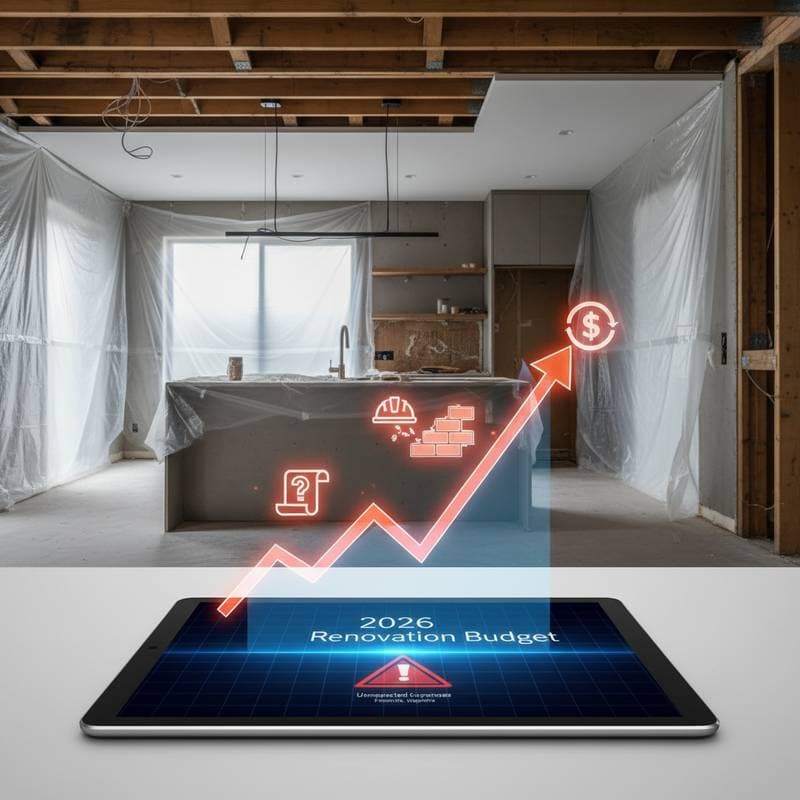
Overlooked Renovation Expenses: What 2026 Calculators Ignore
Renovation calculators offer a basic overview of costs for materials, labor, and initial designs. However, these tools frequently omit the complexities of real projects, leading to budget shortfalls. In 2026, with evolving building codes and material prices, homeowners face even greater risks from unforeseen expenses. Understanding these gaps allows for better preparation and financial control.
Essential Insights
- Budget tools typically undervalue municipal permit charges, inspection expenses, and compliance modifications.
- Concealed structural problems, such as faulty wiring or moisture intrusion, emerge during initial phases and demand substantial investments.
- Mid-renovation design alterations escalate material and labor demands, particularly in high-traffic areas like kitchens and bathrooms.
- Fees for waste management, material transport, and equipment leasing erode reserve funds unexpectedly.
- Early involvement of qualified professionals prevents costly revisions down the line.
Limitations of Online Estimators
Digital calculators rely on generalized data that does not account for individual property characteristics. They presume uniform conditions across homes and uniform regulations across regions. In practice, renovations encounter local code revisions, deteriorating building elements, and varying inspector standards. For instance, a projected cost of twelve thousand dollars for a bathroom update may double if legacy plumbing requires replacement or if environmental assessments prove necessary.
These estimators prioritize visible elements like flooring, coatings, and hardware. They overlook embedded infrastructure, such as foundation cracks or inadequate electrical capacity. Such issues can pause operations entirely if undetected until later stages, resulting in escalated expenses and timelines.
Navigating Permit and Compliance Challenges
Local permitting represents a frequent source of financial surprise. Charges differ by location and project magnitude. Modifications to load-bearing elements or roof configurations necessitate several evaluations, each with associated fees. Failed assessments trigger additional charges for subsequent reviews.
Allocate between five hundred and two thousand dollars for permits in a standard renovation, adjusted for regional variations and work scope. Properties in heritage areas or protected environments incur elevated fees. Certain municipalities mandate community notifications or adjacent property owner consents for facade alterations, introducing delays and paperwork costs.
Addressing Concealed Structural Concerns
Demolition often reveals underlying defects. Legacy support structures may fail to align with contemporary standards. Floor degradation beneath outdated coverings or pest infestations in framing require prompt intervention.
Set aside ten to fifteen percent of the overall budget for such findings. Updating electrical systems in an aged kitchen might cost three thousand dollars, while reinforcing compromised beams adds another two thousand. Compliance demands resolution of these hazards before approval.
Engage a certified inspector or engineer for a preliminary review of plans prior to any teardown. This initial outlay of a few hundred dollars averts potential thousands in adjustments.
Handling Labor and Timeline Extensions
Estimators base labor projections on broad national figures, yet regional market dynamics alter these quickly. High demand for skilled workers elevates hourly rates. Minor setbacks, such as delays in custom fabrication or shipment arrivals, prolong on-site presence.
Contracts frequently incorporate provisions for unexpected interruptions, shifting the burden to the client. An additional week of work may incur eight hundred to fifteen hundred dollars, scaled by team composition. External factors like inclement weather for outdoor tasks or disruptions in specialty supply chains further amplify expenses.
Mitigate these by securing a comprehensive timeline from the contractor, incorporating allowance for contingencies. Clarify responsibility for delay-related costs, particularly those stemming from procurement issues or regulatory pauses.
Controlling Design Modifications and Project Expansion
Impromptu enhancements appeal in the moment but complicate finances later. Altering selections post-commencement involves demolition and reinstallation charges. Suppliers impose restocking penalties, borne by the property owner.
Subtle plan shifts generate broader implications. Relocating a fixture by inches necessitates rerouting utilities, patching surfaces, and realigning storage units. Such a modification can accumulate two thousand dollars in supplementary costs. Commit to established blueprints upon approval.
Prevent escalation by confirming all specifications in advance, encompassing surface treatments, fittings, and spatial arrangements. Obtain a documented protocol for alterations from the contractor to predict fee structures for any deviations.
Accounting for Logistics and Auxiliary Charges
Transport and removal logistics often escape initial planning. Shipping large components like storage units or surface slabs incurs hundreds of dollars per delivery. Container hires or debris hauling services range from four hundred to six hundred dollars, influenced by quantity and site accessibility.
Equipment needs contribute incrementally. Weekly leases for specialized tools or access platforms cost one hundred to three hundred dollars. Extended durations compound these outlays. While some providers integrate such items into proposals, others itemize them distinctly; confirm inclusions via written agreements.
Securing Coverage and Risk Management
Structural alterations warrant a review of existing property insurance. Standard policies may exclude work-site occurrences without prior notification. An interim rider might add a few hundred dollars yet shields against construction-induced damages.
Confirm the contractor maintains general liability and employee protection coverage. Absence of these exposes the homeowner to injury-related liabilities. Demand documentation prior to agreement execution.
Incorporating Efficiency and Regulatory Enhancements
Current codes mandate sustainability measures during updates. This includes advanced glazing, improved thermal barriers, or optimized climate control units, irrespective of original intentions. These features enhance market appeal and daily usability, though they increase immediate expenditures.
Budget an additional five to ten percent for regulatory alignments. Long-term advantages encompass reduced utility payments and adherence to standards, facilitating future transactions.
Building a Robust Reserve Allocation
Experienced builders allocate ten to twenty percent as a buffer against variables. Property owners who rely solely on estimator outputs risk mid-process reductions in scope. A dedicated fund enables flexibility without compromising quality.
Practical Strategies for Effective Planning
- Solicit bids from at least three providers to identify variances in pricing and inclusions.
- Insist on itemized breakdowns to pinpoint potential escalation areas, including teardown and clearance.
- Validate licensing and experience to ensure familiarity with local protocols and risk forecasting.
- Arrange evaluations promptly to minimize holdups from approvals.
- Record advancements with visuals and invoices for protection, incentives, and documentation.
Safeguarding Your Renovation Outcomes
A well-managed budget transforms potential pitfalls into manageable elements. By anticipating hidden costs and implementing proactive measures, homeowners achieve durable results without financial strain. Focus on thorough preparation to maximize the value of your 2026 investment.