
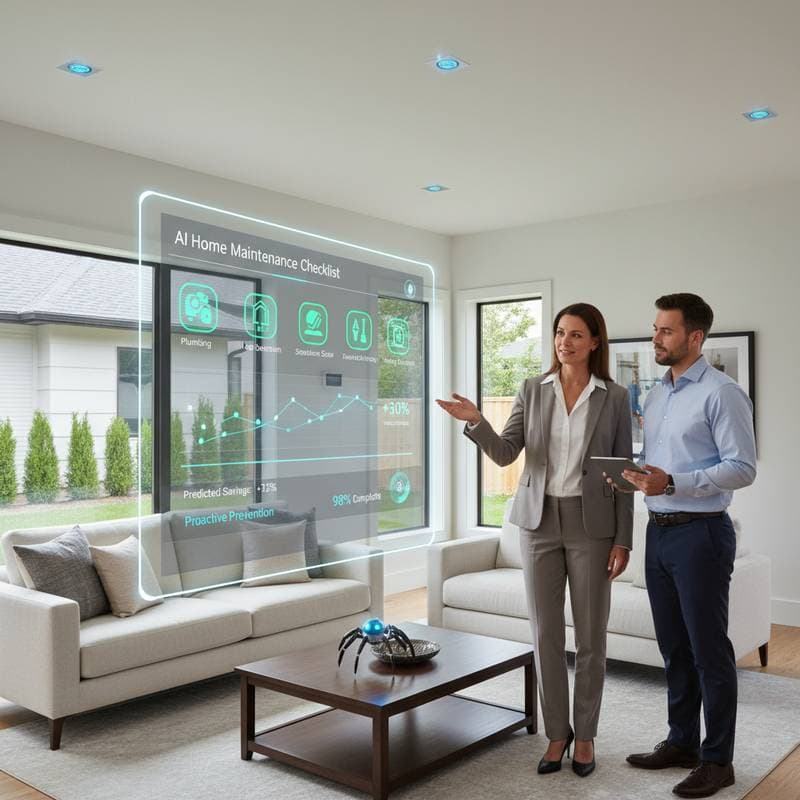
AI Checklists Predicting Home Issues by 2026
Homeowners often encounter unexpected issues such as leaking pipes or malfunctioning air conditioners during inconvenient times. Reactive maintenance creates stress and expense. AI checklists, powered by smart sensors and predictive algorithms, enable homes to alert owners to potential problems before they arise. These systems analyze water pressure, temperature variations, and energy use to prevent emergencies.
AI checklists integrate real-time data, historical trends, and environmental factors to generate customized alerts. This approach reduces uncertainty and minimizes expensive disruptions. Homeownership becomes more predictable and efficient with these tools.
The following sections examine how AI checklists enhance preventive care, the elements they monitor, associated costs, and preparation steps for integration.
How AI Checklists Function
AI maintenance systems gather data from sensors installed in critical home areas. These devices track temperature, humidity, vibrations, electrical current, and acoustic signals. The AI processes this information against baseline patterns to identify deviations early.
Essential Elements of Predictive Checklists
-
Smart Sensors
Sensors link to plumbing, heating, ventilation, air conditioning, roofing, and foundation components. They capture continuous data. For example, a vibration sensor on a sump pump identifies irregular rhythms indicating bearing wear well before failure occurs. -
Central AI Platform
Data flows to a unified hub, typically part of a smart home ecosystem. The AI assesses patterns, detects anomalies, and produces a ranked maintenance schedule. -
Adaptive Checklists
Checklists evolve with incoming data and external conditions, unlike fixed seasonal lists. A surge in basement humidity following rain prompts an immediate mold inspection recommendation. -
Owner Interface
Alerts appear via mobile applications or voice assistants. Interfaces show priority ratings, projected expenses, and choices between self-repair and expert intervention.
Investment Costs and Returns
Installation of AI monitoring setups ranges from $800 to $3,000, based on sensor quantity and system integration. Monthly subscriptions for analysis and checklist generation cost $10 to $40.
These expenses offset against repair avoidance. An overlooked roof leak may cause thousands in structural and mold remediation. HVAC inefficiencies from blockages can increase energy costs by 20 percent over extended periods. Systems recover costs by averting a single significant failure annually.
Consider this return outline:
- Setup Expense: $2,000 on average
- Yearly Subscription: $300 on average
- Annual Savings: $800 to $2,500
- Recovery Timeline: One to two years
Long-term residents benefit further as systems improve predictions through ongoing learning.
Data Security and Installation Safety
These systems process detailed structural and operational data. Established providers employ encrypted storage and backup options to safeguard information. Select platforms adhering to privacy regulations with offline capabilities for connectivity disruptions.
Professional installation ensures safety. Avoid self-wiring electrical sensors or altering HVAC elements. Such actions risk warranty invalidation or fire dangers. Adhere to guidelines and engage certified professionals for setup.
Seasonal Adjustments in AI Checklists
AI systems incorporate weather forecasts, regional climates, and humidity trends to tailor checklists. This alignment matches actual needs rather than calendar dates.
Spring Preparations
- Evaluate roof dampness and attic airflow.
- Verify sump pump functionality ahead of rains.
- Examine exterior coatings and siding for cold-weather harm.
Summer Monitoring
- Assess HVAC output and refrigerant charges.
- Measure indoor air purity and humidity increases.
- Detect irrigation shortfalls in yard setups.
Fall Reviews
- Examine furnace ignition sequences for faults.
- Flag gutter obstructions and drainage anomalies.
- Gauge insulation effectiveness prior to winter.
Winter Vigilance
- Identify heat escapes via thermal scans.
- Signal pipe freeze threats through temperature tracking.
- Observe energy surges from supplemental heating devices.
Steps to Integrate Predictive Maintenance
Preparation maximizes system effectiveness and minimizes hurdles.
-
Evaluate Existing Setup
Catalog smart features like thermostats or detectors. This identifies integration opportunities and cuts expenses. -
Verify Network Reach
Sensors demand reliable connections. Boost coverage in remote zones with extenders or mesh networks. -
Target Vulnerable Areas
Begin with plumbing or HVAC, sources of high expenses. Gradual expansion to other systems maintains feasibility. -
Configure Alerts
Choose delivery methods. Texts suit emergencies; emails manage routine items. -
Build a Record System
Log tasks and fixes digitally. This data supports performance analysis and property transfer.
Enduring Advantages and Property Appreciation
Properties with predictive systems attract buyers through verifiable upkeep histories. Agents note quicker sales and slight value uplifts for documented AI-monitored homes.
Beyond economics, benefits include reduced worry, lower insurance premiums, and decreased waste. Systems promote eco-friendly practices by extending equipment life and refining energy consumption.
Accuracy grows over time with home-specific data. Initial setups expand into full oversight solutions.
Sustaining System Performance
Regular upkeep preserves reliability. Refresh sensors as needed and audit configurations every three months. Swap batteries, adjust devices, and apply updates without delay. Arrange annual expert checks to align predictions with reality.
Upon selling, pass the account to buyers. This preserves data continuity and enhances marketability. Subscriptions often transfer without interruption.
Embracing Intelligent Home Oversight
Maintenance evolves toward foresight rather than response. AI checklists anticipate disruptions, fostering secure and efficient living. Homeowners gain confidence knowing subtle shifts receive timely attention. This technology builds resilient, value-adding homes for the future.