
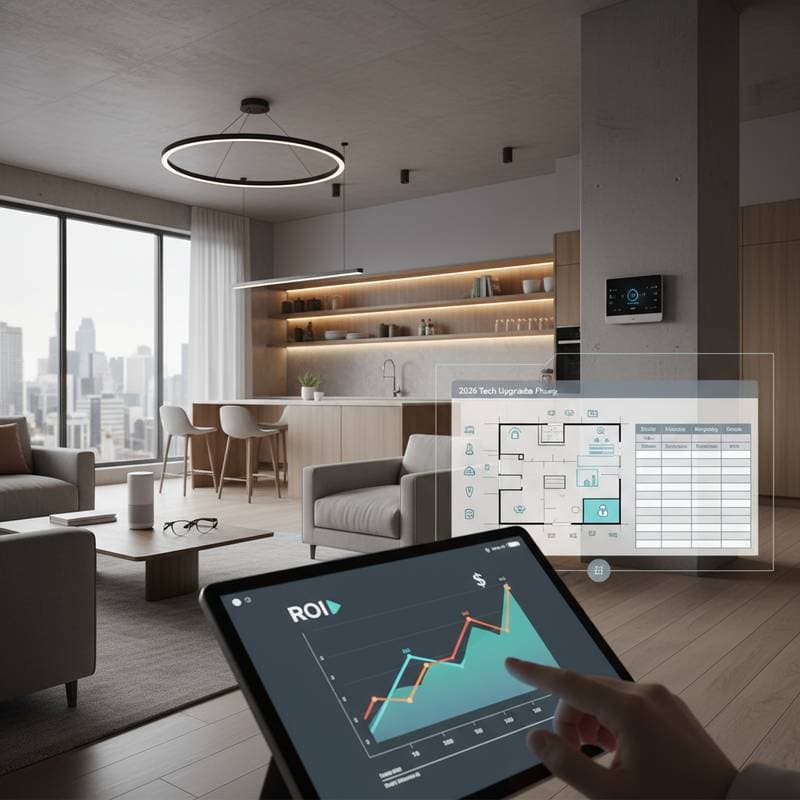
2026 Smart Home Costs: Invest Wisely for Long-Term Savings
Many homeowners gaze at advanced smart thermostats or dynamic lighting systems and wonder about the financial commitment involved. Smart home technology has evolved significantly, offering greater accessibility without the need for excessive expenditure. The essential approach involves identifying high-value investments, sequencing upgrades effectively, and aligning technology with daily routines to enhance efficiency rather than strain budgets.
This guide examines the actual expenses associated with converting a residence into an intelligent, streamlined environment. Readers will discover projects that yield strong returns, methods to sidestep common financial pitfalls, and strategies for planning enhancements that match personal preferences and economic constraints. Individuals embarking on initial automation explorations or contemplating comprehensive digital overhauls can establish a contemporary, interconnected living space while preserving financial stability.
Understanding Smart Home Expenses
Initial Smart Enhancements: $200 to $1,000 Range
For those entering the realm of smart technology, foundational improvements emphasize ease of use and modest energy reductions. These initiatives prove straightforward to implement and demand no expert intervention.
Key options in this category encompass:
- Smart speakers and central hubs ($50 to $200): Devices featuring voice recognition, such as those compatible with major assistants, enable hands-free management of illumination, climate control, and audio playback.
- Intelligent power outlets ($10 to $25 per unit): These transform standard appliances like table lamps, ceiling fans, or beverage brewers into remotely operable items.
- Adaptive light bulbs ($15 to $50 each): Options that allow customization of hue and intensity to suit various atmospheres, from relaxing evenings to productive workspaces.
- Entry-level climate controllers ($100 to $250): Units that analyze occupancy patterns and optimize heating or cooling schedules to minimize power consumption.
Such investments often equate to the price of a brief vacation, with numerous residents observing reduced energy statements shortly after installation. For instance, a smart thermostat might lower heating costs by 10 to 15 percent annually through precise adjustments.
Advanced Full-System Connectivity: $8,000 to $25,000 and Beyond
A completely unified smart residence represents an ideal configuration where components like automated window coverings and irrigation controls synchronize via a primary interface for effortless operation.
Typical features in premium configurations include:
- Complete residence control platforms ($5,000 to $15,000): Networks that integrate media systems, illumination, thermal regulation, and protective measures into a single interface.
- Bespoke management interfaces ($2,000 to $6,000): Installed panels or app-based controls that oversee environmental settings across the property.
- Robust protection and entry mechanisms ($3,000 to $10,000): Electronic locks, surveillance feeds, and intelligent detection for unauthorized movement.
- Renewable energy management with storage ($10,000 and upward): Solutions that harmonize grid power with solar inputs, optimizing usage during peak demand periods.
Professional specialists in system integration typically handle these installations to ensure compatibility and performance. The outcome delivers a subtle, responsive setup that adapts to user behaviors, requiring minimal ongoing adjustments. Homeowners often recoup investments through energy savings exceeding 20 percent on utilities over time.
Deciding Between Self-Installation and Professional Assistance
Advancements in device design have simplified setup processes, yet certain endeavors benefit from expert involvement. Distinguishing between suitable self-managed tasks and those needing specialists prevents inefficiencies and potential hazards.
Suitable for Independent Installation
- Adaptive bulbs and power outlets
- Voice-enabled speakers and hubs
- Standard climate regulators and entryway monitors
- Network boosters and automated switches
These tasks generally span 15 minutes to two hours and involve basic implements like a screwdriver alongside a smartphone for configuration.
Scenarios Requiring Expert Input
- Elaborate electrical modifications or additional circuits
- Synchronized illumination or climate infrastructures
- Property-wide sound distribution or control architectures
- Safeguard installations adhering to regulatory standards
Engaging certified electricians or integration experts guarantees secure and optimal functionality. These professionals frequently provide instructional sessions, empowering owners to navigate their systems proficiently post-installation.
Essential Security Measures
Intelligent residences rely on robust digital infrastructures, necessitating vigilant protection of personal information alongside physical assets.
Recommended protocols involve:
- Assigning distinct passwords to each connected item.
- Activating multi-step verification for linked profiles.
- Regularly applying software updates to address security gaps.
- Fortifying wireless networks with advanced encryption and robust access codes.
- Restricting information disclosure by auditing application access rights.
When incorporating surveillance or listening devices, consider optimal positioning. Place units away from sensitive zones and external sightlines to maintain privacy.
Resolving Typical Operational Challenges
Premium systems occasionally encounter disruptions, but most issues resolve through basic diagnostics.
For intermittent connections, reposition the primary router, incorporate signal amplifiers, or perform a device reboot. If voice directives fail, verify software authorizations or recalibrate recognition for individual users. Regarding routine malfunctions, inspect and refine programmed sequences within the control application. When power sources deplete rapidly, install the latest updates and opt for durable, device-compatible replacements.
Maintaining a record of incidents aids in spotting trends and implementing preventive actions, ensuring sustained reliability.
Strategies for Optimal Implementation
- Evaluate a single component thoroughly prior to broader integration. This approach allows mastery of individual functions before scaling.
- Assign descriptive identifiers to all elements, such as "Living Room Overhead Light" or "Entryway Surveillance," to streamline verbal commands.
- Maintain compatibility across vendors by selecting versatile protocols that support diverse manufacturers.
- Retain non-digital alternatives, including physical toggles and mechanical locks, for contingency scenarios.
- Monitor consumption patterns via built-in analytics to refine operational efficiency and identify savings opportunities.
Expanding on these, consider integrating budget-tracking apps that forecast ROI based on local energy rates. For example, pairing smart plugs with usage monitors can reveal idle appliance draw, potentially cutting bills by 5 to 10 percent.
Experiencing Daily Benefits
With configuration complete, the advantages of an intelligent setup become evident in routine interactions. Illumination can gradually brighten to greet the day, climate settings activate upon approach, and protective features engage automatically at designated times.
To sustain performance, conduct brief monthly reviews. Refresh applications, validate sensor accuracy, and adjust sequences to reflect evolving habits. These practices preserve dependability and safeguard investments.
Beyond convenience, such systems foster mindful resource management. Real-time visibility into usage patterns prompts deliberate decisions, often leading to broader sustainability gains across the household.
Steps to Launch Your Upgrades
Begin by assessing current needs: list priority areas like energy control or security. Research compatible devices within your budget, starting with versatile hubs. Test installations in low-stakes zones, then scale based on performance. Consult local incentives for energy-efficient tech to offset costs. Track progress quarterly to measure savings and refine as required. This methodical path ensures a rewarding transition to smarter living.