
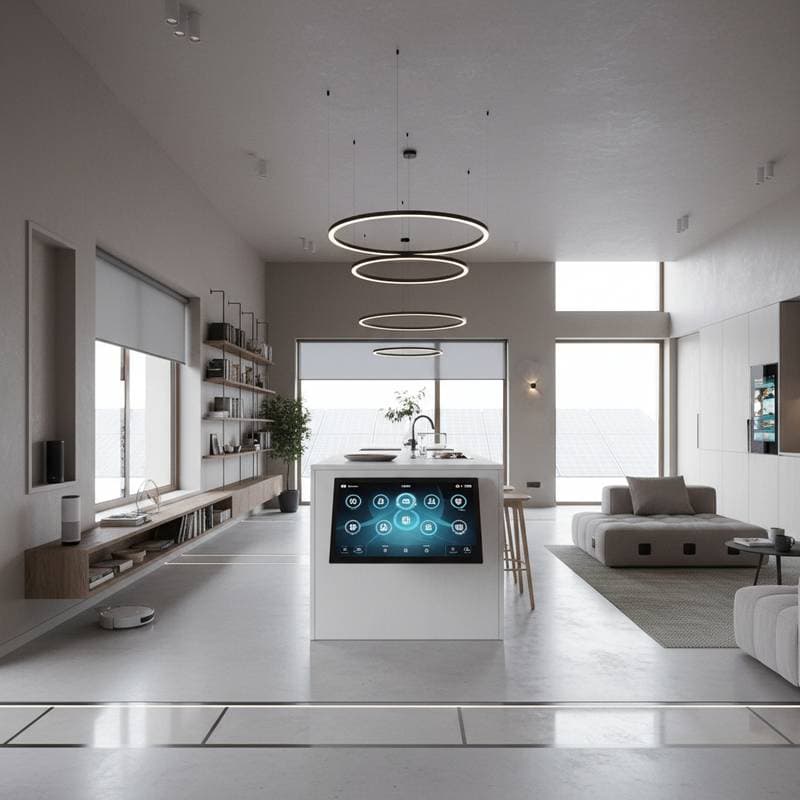
2026 Smart Home Remodel: Costs Unveiled
Imagine entering a home where lights adjust automatically to the fading daylight, the thermostat maintains ideal temperatures without manual input, and audio systems seamlessly transition between rooms. Smart home remodeling has shifted from an optional extravagance to a essential enhancement for comfort, energy savings, and property value. This evolution demands a thorough examination of the financial commitments involved to achieve seamless integration.
This guide details the expenses associated with smart home upgrades, strategies to align advanced features with realistic budgets, and projections for 2026 based on current trends in technology and installation practices.
Breaking Down the Costs
Expenses for smart home remodeling depend on the project's scale and existing infrastructure. Basic retrofits typically fall between $8,000 and $20,000, focusing on add-on devices without major rewiring. Full-scale overhauls, encompassing lighting, climate control, security, entertainment, and appliances, range from $60,000 to $150,000 or higher. The sections below provide detailed estimates to help prioritize investments.
1. Smart Lighting Systems
Homeowners often start with lighting upgrades due to their immediate impact and relatively low entry cost. Individual smart bulbs cost $10 to $50 apiece, but a complete system with recessed fixtures, motion sensors, and app-controlled dimmers requires $2,000 to $8,000 for an average-sized home. To maximize benefits, select bulbs compatible with voice assistants; this setup can cut energy consumption by up to 30 percent through scheduled adjustments and occupancy detection.
Installation involves assessing current wiring for compatibility. Professionals recommend starting in high-traffic areas like kitchens and living rooms to test the system's reliability before expanding.
2. Climate and Energy Management
A standalone smart thermostat from brands like Ecobee or Nest costs $150 to $300, including basic setup. Integrating it with zoned heating, ventilation, and air conditioning (HVAC) systems, along with smart vents and air quality monitors, elevates the total to $3,000 to $10,000. These enhancements enable precise temperature control in individual rooms, often yielding 10 to 15 percent savings on annual heating and cooling bills.
For greater efficiency, incorporate solar panels or home battery storage, which add $5,000 to $20,000 but qualify for rebates in many areas. In regions with variable energy prices, such systems stabilize costs and support off-grid capabilities during outages.
3. Smart Security and Access Control
Basic security begins with a video doorbell and indoor cameras at $1,000, providing remote monitoring via mobile apps. Advanced configurations, including facial recognition locks, outdoor floodlights with motion detection, and centralized control panels, range from $3,000 to $7,000 for most households. Enterprise-grade options with AI analytics and professional monitoring reach $15,000.
To optimize value, evaluate your property's layout first: focus on entry points and blind spots. Regular firmware updates ensure devices remain secure against evolving threats.
4. Entertainment and Audio Zones
Multi-room audio systems with hidden speakers and streaming integration cost $5,000 to $20,000, depending on the number of zones and audio quality. Adding smart TVs, projectors, and automated shades for home theaters pushes expenses to $25,000 or more in dedicated spaces.
Plan wiring during initial construction phases to avoid future disruptions. These setups enhance daily routines, such as starting the day with room-filling music or winding down with immersive viewing, while boosting home appeal to buyers.
5. Kitchen and Appliance Integration
Connected appliances transform routine tasks into efficient processes. A smart refrigerator with inventory tracking and ovens with remote preheat functions start at $2,000 per unit, leading to $10,000 to $30,000 for a full kitchen suite including ranges, dishwashers, and faucets with touchless operation.
Prioritize energy-star rated models to align with sustainability goals. Integration requires a robust home network; consult installers to ensure appliances sync with central hubs for unified control.
Sustainability Meets Technology
Smart remodeling extends beyond convenience to promote environmental responsibility. Energy dashboards display usage patterns in real time, allowing adjustments that minimize waste, such as powering down unused devices automatically. Irrigation controllers use local weather forecasts to optimize schedules, saving up to 50 percent on water compared to traditional timers.
Lighting that adapts to natural light cycles supports occupant well-being while reducing power draw. Pair these technologies with eco-friendly choices like reclaimed wood flooring or energy-efficient insulation to create a holistic, low-impact home.
Timelines and Project Planning
Complete smart remodels generally require six to twelve weeks, influenced by home size and integration depth. Simpler retrofits wrap up in two weeks, whereas projects involving new conduits or wall modifications extend timelines.
Follow this structured approach to maintain momentum:
- Planning and Design (1 to 2 weeks): Outline objectives, set a detailed budget, and select interoperable devices.
- Infrastructure Preparation (1 to 3 weeks): Update electrical panels, install Ethernet cabling, and reinforce Wi-Fi coverage.
- Device Installation (2 to 4 weeks): Position cameras, thermostats, and speakers according to blueprints.
- Programming and Testing (1 to 2 weeks): Develop custom automations, like geofencing for arrival routines, and conduct thorough diagnostics.
Hire a project manager to synchronize electricians, network specialists, and designers. This coordination prevents delays and cost overruns from conflicting schedules.
Safety and Compatibility Considerations
Prioritize devices certified by Underwriters Laboratories (UL) or similar bodies to meet electrical safety standards. Implement strong passwords, two-factor authentication, and regular scans to protect against cyber vulnerabilities.
For seamless operation, choose protocols like Matter for cross-brand compatibility. Test integrations early: connect a new thermostat to your existing lights to confirm smooth voice commands before full deployment.
Maximizing Long-Term Value
A well-executed smart remodel frees up time for what matters most, from family gatherings to personal pursuits, by handling mundane tasks effortlessly. Investments in compatible, scalable systems ensure adaptability to future innovations, preserving relevance and efficiency over years. Homeowners who focus on quality components and professional installation often see rapid payback through lower utilities and increased property worth.