
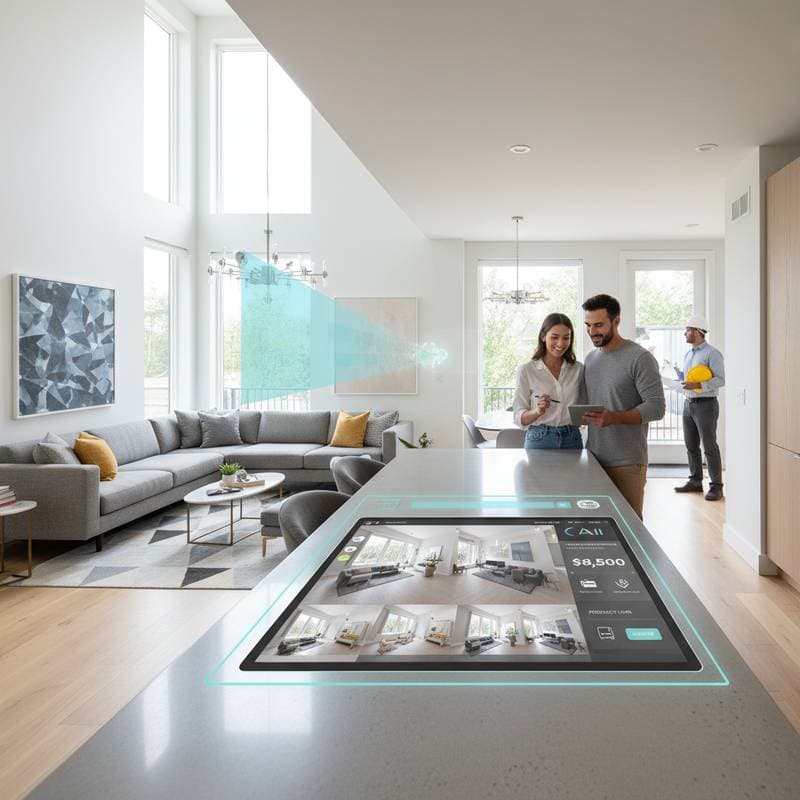
How AI Design Tools Outperform Hiring a Professional in 2026
The choice between engaging a human interior designer and utilizing artificial intelligence tools boils down to project scope, urgency, and budget constraints. These AI platforms have advanced from basic applications into sophisticated systems capable of crafting detailed space plans, producing realistic visualizations, and calculating precise expenses. Homeowners facing this decision should consider their comfort level with independent oversight of the process.
Key Reasons Homeowners Prefer AI Design Tools
Modern AI interior design software generates precise room visualizations and furniture arrangements within minutes. Users simply upload photographs of the area, specify desired aesthetics, and receive various proposals featuring coordinated palettes, illumination ideas, and fabric selections. This process replaces multiple in-person meetings that a traditional designer might require, often completing the initial phase before a beverage cools.
Cost represents a primary advantage for numerous homeowners. Interior designers typically bill $75 to $250 hourly, with comprehensive packages ranging from $2,000 to $10,000 per room. AI alternatives charge $50 to $300 for complete residence schemes, and several provide complimentary introductory features to evaluate concepts prior to upgrading.
AI platforms also provide unmatched velocity and autonomy. Individuals adjust hues, reposition items, and simulate illumination effects at their convenience. For those who relish direct involvement in the creative process, such adaptability proves highly engaging.
The Mechanics of AI Design Technology
These systems employ computer vision alongside extensive language models calibrated to detect spatial configurations, chromatic balance, and foundational design tenets. Upon examining uploaded images, the software determines room sizes and cross-references user inputs against vast style repositories. Leading solutions integrate actual merchandise inventories, enabling seamless transitions to procurement pages for paints, fixtures, or furnishings depicted in the visuals.
Advanced features extend to expenditure projections and environmental assessments. Platforms evaluate if arrangements adhere to elementary regulations or if selections promote energy conservation and longevity. Such functionalities position AI as a reliable ally, furnishing both inspirational guidance and operational assistance to users seeking comprehensive support.
Scenarios Where AI Surpasses Professional Designers
AI demonstrates superiority in targeted contexts:
- Room-specific updates that avoid alterations to building frameworks.
- Cost-sensitive endeavors demanding elegant outcomes minus substantial advisory charges.
- Urgent timelines that preclude arranging expert sessions.
- Exploratory phases allowing trials of diverse aesthetics prior to final selections.
Consider refreshing a compact living area with updated seating and illumination. An AI tool instantly yields five distinct configurations for review, complete with sourcing options and expense tallies, empowering informed purchases without preliminary commitments. This immediacy and clarity seldom occur in conventional engagements.
Areas Where Professionals Retain Advantages
Despite its strengths, AI cannot replicate the intuitive understanding and practical wisdom of experienced designers. Experts discern nuances such as daily light variations or family interaction patterns within particular zones. They handle intricate operations including vendor management, bespoke manufacturing, and approvals for modifications.
Professionals prove indispensable for initiatives involving partition eliminations, fixture displacements, or wiring adjustments. These demand certified individuals versed in regional codes and security protocols. While AI contributes stylistic proposals, it cannot authorize regulatory paperwork or direct on-site teams.
Integrating AI with Professional Guidance
Astute homeowners merge AI capabilities with expert input rather than selecting one exclusively. Numerous designers initiate collaborations by leveragingimages to accelerate ideation. This method minimizes chargeable time and enhances client influence over artistic choices.
Users employ AI to identify favored elements, then engage specialists for polishing and implementation. When incorporating AI into a specialist-led effort, confirm the tool's compatibility with formats exportable to programs like SketchUp or AutoCAD. This compatibility allows seamless progression without redundant efforts.
Analyzing Expenses and Investment Returns
Projects powered by AI reduce overall expenditures by 40 to 70 percent, varying by complexity. Homeowners typically invest $300 to $1,000 in subscriptions and acquisitions for whole-home designs. Comparable traditional services often surpass $10,000, incorporating advisory, supply, and oversight costs.
Investment returns extend beyond immediacy. AI facilitates planning enhancements that attract prospective purchasers, such as streamlined arrangements, vibrant schemes, and modernized lighting. These elevate property appeal sans extensive overhauls, particularly beneficial for market-ready presentations.
Potential Pitfalls in AI Design Applications
Accuracy hinges on input quality. Inaccurate dimensions, suboptimal photo illumination, or obsolete schematics yield flawed outputs. Verify all measurements prior to procurement or commencement.
Exercise prudence with product referrals from unfamiliar vendors. Confirm assurances, delivery fees, and reversal options. Prioritize platforms with transparent sourcing to mitigate surprises.
Essential Strategies for Optimal Results
- Record precise metrics for all surfaces, openings, and passages before image submission.
- Maintain uniform illumination during space photography to ensure color fidelity.
- Evaluate no fewer than three generated schemes prior to selection.
- Input budget parameters prominently to steer feasible suggestions.
- Archive multiple iterations to monitor evolution and explore temporal adaptations.
Realizing Lasting Home Transformations
Approach AI as a collaborative partner to preserve oversight while harnessing analytical rigor. This synergy yields efficient, informed designs that align with personal visions and practical needs. Homeowners achieve enduring, harmonious environments that reflect both innovation and individual style.