
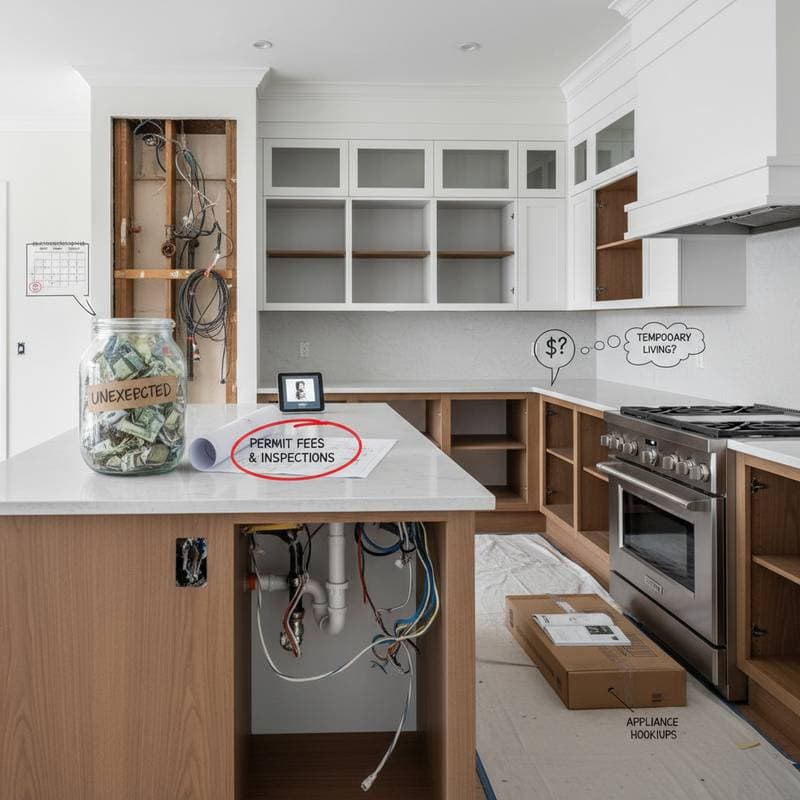
The Overlooked Expenses in 2025 Kitchen Remodels
Homeowners often envision a kitchen remodel as a straightforward path to enhanced functionality and increased property value. However, the actual expenses frequently exceed initial projections. A budget of $20,000 can expand to $35,000 when unforeseen costs emerge. Understanding these potential pitfalls allows for more accurate planning and a smoother project execution.
Structural Issues Uncovered During Demolition
Kitchens contain intricate systems that become visible only after walls open. Demolition may reveal outdated electrical wiring, concealed water damage, or foundational weaknesses requiring immediate attention. These discoveries halt progress until resolved, extending timelines and budgets.
Typical cost range: $800 to $4,000, based on the extent of the problems.
In homes built before 1980, electrical systems often fail to support contemporary appliances, necessitating new circuits to comply with safety codes. Plumbing leaks can lead to mold growth, which demands professional remediation to prevent health risks. To prepare, allocate 10 percent of the total budget as a buffer for such repairs and consult a structural engineer early in the planning phase.
Permit Fees and Regulatory Compliance
Local authorities mandate permits for modifications involving electrical, plumbing, or structural elements. Inspections ensure adherence to building codes, but the associated fees accumulate quickly, particularly in urban areas with stringent requirements.
Typical cost range: $200 to $2,000, varying by location and project scale.
Contractors sometimes exclude permits from initial quotes, so confirm responsibility in the contract. Bypassing permits may seem cost-effective initially, yet it poses risks during home sales, including inspection failures or mandatory corrections. Research your municipality's regulations online and factor in fees from the outset to maintain compliance without delays.
Delivery, Disposal, and Labor Extensions
Estimates for materials like cabinets and appliances rarely include transportation or waste removal. Delivering heavy items to the site and disposing of debris require specialized services, which add to the overall expenditure.
Typical cost range: $300 to $1,200 for combined delivery and disposal.
Labor costs can rise due to unforeseen complications or client-requested alterations. Relocating a sink, for instance, involves rerouting pipes and additional carpentry, increasing hours billed. Request a breakdown of change order rates from your contractor and document all decisions in writing to control these variables.
Appliance Installation and Utility Adjustments
Selecting modern appliances excites, but their integration demands specific infrastructure. Gas appliances may require line extensions, while electric models need dedicated circuits and proper venting to operate safely.
Typical cost range: $500 to $2,500 for necessary modifications.
Appliance warranties often void without certified installation, underscoring the need for professionals. Before purchasing, examine specification sheets for utility demands and coordinate with your contractor to assess existing setups. This proactive step prevents rushed, expensive adaptations later.
Customizations for Cabinets and Countertops
Off-the-shelf options keep costs low, but personalization for fit or aesthetics drives up prices through additional fabrication and materials. Adjusting heights, adding features, or selecting premium finishes compounds expenses rapidly.
Typical cost range: $1,000 to $6,000 for tailored elements.
Details such as dovetail joints or integrated lighting further elevate the investment. Balance desires with finances by combining stock bases with custom accents, like a bespoke range hood. Sketch your layout in advance and obtain quotes for variations to refine selections within budget constraints.
Flooring and Trim Adjustments
After installing core components, mismatches in flooring or trim become apparent, necessitating extensions or replacements for cohesion. These finishing touches ensure a polished result but often fall outside primary estimates.
Typical cost range: $400 to $1,800, influenced by material choices and area size.
Inconsistent transitions can undermine the remodel's professional appearance. Measure adjacent spaces during design and select versatile materials that adapt easily. Schedule these updates as the final phase to avoid rework and maintain visual harmony.
Disruptions to Daily Living and Meals
Extended timelines displace kitchen use, forcing reliance on external dining options. Projects averaging four to six weeks amplify these inconveniences, turning routine costs into significant outlays.
Typical cost range: $300 to $1,000, scaled to duration and household size.
Prepare by identifying nearby eateries or meal delivery services in advance. Consider temporary setups, such as a countertop grill in another room, to minimize expenses. Discuss realistic timelines with your contractor to set expectations and reduce financial strain.
Strategies to Control Costs Effectively
- Establish a contingency reserve. Dedicate 15 percent of the budget to cover unforeseen expenses, adjusting as the project advances.
- Solicit detailed proposals. Compare at least three contractor bids to spot discrepancies and negotiate inclusions for potential hidden fees.
- Clarify material allowances. Understand baseline prices for selections like flooring; upgrades incur direct overages, so prioritize essentials.
- Secure comprehensive protections. Obtain written warranties for workmanship and products, plus verify contractor insurance to mitigate liability.
- Set a feasible schedule. Allow buffer time for approvals and supply chain issues, as haste invites errors and added costs.
Safeguarding Your Kitchen Investment
Regular upkeep preserves the remodel's longevity and appearance. Wipe surfaces with gentle cleaners to prevent buildup, and apply sealant to countertops annually to resist stains. Inspect seals around sinks and appliances quarterly, addressing cracks promptly to avoid water intrusion.
A well-planned kitchen remodel enhances home life profoundly. By anticipating these expenses and implementing disciplined strategies, homeowners achieve a space that delivers lasting satisfaction and value.