
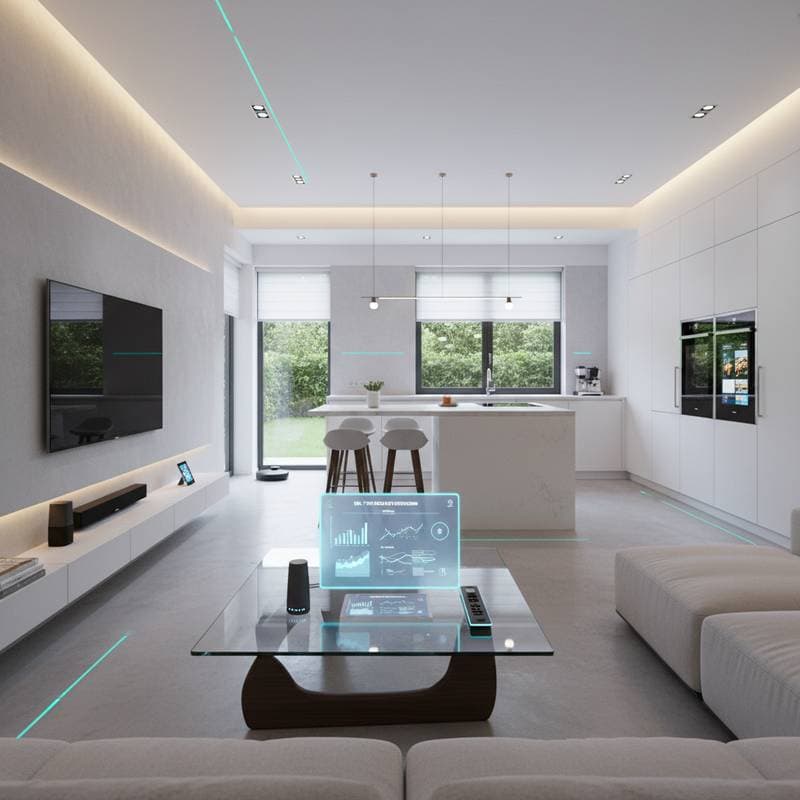
Understanding Smart Home Remodel Budgets
Smart home upgrades integrate technology to enhance daily living through automation, security, and energy management. Costs vary widely based on scope, from basic additions to full-system overhauls. This breakdown covers three tiers: starter projects around $5,000, mid-range expansions at $20,000 to $40,000, and premium integrations up to $75,000. Each level builds on the previous, allowing scalability as needs evolve.
Factors influencing expenses include device quality, installation complexity, and home size. High-end brands like Nest or Control4 command premium prices, while compatible off-the-shelf options reduce outlays. Always factor in compatibility with existing wiring and Wi-Fi infrastructure to avoid surprises.
Starter Level: $5,000 Budget for Essential Upgrades
Begin with foundational elements that deliver immediate benefits without overwhelming investment. Focus on plug-and-play devices that require minimal setup.
- Smart Lighting and Plugs: Install LED bulbs and smart plugs for remote control via apps. Costs range from $500 to $1,500, including multi-room hubs.
- Basic Thermostat Upgrade: Replace standard units with Wi-Fi-enabled models to optimize heating and cooling. Expect $200 to $500 per unit, plus sensors for better accuracy.
- Entry-Level Security: Add doorbells with video and motion sensors. Packages start at $300, covering two to four entry points.
- Voice Assistants: Integrate hubs like Amazon Echo or Google Nest for voice commands. Budget $200 to $400 for a central unit and satellites.
This tier suits first-time adopters testing the technology. Total setup often completes in a weekend, emphasizing user-friendly apps for control.
Mid-Range Level: $20,000 to $40,000 for Expanded Functionality
Advance to interconnected systems that automate routines across key areas. This level involves some wiring and app integrations for smoother operation.
- Multi-Room Audio and Lighting: Wire speakers and dimmers for zoned control. Investments fall between $5,000 and $10,000, including central controllers.
- Enhanced Climate Control: Add smart vents and humidity sensors to existing HVAC. Allocate $3,000 to $6,000 for balanced zoning.
- Comprehensive Security Setup: Include indoor cameras, smart locks, and window sensors. Systems cost $4,000 to $8,000 with cloud storage options.
- Kitchen and Appliance Links: Connect ovens, fridges, and faucets for inventory tracking and alerts. Dedicate $4,000 to $8,000 for branded suites.
Homeowners at this stage gain efficiency gains, such as automated evening routines. Professional consultation recommended for wiring to ensure reliability.
Premium Level: $75,000 for Full-System Integration
Achieve a fully automated residence with custom solutions tailored to lifestyle. This comprehensive approach unifies all elements under one interface.
- Automated Climate Zones: Spend $4,000 to $8,000 to manage multiple HVAC zones and humidity automatically through sensors and actuators.
- Smart Kitchen Appliances: Integrate connected refrigerators, ovens, and dishwashers. Prices range from $8,000 to $15,000 based on brand and features.
- Full-Scope Lighting and Shade Automation: Implement whole-home systems with motorized shades. Budget $10,000 to $20,000 for seamless operation.
- Advanced Security and Monitoring: Deploy facial recognition cameras, biometric locks, and unified alarms. Total exceeds $10,000 for robust coverage.
- Home Theater Integration: Build a high-end setup with projectors, surround sound, and controls. Costs span $7,000 to $20,000.
Additional elements like irrigation controls and energy dashboards push totals higher. Customization ensures devices interoperate via protocols like Zigbee or Z-Wave.
Professional Support
Premium projects demand certified installers, electricians, and network experts. They handle custom programming so systems communicate without issues. Avoid self-troubleshooting complex setups to prevent downtime or safety risks.
Timeline
Anticipate six to ten weeks for completion, varying by home size and customizations. Properties undergoing new construction or major renovations extend timelines due to coordination needs.
Best For
This tier appeals to owners prioritizing technology as a core asset. It combines luxury with practicality, delivering full oversight and strong return potential through efficiency.
Calculating Return on Investment
Beyond convenience, smart remodels boost property worth. Market analyses indicate resale values rise 3 to 7 percent with integrated features. Prospective buyers appreciate reduced energy use, superior protection, and contemporary design.
Energy Efficiency Gains
Smart thermostats, lights, and monitors lower utility bills by 10 to 25 percent each year. These reductions gradually recoup initial costs, particularly in larger homes.
Preventive Maintenance Benefits
Systems detect issues early, such as leaks via water sensors, averting costly damages to structures or finishes. Proactive alerts extend equipment life and minimize repair expenses.
Daily Life Improvements
Benefits extend to enhanced security, like auto-locking doors, and accessibility through mobile monitoring. These elements foster greater ease and reassurance in routines.
Deciding Between DIY and Professional Help
Selection hinges on technical confidence and project scale. Start small to build skills before advancing.
Suitable DIY Projects
- Configure smart speakers, plugs, and bulbs using manufacturer apps.
- Mount Wi-Fi thermostats, ensuring clear cable management.
- Set up assistants and automate sequences via intuitive interfaces.
These tasks demand basic tools and suit novices, often finishing in hours.
Scenarios Requiring Experts
- Integrate hardwired lights or HVAC components.
- Install multi-camera security arrays.
- Design custom theaters or audio zones.
- Optimize whole-home networks for speed.
Specialists verify code adherence and performance stability. Request detailed quotes and warranties upfront.
Strategic Timing for Upgrades
Align smart additions with seasonal or renovation cycles. Update HVAC smart controls in spring to prepare for warmer months. Deploy irrigation systems pre-planting to optimize water use. During interior work, embed lighting automation to cut future disruption costs.
Bundling tasks with one provider streamlines efforts and negotiates better rates. This approach limits interruptions and amplifies cost efficiencies.
Sustaining Your Smart Home Setup
Post-installation, prioritize regular maintenance to preserve performance. Update firmware promptly, adjust automations for life changes, and analyze energy data for optimizations. When incorporating new gadgets, verify secure network compatibility.
View the system as adaptable, expanding incrementally with tech progress. Each addition refines energy management, fortifies security, or simplifies controls, aligning closer to an intuitive living environment.
Smart upgrades transform residences into responsive spaces, yielding ongoing returns in efficiency, protection, and enjoyment.