
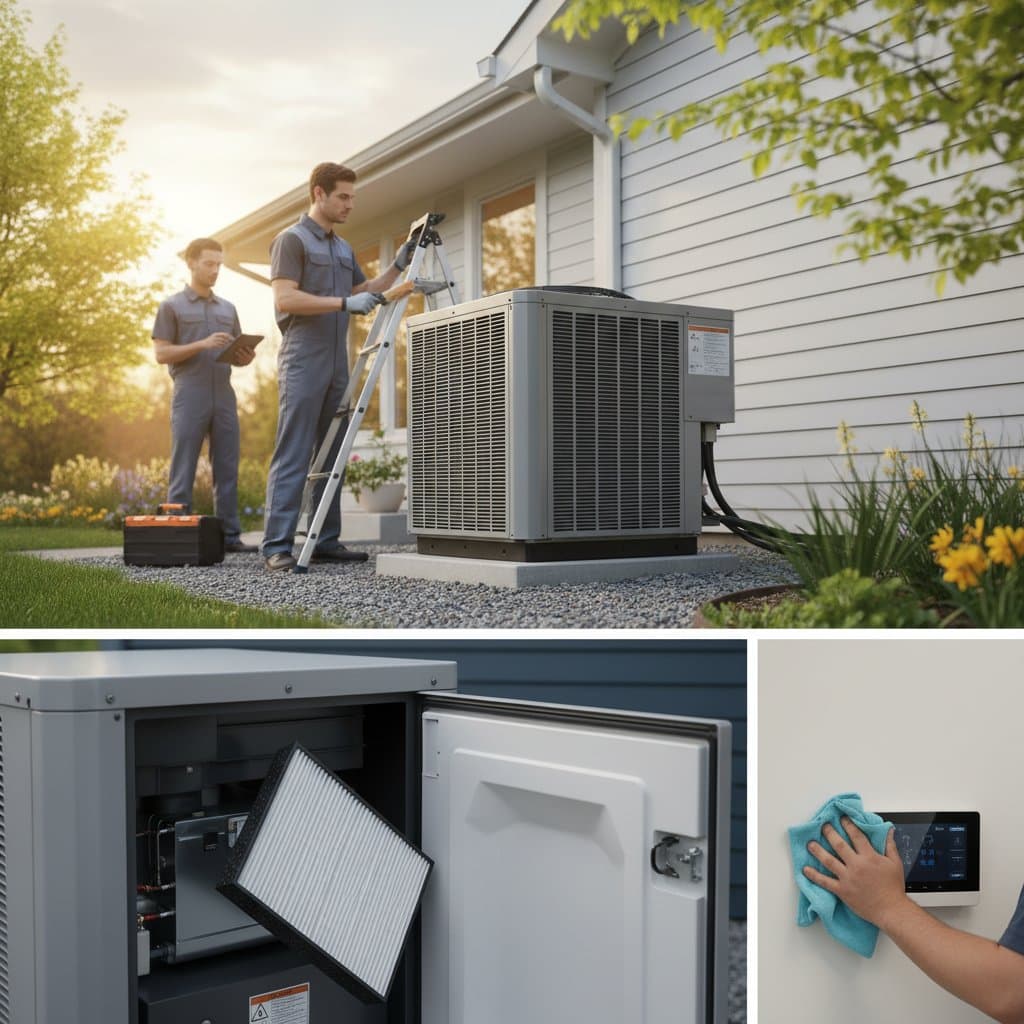
Imagine activating your air conditioning on the earliest warm day of spring, only to encounter silence or an unsettling clanking sound. Such moments often lead to concerns about whether the issue requires a simple adjustment or an expensive overhaul. The reassuring fact remains that the majority of HVAC failures can be avoided through proactive early-season maintenance. Spring provides an ideal window to attend to your system before intense summer heat arrives.
This guide outlines practical procedures, estimated expenses, and essential safety measures. Readers will gain the knowledge needed to prevent disruptions and sustain a comfortable indoor environment throughout the season.
Step 1: Conduct a Thorough Visual Inspection
Begin by examining the outdoor condenser unit prior to powering on the system. Inspect for accumulated twigs, leaves, or soil within or surrounding the enclosure. Ensure at least two feet of clearance around the unit to facilitate unobstructed airflow.
Inspection Checklist:
- Clear all visible debris and gently rinse the fins using a garden hose on a low-pressure setting.
- Examine for damaged fins, signs of rust, or oily residues on the refrigerant lines.
- Verify that the unit rests evenly on its mounting pad.
- Check for unsecured panels or components that might produce rattling sounds during operation.
Should you observe significant corrosion, residual ice formation, or an uneven condenser position, engage a certified technician promptly for a detailed evaluation. These early detections can avert more severe complications later.
Step 2: Clean or Replace Air Filters
Air filters serve as the primary defense against dust and allergens entering your HVAC system. Over time, clogged filters restrict airflow, compel the unit to labor harder, and elevate energy consumption. Schedule filter checks monthly during peak usage periods, but prioritize a full replacement or cleaning at the onset of spring.
Select filters with a MERV rating between 8 and 13 for balanced filtration without excessive resistance. For reusable filters, vacuum the surface thoroughly or rinse with lukewarm water if the manufacturer permits. Disposable filters demand straightforward replacement: locate the filter slot near the return air duct, slide out the old unit, and insert the new one, ensuring proper orientation indicated by airflow arrows.
Neglecting this step can reduce system efficiency by up to 15 percent and shorten equipment lifespan. Homeowners typically spend $10 to $30 on quality filters, a modest investment compared to potential repair bills exceeding $500.
Step 3: Clean Vents and Registers
Dust accumulation in vents and registers not only diminishes air circulation but also compromises indoor air quality. Allocate time to vacuum the grilles and adjacent wall surfaces using a soft brush attachment.
For comprehensive cleaning, detach the vent covers and immerse them in a solution of warm water and mild dish soap. Rinse thoroughly and allow complete drying before reattachment. Persistent musty odors or evident mold growth signal the need for professional duct cleaning services, which range from $300 to $600 based on residence size. Such interventions enhance airflow, boost efficiency, and promote healthier living spaces.
Regular vent maintenance prevents strain on the blower motor and coils, contributing to lower utility bills and fewer allergen-related issues.
Step 4: Test and Calibrate the Thermostat
A malfunctioning thermostat can cause inconsistent temperatures or unnecessary system cycling, leading to discomfort and inefficiency. Test the device by adjusting settings to activate heating and cooling modes, confirming that the system responds within a few minutes.
For programmable models, verify the schedule aligns with your daily routines; for smart thermostats, update firmware via the manufacturer's app if applicable. If inaccuracies persist, such as a two-degree deviation from actual room temperature, recalibrate using the device's manual instructions or replace the unit. Basic thermostats cost $20 to $50, while advanced models range from $100 to $250.
Proper thermostat function optimizes energy use, potentially saving 10 percent on heating and cooling costs annually. Accurate control also extends the overall life of your HVAC components.
Step 5: Arrange a Professional Tune-Up
While homeowners can manage many tasks independently, certain aspects demand expert intervention. Professional tune-ups identify subtle problems early, preventing escalation into costly failures.
Standard Tune-Up Components:
- Assessment of refrigerant levels and system pressure.
- Examination of electrical connections and wiring.
- Thorough cleaning of evaporator and condenser coils, plus drain lines.
- Application of lubricant to motors and fans.
- Comprehensive performance testing under load conditions.
Fees for these services generally fall between $100 and $200. Systems over 10 years old or those covered by warranty benefit most from this routine. Maintain service records to validate warranty claims and monitor long-term trends.
Prioritize Safety During Maintenance
Refrigerant handling and electrical diagnostics require certification and specialized tools; untrained individuals should avoid these areas. Indicators like frost on lines, frequent breaker trips, or acrid smells necessitate immediate system shutdown and technician consultation.
Always isolate power sources before any cleaning or inspection. Restrict access to outdoor units for children and pets during operation to minimize risks. Adhering to these precautions protects both personnel and property.
Advanced Strategies for Optimal Performance
-
Mark filter installation dates directly on the frame with a permanent marker for easy tracking.
-
Employ a shop vacuum with a narrow nozzle to dislodge dust from the accessible blower area, exercising caution around wiring.
-
Enhance home insulation at windows and doors to lessen HVAC workload and improve overall energy retention.
-
Prune overhanging branches from shade trees to minimize debris accumulation on the condenser.
-
Record all maintenance activities in a dedicated logbook or app, noting dates, costs, and observations for future reference.
These practices not only extend equipment durability but also foster a more efficient and comfortable home environment.
Achieve Sustained Efficiency and Comfort
Implementing these spring preparation steps equips your HVAC system to handle seasonal demands effectively. Homeowners who invest time in maintenance report fewer emergencies, reduced energy expenses, and prolonged system reliability. By addressing potential issues proactively, you secure peace of mind and a consistently pleasant indoor climate year-round.