
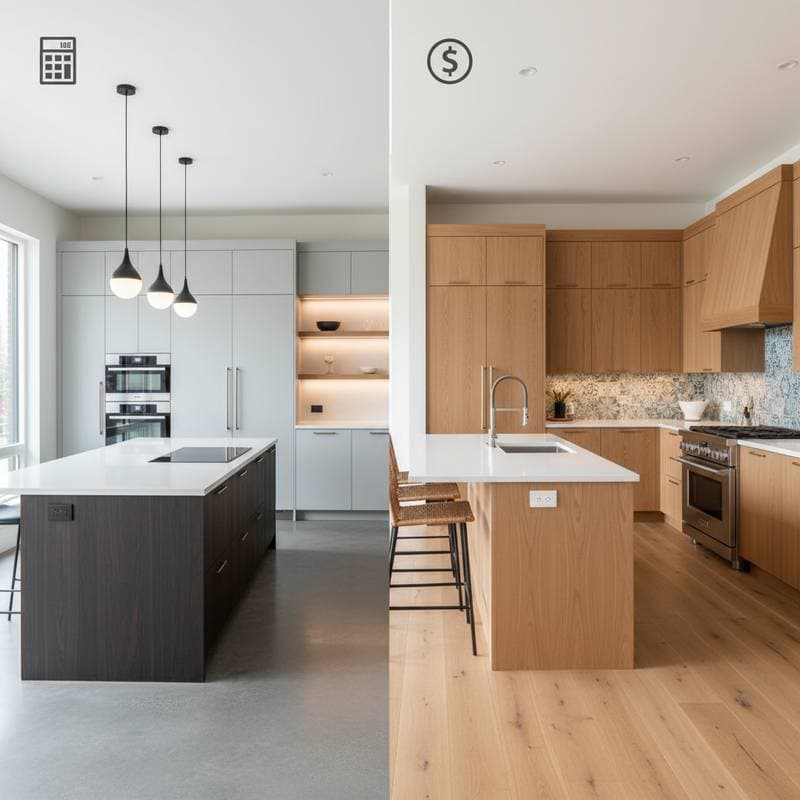
2026 Kitchen Layout Costs: Island Versus Peninsula
Homeowners envisioning a renovated kitchen often focus on central features that enhance gathering and preparation. A kitchen island serves as a focal point for social interaction, while a peninsula provides defined separation with accessible workspace. These elements blend aesthetics, storage, and utility, but differences in expense, setup demands, and enduring benefits influence the final decision.
Consider measuring your space to evaluate if an island's expanded surface warrants higher investment. The selection extends beyond arrangement to reflect cooking habits, family dynamics, and connectivity. This analysis examines true expenses, advantages, and methods to select the optimal configuration for your environment.
Detailed Cost Analysis: Island Versus Peninsula
Typical Expense Ranges
- Kitchen Island: Ranges from $4,000 to $12,000, varying by dimensions, materials, and integrated elements such as seating or appliances.
- Kitchen Peninsula: Spans $2,500 to $8,000, generally reduced through attachment to existing walls and streamlined assembly.
These estimates adjust based on material selections and regional labor rates. Incorporating plumbing for a sink or wiring for power sources adds $1,000 to $3,000. Options like bespoke cabinetry, edged countertops, or embedded fixtures can elevate totals substantially.
Peninsulas prove budget-friendly by utilizing current cabinet lines and services. This approach avoids expenses related to floor modifications or independent electrical runs, proving ideal for projects with constrained schedules or funds.
Material Choices and Their Price Influences
Countertop Selections
- Laminate: $25 to $50 per square foot, including installation.
- Quartz or Granite: $80 to $150 per square foot.
- Butcher Block: $60 to $100 per square foot.
Islands demand more material, amplifying costs for upscale stones. Peninsulas, with compact areas, permit premium surfaces without excessive outlay. Select based on durability needs; quartz resists stains effectively in high-use zones.
Cabinetry and Structural Elements
Standard prefabricated units lower expenses, whereas tailored cabinets to accommodate devices or seating increase costs by thousands. Homeowners frequently combine strategies, employing ready-made bases for stability and investing in personalized doors or accents for visual appeal. Factor in hardware like soft-close hinges, which add $200 to $500 but enhance usability.
Setup Demands and Workforce Expenses
Workforce constitutes 30 to 40 percent of overall expenditure. Island projects require floor adjustments, fresh electrical pathways, and occasional beam support. Peninsulas, anchored to walls, often halve labor duration through shared stability.
Engage certified experts for any plumbing or electrical work. Confirm compliance with permits and regional regulations prior to commencement. In numerous areas, island additions like sinks or receptacles necessitate official reviews to ensure safety.
Investment Returns and Enduring Benefits
A thoughtfully crafted island enhances property marketability by conveying contemporary ease and adaptable socializing. Peninsulas, though conventional, improve operations and transitions in smaller areas.
Industry experts project 60 to 80 percent recovery on kitchen upgrades executed proficiently. Islands showcase well in listings, drawing purchasers desiring open concepts, whereas peninsulas suit buyers valuing streamlined divisions between preparation and relaxation spaces. Prioritize timeless designs to sustain appeal over years.
Eco-Friendly Choices and Upkeep Factors
Opting for green materials yields long-term savings for either design. Bamboo or recycled timber surfaces, paints with minimal volatile compounds, and efficient illumination options lessen ecological footprint and endure well.
Upkeep differs by material. Stone varieties need sealing every six to twelve months to avert etching, while wood demands regular oil applications to maintain moisture balance and resist marks. Effective airflow and strategic lighting in both setups prolong durability and boost routine satisfaction.
Deciding Between Professional Help and Self-Installation
Intermediate builders can manage a peninsula using modular components and basic surfaces. Islands present greater challenges with service integrations and weight management, justifying expert involvement.
For features like stovetops, dishwashers, or sinks in islands, secure a qualified specialist. Electrical enhancements typically require isolated circuits and approvals to meet codes.
Essential Strategies for Optimal Results
- Outline pathways initially. Use tape to simulate traffic flow and confirm adequate clearance of 36 to 42 inches.
- Align heights consistently. Standardize counter levels at 36 inches for preparation and 30 inches for bar seating to promote ease.
- Incorporate focused illumination. Install under-cabinet strips or pendants over work areas to enhance precision and ambiance.
- Account for seating allowances. Provide 24 to 30 inches of depth for stools to ensure comfort without crowding.
- Design for adaptability. Select versatile shelving and neutral palettes that accommodate changing family requirements.
Integrating the Layout into Daily Routines
After completion, observe how the configuration shapes habits. An island may evolve into a casual dining spot, study area, or quick meal station, fostering connections.
A peninsula streamlines tasks while preserving boundaries, ideal for focused cooking sessions. The superior designs integrate seamlessly, transforming routines into efficient, enjoyable experiences that reflect personal priorities.