
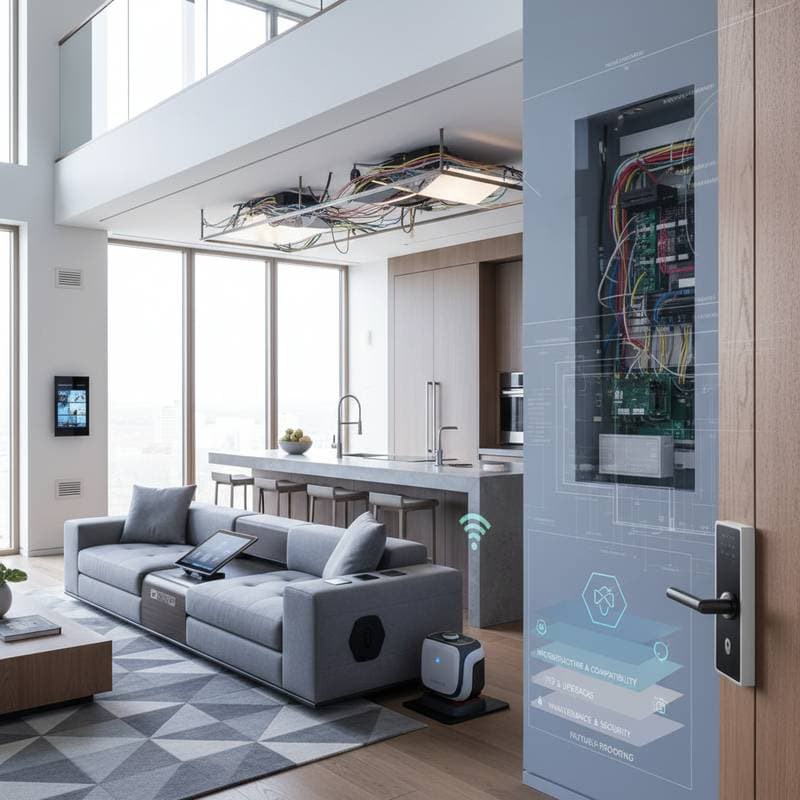
The Real Cost of Integrating Smart Technology in 2026 Remodels
Homeowners envision modern remodels that incorporate smart technology for enhanced convenience. Consider a kitchen that preheats the oven automatically, a bathroom mirror that shows daily schedules, or an HVAC system that adjusts temperatures proactively. Smart home integration has evolved from optional luxury to standard feature. However, the expenses extend beyond device prices to include wiring, compatibility, data security, and ongoing maintenance.
This guide details budgeting expectations for smart upgrades, strategies for achieving realistic returns on investment, and decisions between do-it-yourself efforts and professional services. Readers gain a structured approach to assess smart technology suitability for their remodel and ensure long-term efficiency.
Cost Breakdown for Smart Integration
Expenses for smart technology vary according to home size, current infrastructure, and desired complexity. The following table provides a practical overview of anticipated costs for remodels featuring smart elements.
| Smart Technology Category | Estimated Cost Range | Typical Return on Investment Potential | Required Skill Level for Installation |
|---|---|---|---|
| Smart Lighting | $1,000 - $6,000 | Medium; enhances energy efficiency | Moderate; do-it-yourself feasible |
| Smart Thermostat and HVAC Sensors | $400 - $3,000 | High; lowers utility expenses | Easy to moderate |
| Smart Security Systems (Cameras, Locks, Alarms) | $1,500 - $8,000 | High; elevates home value perception | Moderate to professional |
| Smart Kitchen Appliances | $2,000 - $15,000 | Medium; emphasizes convenience | Professional |
| Whole-Home Hubs and Integration Platforms | $3,000 - $12,000 | Medium to high based on automation level | Professional |
| Smart Plumbing and Leak Detection | $300 - $2,500 | High; averts water damage | Moderate |
| Voice Control and AI Assistants | $200 - $1,200 | Low to medium; supports lifestyle | Easy |
Budget approximately 10 to 15 percent of the overall remodel budget for comprehensive smart integration. In a typical mid-range project, this amounts to $8,000 to $25,000 in supplementary costs. Factor in scalability by starting with core systems and expanding as needs evolve.
Assessing Returns on Investment from Smart Features
Smart features yield varying benefits, from energy savings to increased convenience. Prioritize based on financial, functional, and lifestyle returns to optimize spending.
Returns from Energy Efficiency
Devices such as smart thermostats, window sensors, and automated lighting reduce energy consumption by 10 to 20 percent with accurate programming. These savings recoup installation expenses over several years. For instance, an HVAC system with temperature zoning automates adjustments and delivers payback through consistent utility reductions.
Functional Returns
Leak detectors, smart locks, and security cameras mitigate risks of emergencies. Preventing one incident, like a flood or break-in, justifies the investment multiple times. Although outcomes vary, these systems provide reliable protection and reassurance.
Lifestyle Returns
Voice-activated assistants, motorized blinds, and linked appliances streamline routines. Financial recovery proves limited, yet these enhancements appeal to buyers in resale scenarios. In dynamic real estate markets, such features distinguish properties effectively.
Overlooked Expenses in Smart Remodels
Budgets typically cover devices and setup, yet additional costs emerge over time. Address these proactively to avoid surprises.
Ongoing Software Fees
Security and camera setups often require monthly charges for storage or premium functions. Plan for $10 to $40 per month in cloud services. Evaluate free alternatives or local storage options to minimize recurring outlays.
Device Firmware Updates
Regular software refreshes sustain performance and security. Updates occur at no direct cost, but they demand time and may temporarily affect network operations. Schedule these during low-usage periods to maintain smooth functionality.
Enhancements for Data Security
Implement firewalls or separate IoT networks to safeguard against threats. Allocate $150 to $600 for a robust router or protective service. Conduct annual reviews to adapt to emerging risks.
Periodic Replacements
Smart components like screens, sensors, and batteries last three to five years on average. Traditional fixtures endure longer, so anticipate refresh cycles. Reserve funds for upgrades to preserve system reliability.
Essential Safety and Compliance Measures
Smart technology demands attention to electrical and data protections for safe operation.
- Adhere to local electrical codes during any wiring modifications; engage certified electricians for compliance.
- Strengthen network security with unique passwords and two-factor authentication on connected devices.
- Review privacy configurations on cameras and microphones to restrict data collection.
- Select products with UL or Energy Star certifications to verify quality and efficiency.
Neglecting these practices may invalidate warranties or introduce hazards that diminish automation benefits.
Strategies for Budgeting Smart Technology Sustainably
View smart integration as a progressive commitment rather than a single purchase. Effective management involves these steps:
- Focus initially on efficiency-driven features for tangible benefits.
- Select devices within a unified ecosystem to simplify control and avoid fragmentation.
- Set aside five percent of the original outlay annually for maintenance and updates.
- Analyze usage patterns to identify high-value elements and refine automations.
This approach aligns technology with household needs and prevents escalating complexity.
Adapting to Daily Smart Home Routines
After installation, evaluate how systems influence everyday life. Begin with simple automations, such as lights dimming at dusk or appliances activating with alarms. These adjustments build familiarity before advancing to intricate routines. Monitor interactions to eliminate redundancies and enhance overall satisfaction.