
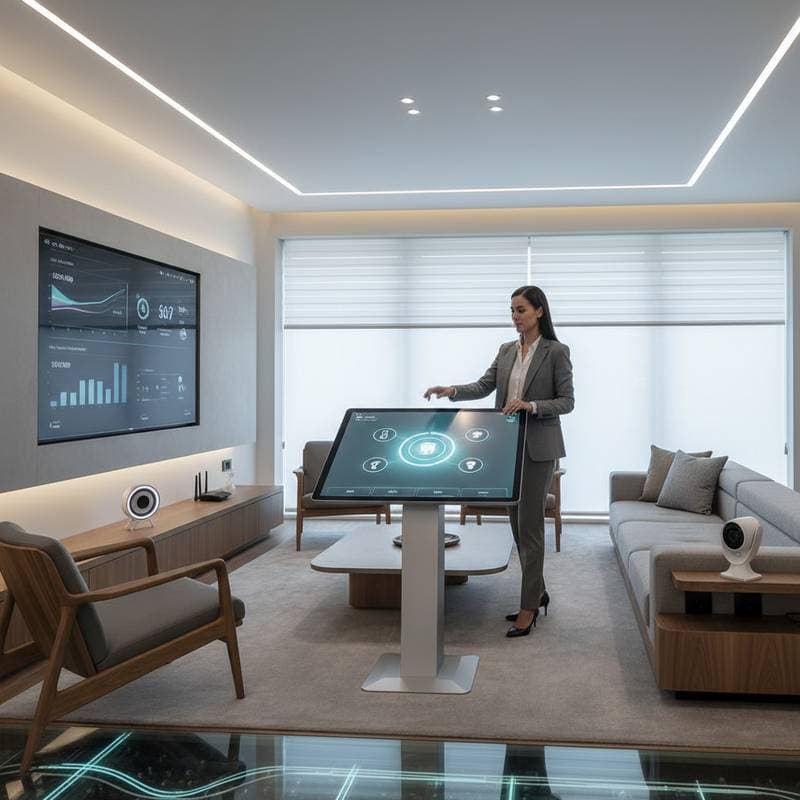
Essential 2026 Upgrades for Seamless Smart Homes
Many homeowners face the frustration of managing several apps to control lights, thermostats, and security cameras. Smart homes offer great potential for convenience, yet incompatible devices often lead to complexity. Fortunately, targeted upgrades in 2026 address these issues, fostering a cohesive system that prioritizes ease, security, and efficiency. Begin with an assessment of current devices, then implement changes step by step to achieve a unified setup.
Key Areas to Focus On
- Unified control systems that integrate devices via a single interface
- Energy-efficient automation to minimize utility costs
- Enhanced security measures with robust privacy features
- Scalable infrastructure for ongoing technological compatibility
- Diagnostic tools for proactive system maintenance
1. Centralized Hubs for Cross-Device Integration
Central hubs eliminate the need for multiple apps by enabling communication across brands. These devices connect lighting, heating, ventilation, air conditioning, and security through one platform. Quality models range from $150 to $400 and support protocols like Wi-Fi, Bluetooth, and Thread for broad compatibility.
Installation involves scanning for existing devices, which the hub detects automatically to minimize configuration time. For instance, activate a "movie mode" routine that dims lights, adjusts temperature, and closes blinds with a single voice command. This approach reduces daily hassles and ensures reliable performance across your home network.
2. Advanced Energy Management Solutions
Smart energy tools learn user patterns to optimize consumption, potentially cutting usage by 10 to 20 percent. Thermostats priced at $100 to $250 adjust temperatures based on occupancy, while plugs costing $25 to $50 each monitor individual appliances. Integrate these with utility programs that provide rebates to offset initial expenses.
Consider a scenario where lights brighten gradually at dawn to match rising sunlight, or heating systems enter eco-mode upon detecting an empty house. Track savings through built-in reports that highlight peak usage times. Over time, these adjustments not only lower bills but also promote sustainable habits.
3. Comprehensive Security Enhancements
Security upgrades protect against both physical threats and data breaches in connected environments. Select routers with integrated firewalls and automatic updates, available for $150 to $300, optimized for Internet of Things networks. Enable multi-factor authentication on apps and review third-party access permissions quarterly.
Incorporate encrypted video doorbells, locks, and sensors that alert your phone to unusual activity. For added layers, use network segmentation to isolate sensitive devices like cameras from general internet traffic. This strategy safeguards personal information while maintaining seamless operation.
4. Adaptive Lighting Systems
Dynamic lighting influences well-being by aligning with natural circadian rhythms. Smart bulbs and switches, costing $200 to $500 for a standard home, allow customization of color temperatures from energizing cool whites to soothing warms. Program scenes that transition automatically, such as morning pathways or evening wind-downs.
Path lighting activates softly upon motion in hallways, while outdoor fixtures sync with sunset times for dusk-to-dawn coverage. Studies show such systems improve focus during work hours and relaxation at night. Evaluate room-specific needs to prioritize high-impact areas like living rooms or bedrooms.
5. Evolved Voice Assistants
Modern voice assistants handle complex tasks beyond basic commands, such as orchestrating multi-device routines or detecting environmental hazards. Speakers priced from $30 to $250 vary in audio capabilities and integration depth. Privacy features include manual microphone controls to pause listening on demand.
Set up reminders for routine maintenance, like filter replacements, or automate responses to alarms by notifying emergency contacts. Pair with hubs for expanded functionality, ensuring commands execute reliably even in noisy settings. This evolution makes voice control a central, trustworthy element of daily life.
6. Future-Proof Infrastructure Investments
Reliable connectivity underpins all smart features, so upgrade to mesh Wi-Fi systems costing $200 to $600 for whole-home coverage without dead zones. During renovations, install additional Ethernet cables and outlets in key locations like home offices or entertainment areas.
These preparations accommodate emerging devices, such as high-bandwidth augmented reality systems. Test signal strength in every room post-installation and adjust node placements for optimal reach. Investing now prevents costly retrofits and supports scalability as technology advances.
7. Proactive Maintenance Strategies
Smart systems require regular attention to maintain peak performance. Built-in diagnostics in many platforms notify users of issues like signal interference or pending updates via app alerts. For hands-off oversight, professional monitoring services run $10 to $20 monthly and resolve problems remotely.
Schedule firmware checks bi-monthly and clean sensors annually to avoid false readings. Document device compatibility lists to streamline future additions. This disciplined approach minimizes downtime and extends the lifespan of your investments.
Implement Your Upgrades Strategically
Inventory existing devices to pinpoint integration challenges, then prioritize hubs or energy tools for quick wins. Research models certified for interoperability standards to avoid vendor lock-in. Budget for phased rollouts, starting with high-use areas, and monitor improvements in convenience and savings. This methodical process transforms fragmented setups into efficient, responsive homes that adapt to your needs.