
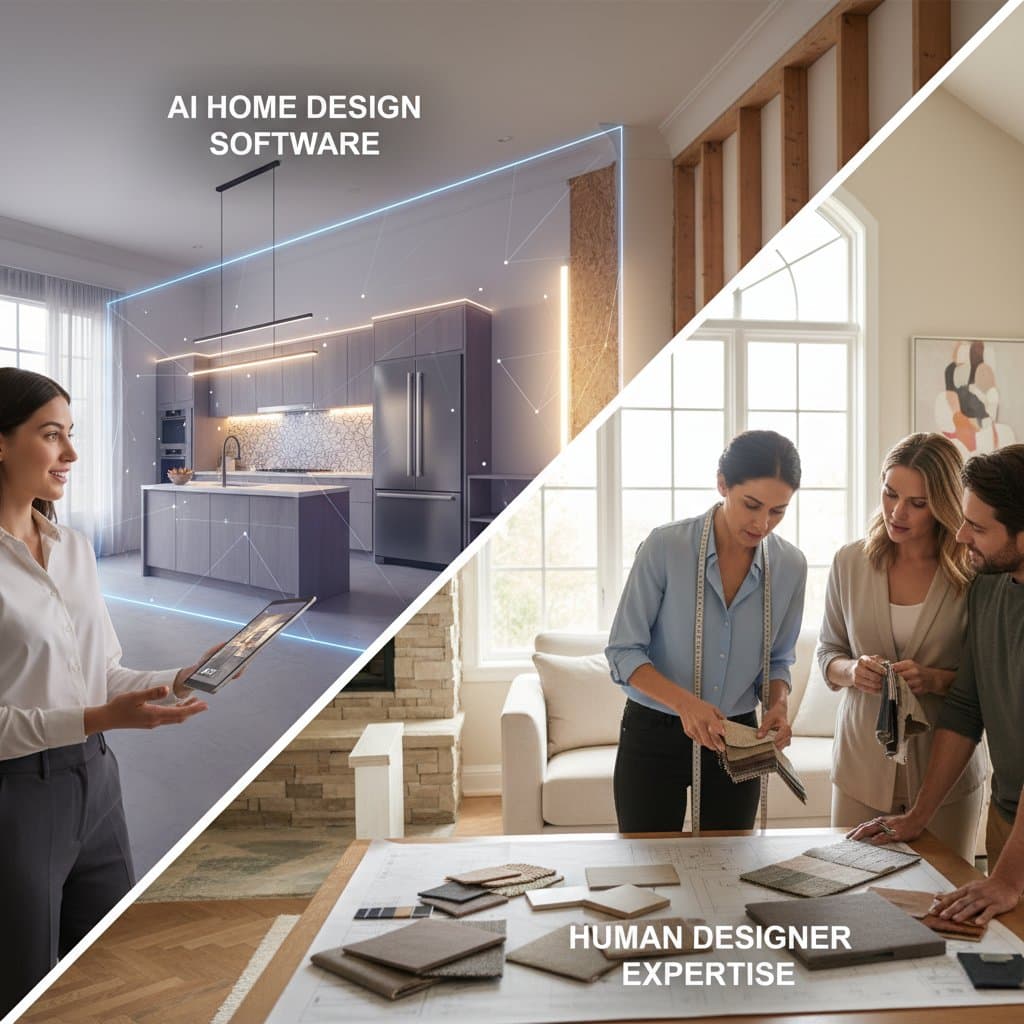
AI Tools and Designers: A Comparison for Effective Home Remodels
Home remodeling often involves uncertainty, such as selecting tiles that complement existing cabinets or envisioning a space's final appearance. Artificial intelligence introduces innovative solutions through digital tools that simulate remodels virtually. These advancements make the process more accessible and efficient.
Before selecting an AI application or engaging a professional designer, evaluate the strengths of each method. Both options enhance living spaces, yet they differ in execution. The most successful projects leverage elements from AI and human expertise.
The Value of Human Designers
AI tools generate visual representations and calculate spatial arrangements, but they lack the nuanced judgment of experienced professionals. Designers incorporate emotional resonance, contextual awareness, and innovative thinking that software cannot duplicate. They consider not only visual appeal but also the sensory experience of a space.
Designers assist with the following tasks:
- Determining a unique style that extends beyond standard digital presets.
- Ensuring adherence to building regulations, obtaining necessary permits, and upholding safety protocols.
- Procuring durable materials and coordinating with dependable contractors.
- Harmonizing visual elements with practical requirements suited to everyday routines.
Professionals typically bill hourly, with fees ranging from $75 to $250 based on qualifications and location. Although initial costs appear significant, designers mitigate expenses by preventing errors, such as mismatched dimensions or unsuitable finishes for local weather conditions.
AI's Adaptation to Individual Preferences
Contemporary design software excels at analyzing user inputs to tailor suggestions. As users modify colors, furniture placements, or room dimensions, the system updates its profile of preferences. Eventually, it proposes configurations and selections aligned with budget constraints.
These platforms draw from extensive collections of actual interiors, applying algorithms to identify harmonious pairings. Users can upload images of current rooms and receive multiple tailored proposals that align with preferred styles. This process resembles consulting a designer familiar with personal inspirations.
However, AI outputs may appear standardized due to reliance on predefined datasets. Spaces risk resembling generic displays rather than personal sanctuaries. Human designers introduce distinctive elements to infuse authenticity and character.
Addressing Safety, Regulations, and Feasibility
Artificial intelligence cannot substitute for certified experts in matters of structural integrity or legal compliance. A visually appealing digital plan might violate municipal codes. Aspects like electrical installations, water systems, support structures, and airflow demand specialized evaluation.
For projects involving modifications to the building's framework, consult a licensed contractor or structural engineer prior to implementation. This precaution safeguards investments and maintains policy protections.
In minor undertakings, AI serves as a reliable guide for aesthetic decisions, provided users confirm dimensions and specifications. Verify material suitability, particularly in high-humidity areas like kitchens and bathrooms, where resistance to water is essential.
Enhancing Collaboration Through Digital Platforms
Remote design sessions gain popularity with integrated technology. Professionals utilize AI interfaces alongside clients, facilitating simultaneous interaction via interactive project interfaces. Participants review three-dimensional renderings during video discussions, making adjustments to illumination or surfaces in real time.
This method reduces misunderstandings and streamlines communication. It also broadens access to specialists regardless of geography. Experts in styles such as Nordic minimalism or arid-region modernism become available through virtual meetings.
The outcome is a customized workflow that keeps clients engaged throughout. Individuals monitor advancements, pose inquiries, and contribute to choices without pressure or confusion.
Developing Personal Expertise in Remodeling
For beginners in home improvement, AI applications function as instructional resources. They deliver principles via responsive guidance, fostering skills for subsequent endeavors. Numerous systems offer explanations on effective color pairings or illumination strategies.
With practice, users recognize links between virtual simulations and physical execution. They learn why an online-balanced arrangement may require additional support or why specific surface treatments demand particular upkeep.
These insights cultivate proficiency, transforming novices into knowledgeable property owners capable of informed decisions.
Sustaining and Evolving Your Remodeled Space
After completion, a well-executed remodel enhances daily life and emotional well-being. AI facilitates the preview of changes, while human input ensures practical realization of visions.
Retain digital files for ongoing adjustments, ideal for periodic updates or expanding to additional areas. If collaborating with a designer, request guidance on upkeep for unique elements like custom surfaces or integrated lighting.
Remodeling establishes a lasting framework for living, socializing, and personal development. By merging technological precision with creative insight, homes become enduring expressions of individuality and comfort.