
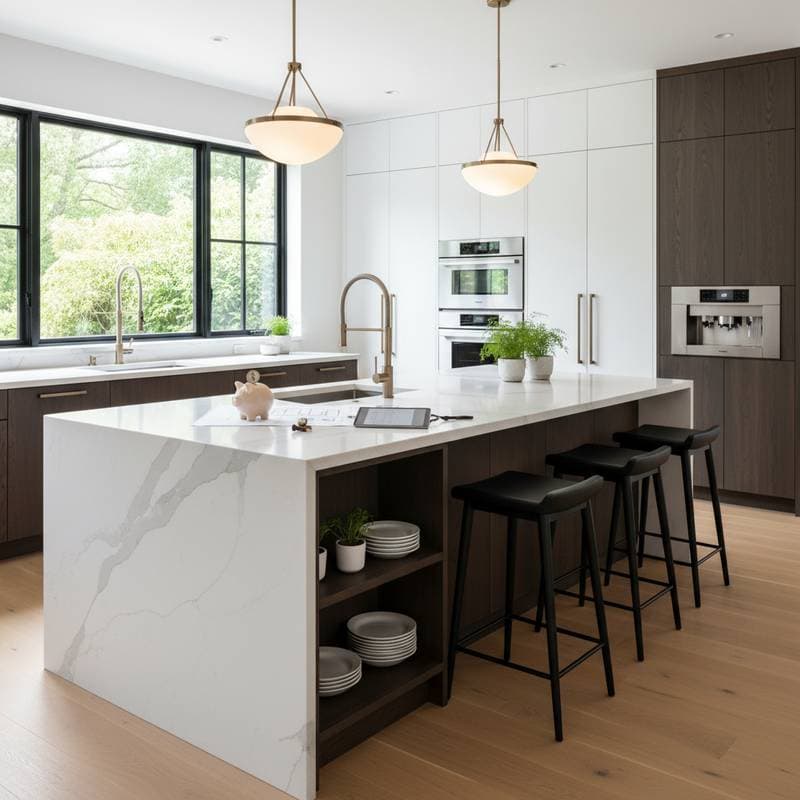
2025 Kitchen Island Costs: Real Breakdown and True ROI
Visualize the heart of your dream kitchen: a central island that facilitates cooking, gatherings, and daily routines. Before exploring design options or selecting appliances, consider the essential question: what is the actual cost of a kitchen island, and what return on investment does it provide?
This guide details realistic price ranges, installation considerations, and budgeting approaches. It also examines methods to determine the island's genuine return on investment, encompassing aesthetic appeal, practical utility, and enduring effects on property value.
Budget Frameworks for Different Homes
Kitchen remodels vary based on specific priorities. The following three frameworks illustrate budgeting strategies aligned with objectives and property valuation.
Budget Refresh ($1,500 to $4,000)
- Ideal for: Compact kitchens or rental units.
- Approach: Select prefabricated base cabinets paired with laminate or butcher block countertops.
- ROI Focus: Enhanced functionality and visual improvement without extensive structural work.
- Timeframe: One to three days for installation.
Incorporate basic features like open shelving to maximize utility in limited spaces. This level suits quick updates that deliver noticeable benefits.
Mid-Range Upgrade ($5,000 to $10,000)
- Ideal for: Homeowners intending to reside for several years.
- Approach: Choose semi-custom cabinetry, quartz or granite surfaces, and integrated electrical outlets.
- ROI Focus: Equilibrium between aesthetic enhancement and practical advantages, attractive to prospective buyers.
- Timeframe: Three to five days, including fabrication processes.
Add elements such as soft-close drawers and under-cabinet lighting to elevate daily use. Such investments balance cost with lasting appeal.
High-End Custom Build ($12,000 to $25,000+)
- Ideal for: Luxury residences or comprehensive kitchen overhauls.
- Approach: Opt for custom cabinetry, built-in appliances, and high-quality stone or concrete countertops.
- ROI Focus: Prominent visual element and superior performance that amplifies the overall kitchen's worth.
- Timeframe: One to two weeks, incorporating design collaboration.
Incorporate advanced features like wine coolers or induction cooktops for seamless integration. This tier transforms the island into a sophisticated focal point.
DIY vs. Professional Installation
Choose the installation method according to your expertise and the project's demands.
DIY-Friendly Scenarios
- Assemble prefabricated island kits available from large retailers.
- Mount butcher block tops or straightforward laminate counters.
- Attach open shelving or wheeled islands equipped with casters.
Estimated savings: Twenty to forty percent of the total expense.
Risks: Uneven leveling, unstable countertops, or breaches of building codes when utilities are involved.
Start with precise measurements and follow manufacturer guidelines to minimize errors. This option works best for straightforward assemblies.
When to Hire a Professional
- Projects that include plumbing, gas lines, or electrical wiring.
- Custom fabrication or installation of substantial stone countertops needing specialized equipment.
- Integrations with structural modifications or flooring adjustments.
Professional benefits:
- Adherence to local building regulations.
- Coverage under warranties for materials and workmanship.
- Thorough sealing and finishing to avert future deterioration.
Certified contractors charge between $50 and $150 per hour, yet they guarantee safety and longevity. For mid-range and premium projects, professional involvement typically secures superior return on investment via dependable execution.
Troubleshooting Common Cost Surprises
Well-prepared projects occasionally encounter unforeseen expenses. Review these typical challenges and mitigation strategies.
-
Underestimating countertop thickness changes
Substantial slabs demand reinforced cabinetry or additional support brackets. Verify weight tolerances prior to acquisition to avoid retrofits. -
Forgetting electrical code updates
Current regulations often mandate at least one outlet per island. Allocate funds for this requirement upfront to prevent delays during inspections. -
Overlooking flooring transitions
Extending the island's base may reveal unprotected floor areas. Maintain spare matching flooring materials or schedule refinishing concurrently. -
Miscalculating overhang space
Ensure 12 inches of countertop overhang for seating and 24 inches of width per stool to promote comfort. -
Skipping ventilation for cooktop islands
Install downdraft systems or overhead hoods to manage odors and smoke effectively, though they increase initial outlay.
Address these elements during planning to safeguard your financial plan and schedule.
Maintaining Your Investment
Regular upkeep preserves the island's appearance and performance over time.
- Seal natural stone and wood: Reapply sealant every six to twelve months to guard against stains and fissures.
- Clean gently: Employ mild soap and warm water, steering clear of abrasive products that compromise surface shine.
- Check caulking and seams: Renew seals on joints yearly to block moisture intrusion around sinks.
- Inspect hardware: Adjust drawer pulls and hinges every season to sustain proper alignment.
- Refresh finishes: Perform light sanding and oil application on butcher block to restore vitality without complete refinishing.
Establish a quarterly maintenance routine to extend the island's lifespan. Consistent care minimizes repair needs and upholds aesthetic standards.
Maximizing Long-Term Value
A thoughtfully selected and maintained kitchen island enhances daily life while contributing to property appreciation. Focus on alignments with your lifestyle and future plans to optimize both enjoyment and financial returns. Consult local real estate trends to gauge how such upgrades influence market appeal in your area.