
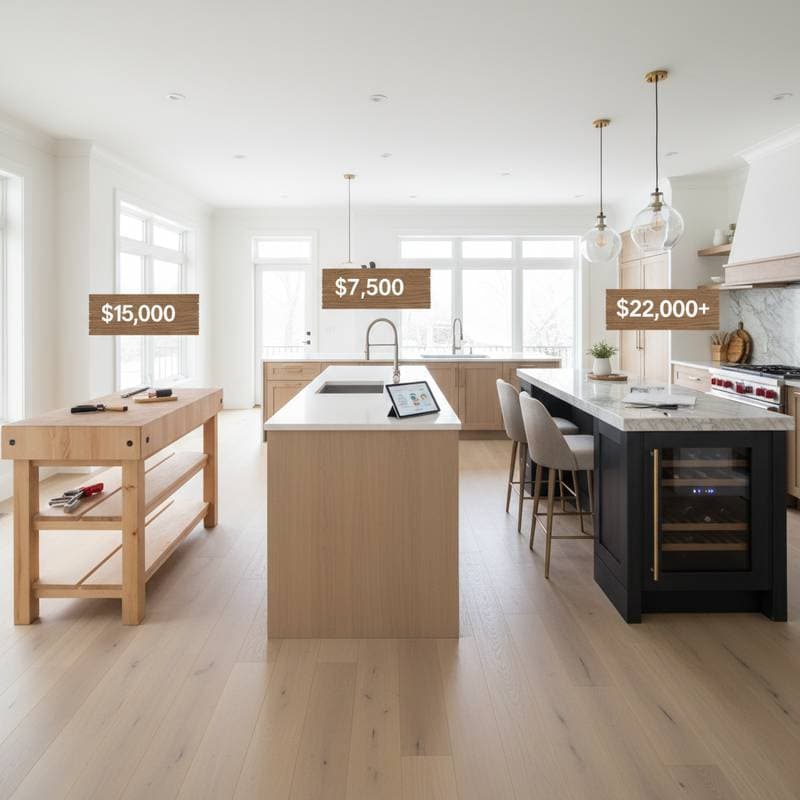
Understanding 2025 Kitchen Island Costs
Homeowners often envision a kitchen island as an essential addition that enhances preparation space and storage, yet concerns about expenses frequently cause hesitation. This uncertainty is common among those considering options from a straightforward butcher-block surface to an elegant waterfall-edge design. A clear grasp of pricing enables informed planning and prevents unexpected financial burdens.
A kitchen island serves as a versatile centerpiece for meal preparation, casual dining, and social interaction. Its cost varies based on dimensions, material selections, integrated elements, and installation demands. The following sections detail anticipated expenses, budgeting approaches, and scenarios where professional expertise proves beneficial.
Factors Influencing Kitchen Island Pricing
Significant price differences arise between a $1,200 basic unit and a $10,000 elaborate one, primarily due to scale, material quality, and practical enhancements.
Dimensions and Configuration
Standard kitchen islands range from 4 to 7 feet in length and 2 to 4 feet in width. Compact models or portable carts suit limited budgets, whereas designs accommodating seating for four individuals or incorporating a sink elevate expenses considerably. Expansive islands may necessitate subfloor reinforcements or adjustments to accommodate substantial countertops.
Practical advice: Conduct precise measurements prior to purchase or construction. Maintain at least 36 inches of clearance around all sides to facilitate safe navigation and appliance operation. Constrained areas often favor slimmer profiles or wheeled units for adaptability.
Material Selections and Surface Treatments
The countertop material represents a primary expense driver. Below is a summary of installed costs per square foot for common choices:
- Laminate: $20 to $50
- Butcher block: $40 to $100
- Quartz: $70 to $150
- Granite or marble: $60 to $200
- Concrete or exotic stone: $100 to $250
Base cabinet construction also affects the total. Stock units from medium-density fiberboard or plywood offer economy, whereas solid wood or bespoke cabinetry incurs additional charges tied to detailing and durability.
Integrated Appliances and Accessories
Each enhancement boosts functionality at an added cost, so prioritize elements aligned with daily routines.
- Sink integration: $300 to $1,200, encompassing plumbing connections
- Cooktop installation: $500 to $2,000, including electrical or gas modifications
- Power outlets or USB stations: $150 to $400 per unit
- Compact dishwasher or undercounter refrigerator: $800 to $2,500 with setup
- Overhead or pendant lighting: $250 to $1,000
Transforming the island into a dedicated workstation introduces complexities such as expanded wiring, ventilation systems, and adherence to local regulations.
Budget Scenarios for Kitchen Islands
Examine these practical examples to align expectations with financial goals.
Entry-Level Option: $800 to $2,000
This category fits rentals or compact kitchens, relying on ready-made cabinets or assembled carts. Economical surfaces like laminate or butcher block maintain affordability. Incorporate casters for portability or exposed shelving for organization.
Sample configuration:
- Stock base cabinet: $400
- Butcher-block surface: $300
- Finishes, fittings, and protective coatings: $100
- Matching stools: $200
Assembly requires minimal tools and fits into a single weekend, delivering storage and workspace without structural alterations.
Intermediate Option: $3,000 to $6,000
Suitable for standard kitchen refreshes, this tier includes modified custom cabinets, durable quartz or granite surfaces, and basic electrical additions. The outcome integrates seamlessly while remaining cost-effective.
Sample configuration:
- Modified custom cabinets: $1,500
- Quartz surface: $1,800
- Power outlets: $250
- Illumination and seating: $400
- Installation labor: $800
Completion spans three to five days, covering fabrication and on-site work.
High-End or Bespoke Option: $8,000 to $15,000 and Above
During comprehensive kitchen overhauls, a tailored island emerges as a focal element. Premium materials, embedded appliances, and meticulous execution define this range.
Sample configuration:
- Bespoke cabinetry: $3,000 to $5,000
- Cascading quartz or marble surface: $3,000
- Sink and dishwasher integration: $2,500
- Electrical and plumbing systems: $1,200
- Professional labor and detailing: $2,000
Such projects extend one to two weeks and frequently involve permits or specialist consultations.
Essential Planning Elements
Assess the overall kitchen arrangement before finalizing an island design. An effective island improves circulation rather than impeding it.
Spatial and Operational Needs
Perform thorough measurements. Allocate at least 42 inches of walkway space for multi-user efficiency. For seating arrangements, designate 24 inches per stool to ensure comfort.
Illumination and Airflow Solutions
Suspended pendant lights deliver focused illumination and aesthetic appeal. Opt for height-adjustable models to accommodate varying tasks. Cooktop inclusions demand expert evaluation of exhaust systems to uphold indoor air standards.
Compliance with Electrical Standards
Regulations typically mandate at least one GFCI-protected outlet per island for safety. Engage a licensed electrician to verify installations meet code requirements and mitigate risks.
Enhancing Home Value Through Islands
Kitchen islands rank highly among sought-after home features in real estate markets. Although returns vary, strategic additions or upgrades to islands elevate usability and market appeal.
A mid-tier installation may raise the kitchen's assessed value by 5 to 10 percent. Daily benefits extend to expanded storage, communal seating, and efficient workflows, fostering family interactions during meals, studies, or casual gatherings.
Preserving Your Kitchen Island
Regular upkeep ensures longevity and maintains visual appeal. Use neutral pH cleaners on stone surfaces and reseal granite yearly as needed. Treat butcher block with food-grade mineral oil or wax on a monthly basis to avert cracks or fading.
Inspect sealant around fixtures periodically. Secure any loose fittings or unstable seating with simple tools. Consistent care safeguards functionality and sustains the kitchen's attractiveness for future sales.
Steps to Launch Your Island Project
Begin by sketching your ideal layout and consulting measurements against budget constraints. Source materials from reputable suppliers and schedule professional assessments for complex integrations. With thoughtful preparation, your new island will elevate daily routines, blending practicality with enduring style.