
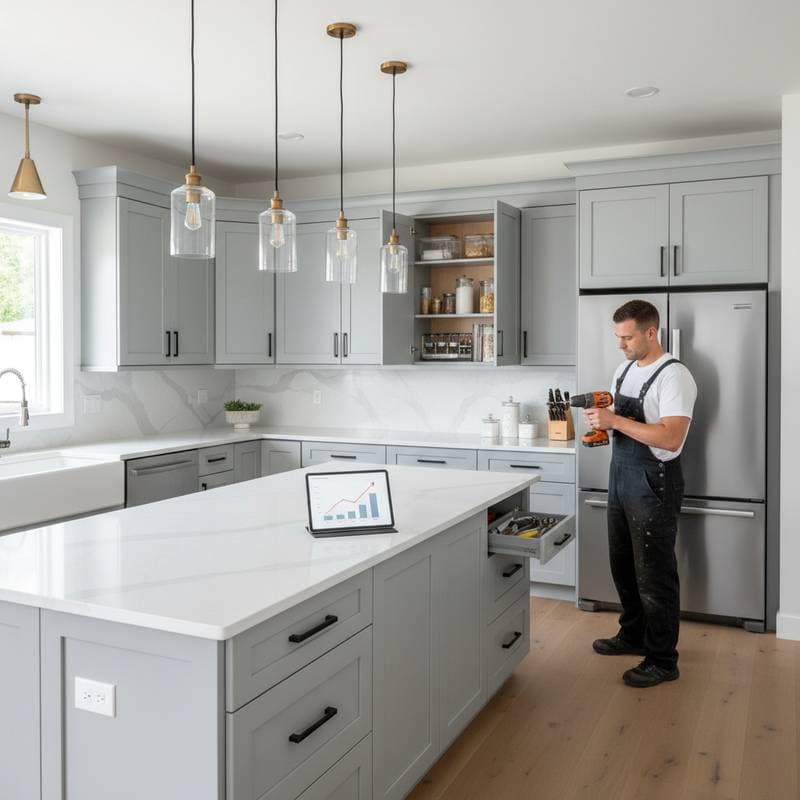
Top Kitchen Upgrades for Maximum Return on Investment in 2025
Strategic kitchen renovations can significantly increase home value. Homeowners who select updates with proven resale appeal recover a substantial portion of their costs. Focus on mid-range projects that enhance usability and visual impact without excessive spending.
1. Cabinet Refacing
Cabinet refacing updates the appearance of existing cabinets by replacing doors, veneers, and hardware. This approach refreshes the kitchen's core element at a fraction of full replacement cost. Buyers appreciate the modern look, which signals care and updates the overall style.
Average cost: $2,000 to $5,000
Estimated ROI: 75 to 85 percent
Select materials like thermofoil or wood veneer for durability and easy cleaning. Neutral colors such as white or gray provide broad appeal. Pair refacing with new handles in satin nickel or matte black for a contemporary finish.
Pro tip: Measure cabinets precisely before ordering. Professional installation ensures alignment and avoids structural issues that could complicate future repairs.
2. Countertop Replacements
New countertops serve as a focal point in any kitchen. Durable, low-maintenance surfaces like quartz or granite resist stains and scratches while elevating design. These materials align with buyer preferences for practical luxury.
Average cost: $2,000 to $6,000
Estimated ROI: 70 to 80 percent
Quartz offers seamless patterns and nonporous protection against bacteria. Butcher block provides warmth for traditional styles, though it requires regular sealing. Avoid overly trendy colors; opt for timeless neutrals to maximize appeal.
Pro insight: Integrate an undermount sink during installation for a clean edge. This detail enhances hygiene and makes the space feel more spacious.
3. Appliance Upgrades
Energy-efficient appliances represent a standard feature in modern homes. Informed buyers prioritize Energy Star certifications, and real estate professionals account for these in valuations. Updated appliances convey reliability and lower utility bills.
Average cost: $3,000 to $7,000 for a full suite
Estimated ROI: 50 to 70 percent
Match finishes across refrigerator, oven, and dishwasher for visual unity. Stainless steel endures, yet matte black or brushed nickel introduces subtle modernity. Prioritize models with quiet operation to improve the kitchen environment.
Pro tip: Select units with Wi-Fi connectivity and energy tracking. Such features demonstrate forward-thinking design and appeal to tech-savvy purchasers.
4. Lighting and Electrical Upgrades
Inadequate lighting diminishes a kitchen's potential. Proper illumination supports tasks like food preparation and enhances safety. Layered lighting creates ambiance and highlights architectural details.
Average cost: $800 to $2,500
Estimated ROI: 60 to 75 percent
Install under-cabinet LEDs for precise work areas, recessed cans for general light, and pendants for style. Dimmable options allow versatility from bright mornings to soft evenings.
Warning sign: Outdated wiring poses risks. Engage a licensed electrician to evaluate the system before new installations to prevent overloads and ensure compliance.
5. Flooring Replacement
Flooring influences the kitchen's durability and aesthetic cohesion. Resilient materials withstand spills and traffic while contributing to perceived value. Select options that complement the home's overall design.
Average cost: $2,000 to $6,000
Estimated ROI: 65 to 80 percent
Luxury vinyl planks mimic wood with superior water resistance. Engineered hardwood suits transitional spaces, and porcelain tile excels in high-moisture zones. Lighter tones expand visual space.
Pro insight: Maintain consistent hues with adjacent rooms. Seamless transitions promote harmony and make the home feel larger and more unified.
6. Backsplash Makeovers
A refreshed backsplash introduces pattern and texture without major disruption. This update protects walls from splashes and adds character. Homeowners with basic skills can complete the project over a weekend.
Average cost: $500 to $1,500
Estimated ROI: Around 70 percent
Subway tiles offer classic simplicity, while glass or ceramic mosaics deliver intricate designs. Natural stone provides organic elegance but demands sealing.
DIY tip: Employ a leveling system during installation. Apply waterproof grout to safeguard against moisture and extend the surface's lifespan.
7. Improved Storage Solutions
Effective storage eliminates clutter and optimizes workflow. Thoughtful organization turns chaotic spaces into efficient hubs. These enhancements shine in real estate photos and daily routines.
Average cost: $1,000 to $3,500
Estimated ROI: 60 to 80 percent
Incorporate pull-out pantry shelves, soft-close drawers, and corner carousels. Vertical dividers for utensils and adjustable wall racks free counter space.
Professional insight: Install custom cabinet inserts or integrated organizers. Such details convey meticulous planning and elevate buyer impressions during tours.
Deciding Between DIY and Professional Assistance
Certain upgrades suit skilled homeowners, while others require expert intervention. Distinguish these to safeguard budget, safety, and quality.
DIY-friendly upgrades:
- Painting cabinets or walls
- Applying peel-and-stick backsplashes
- Swapping cabinet hardware or faucets
- Mounting open shelving
Projects requiring professionals:
- Electrical modifications or new circuits
- Gas line connections for appliances
- Custom countertop installation
- Extensive plumbing adjustments
Faulty work may invalidate warranties or trigger code issues that hinder sales. Choose contractors with licenses, insurance, and kitchen expertise. Review portfolios and secure multiple references.
Strategies for Ongoing Kitchen Preservation
Sustained value depends on diligent upkeep. Routine care prevents deterioration and preserves functionality.
Quarterly maintenance:
- Examine caulk and grout for damage.
- Clean filters and vents in appliances.
- Check plumbing under sinks for drips.
Annual maintenance:
- Reseal stone surfaces as needed.
- Refinish wooden floors periodically.
- Verify GFCI outlets operate correctly.
Retain records of installations. These documents assist valuations and reassure prospective owners about material standards and workmanship.
Maximizing Kitchen Value Over Time
The kitchen functions as both a daily hub and a key equity driver. Targeted updates integrate practicality, style, and sustainability for enduring benefits.
For imminent sales, prioritize surface-level changes like cabinets and lighting. For long-term residency, emphasize appliances and flooring that reduce expenses. Approach each choice deliberately: solicit quotes, secure approvals, and consider impacts on comfort and marketability.
These renovations yield spaces that perform efficiently, inspire enjoyment, and strengthen financial returns.