
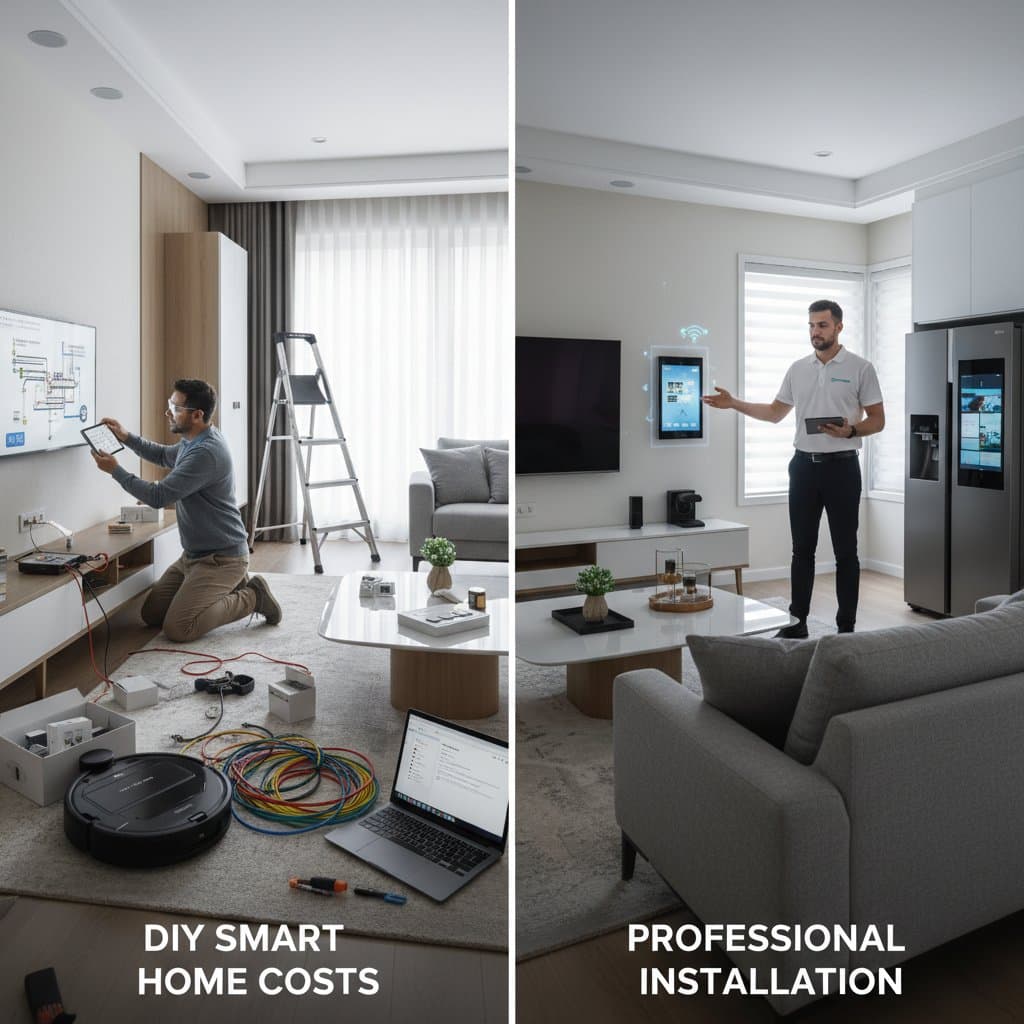
Introduction to Smart Home Setup Options
Setting up a smart home involves choosing between do-it-yourself installation and hiring professionals. Each approach carries distinct costs, from initial device purchases to ongoing maintenance. Understanding these factors helps homeowners select the method that aligns with their skills, budget, and desired outcomes.
DIY appeals to those who enjoy hands-on projects and want to minimize expenses. Professional services offer expertise for seamless results, particularly with intricate systems. This guide examines both paths, highlighting real-world cost breakdowns and scenarios where one excels over the other.
Breaking Down DIY Smart Home Costs
DIY installation focuses on purchasing devices and handling setup independently. Basic components like smart bulbs, plugs, and voice assistants typically range from $50 to $300 per unit. A starter kit with five to ten devices might total $300 to $800, depending on brand and features.
Time represents a significant hidden cost. Expect to spend 4 to 12 hours per project, factoring in research, unboxing, and troubleshooting. For complex additions such as cameras or sensors, this could extend to weekends of effort. Tools like screwdrivers, ladders, and cable testers add another $50 to $150 if not already owned.
Potential pitfalls include compatibility issues or faulty wiring, leading to returns or replacements that inflate expenses by 10 to 20 percent. However, DIY avoids labor fees, making it ideal for tech-savvy individuals with smaller homes.
Professional Installation Expenses
Hiring a professional covers device procurement, setup, and optimization. Entry-level services for a basic system start at $800 to $1,500, including labor for 4 to 8 hours at $75 to $150 per hour. Advanced setups with whole-home integration can reach $2,000 to $5,000.
These costs often include warranties, technical support, and integration with existing infrastructure. Professionals handle permits if needed for hardwired elements, avoiding code violations that could cost hundreds in fines.
The Value of Professional Expertise
A professional installer brings more than just technical skill. They understand network optimization, power requirements, and compatibility across brands. The benefits include:
- Reliable performance through proper configuration and testing.
- Clean installation with hidden wiring and neatly mounted hardware.
- Advanced integration for seamless device communication across platforms.
- Security assurance via best practices for encryption and network protection.
For busy homeowners or those less comfortable with technology, professional help saves time and reduces stress.
When Professional Setup Makes Sense
Consider a professional if:
- Installing complex systems like smart locks, thermostats, or in-wall switches.
- Integrating multiple brands under one control hub.
- Seeking guaranteed reliability and long-term support.
- Managing a large home or rental property.
Professionals often provide ongoing maintenance plans or remote monitoring, ensuring the system remains operational.
Cost Comparison: DIY Versus Professional
Directly comparing the two reveals clear differences. A DIY setup for a three-room system might cost $600 in devices plus 10 hours of personal time, valued at $200 if considering opportunity costs. Total effective expense: around $800.
The same system professionally installed totals $1,200 to $2,000, but includes expert tuning that prevents future issues. Over time, professionals may save money through efficiency and warranties, especially if errors in DIY lead to repairs costing $300 or more.
Hidden fees tip the scales. DIY risks voided warranties from improper handling, while pros charge for travel in remote areas, adding $100 to $300. In urban settings, professional rates rise due to demand, but DIY shipping for devices evens out costs.
The Hybrid Approach: Best of Both Worlds
Many homeowners blend DIY and professional elements for optimal results. This strategy leverages personal involvement for simple tasks while outsourcing technical challenges.
How a Hybrid Setup Works
Handle plug-and-play devices like smart bulbs and plugs independently. Hire professionals for wiring-intensive tasks such as:
- Smart thermostats connected to HVAC systems.
- Hardwired doorbells and security cameras.
- Central control panels or in-wall touchscreens.
This method keeps engagement high while ensuring professional quality for critical components.
Budgeting for a Hybrid Setup
A practical hybrid budget includes:
- DIY devices: $500 to $1,000.
- Professional installation for complex components: $500 to $1,200.
- Total: $1,000 to $2,200.
Such an investment yields a cohesive system that is reliable and user-friendly.
Regional and Seasonal Cost Variations
Costs vary by location and timing. Urban areas feature higher labor rates for professionals, often 20 to 30 percent above rural averages. Rural spots may lack local experts, increasing travel fees or DIY shipping expenses.
Seasonal trends influence pricing. Winter promotions on thermostats and energy devices can cut costs by 15 to 25 percent. Summer sales target outdoor lighting and cameras, offering similar savings. Align purchases with these periods to optimize budgets.
Pro Tips for Success
Adopt these practices regardless of approach:
- Start small with one or two devices to grasp automation basics before scaling.
- Prioritize compatibility by selecting products for a single app or ecosystem.
- Plan for growth, considering additions like smart blinds or irrigation.
- Document logins, device names, and installation details for easy reference.
- Test pairings before permanent mounting to avoid rework.
These steps minimize errors and enhance long-term satisfaction.
Maximizing Your Smart Home Investment
With setup complete, enjoy automated conveniences like lights adjusting for evenings or thermostats optimizing comfort. Security alerts provide reassurance during absences, while energy savings accumulate over time.
Regular software updates keep systems current with new features. Monitor performance and expand thoughtfully to sustain benefits. This balanced setup delivers comfort, security, and efficiency tailored to daily life.