
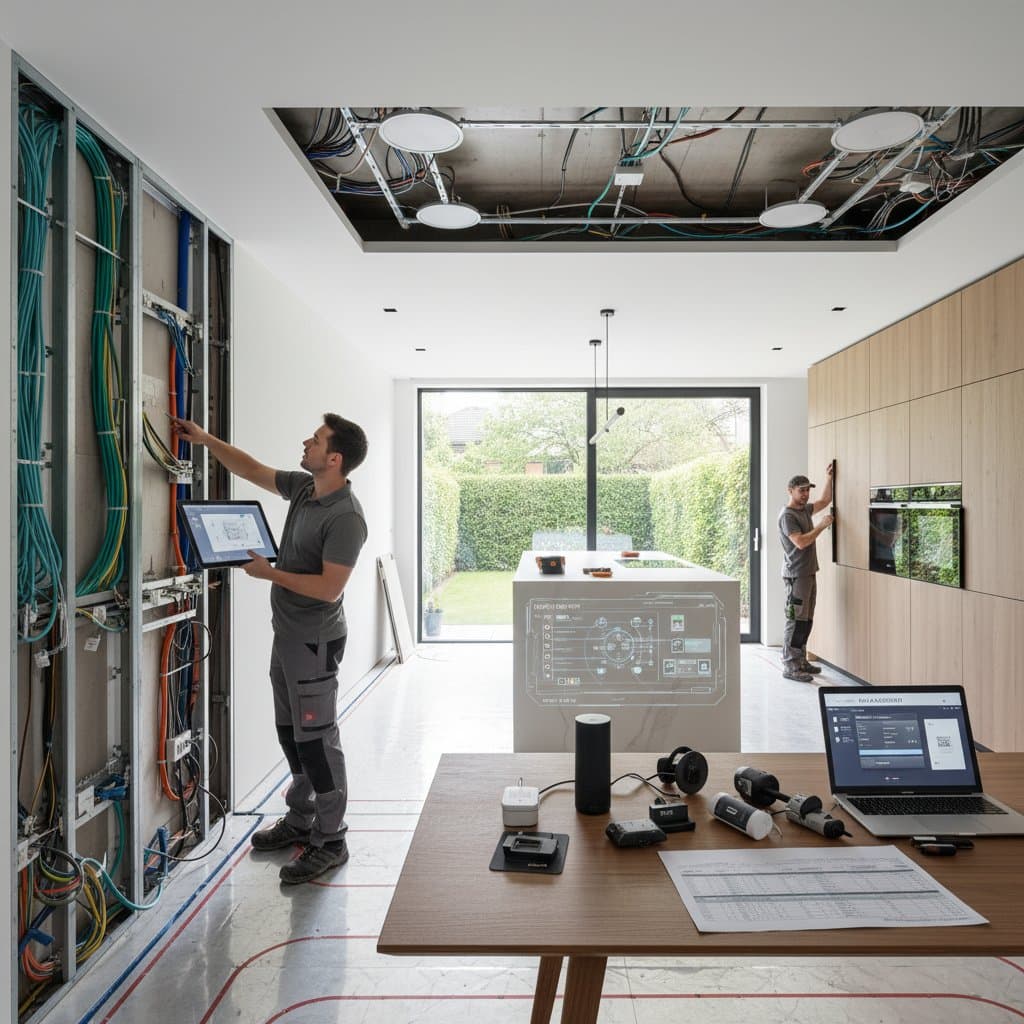
Integrate Smart Technology Seamlessly in Home Renovations
Integrating smart technology into a home renovation requires foresight to avoid complications later. Treat these upgrades as integral components of the project, rather than additions after completion. This approach ensures a connected home that supports efficiency and adaptability across spaces like kitchens, basements, or lighting setups.
Many homeowners view smart devices as complex innovations, yet current options install with minimal effort, operate via wireless connections, and adapt to individual schedules. The objective remains to embed technology subtly, making it intuitive and functional without dominating the living environment.
Design Principles for Smart Integration
Effective smart homes prioritize adaptability from the outset. During renovation planning, position wiring and power sources thoughtfully, even for devices installed at a future date. Incorporate extra conduits and neutral wires at switch locations, as these support most smart lighting configurations. Install access panels for routers, hubs, and networking gear to simplify ongoing maintenance.
Establish Robust Infrastructure
Reliable smart systems rely on solid Wi-Fi or dedicated networks. Poor connectivity frequently leads to post-installation dissatisfaction. Prior to enclosing walls, implement the following:
- Ethernet outlets in primary areas such as offices, living rooms, and bedrooms
- A dedicated network closet or cabinet to centralize equipment
- Mesh Wi-Fi access points positioned for comprehensive coverage
In homes with dense walls or multiple levels, these measures eliminate signal interruptions and reduce the need for disruptive retrofits.
Strategize Power and Device Placement
Most smart devices demand steady power supplies. Anticipate outlets adjacent to windows for automated shades, behind entertainment centers for media streamers, and close to entryways for security sensors. Select positions that remain hidden yet reachable, preventing visible cable clutter.
Advanced lighting controls might necessitate specific wiring or low-voltage lines. Collaborate with an electrician during the rough-in phase to address these needs. Confirm that your electrical setup aligns with selected devices prior to proceeding with installations.
Harmonize Aesthetics with Smart Features
A well-integrated smart home blends technology into the surroundings naturally. Concealment plays a crucial role alongside installation. Opt for in-wall mounts on control panels or select switches and thermostats in streamlined designs that complement existing finishes. In communal areas, house hubs and routers within ventilated enclosures for easy access without visual intrusion.
Align Technology with Interior Elements
Programmable lighting can accentuate structural details, artwork, or furnishings effectively. Automated window treatments respond to natural light levels, safeguarding interiors from fading while regulating climate. Audio solutions embed into ceilings or walls, preserving a polished appearance.
When engaging an interior designer, disclose smart technology intentions early in the process. Contemporary designers often partner with technology specialists to align features with overall style, ensuring harmony rather than conflict.
Address Safety and Regulatory Standards
Smart enhancements, even modest ones, involve potential safety risks. Review local electrical regulations and obtain necessary permits for any wiring alterations. Structural changes or additional circuits may demand municipal inspections prior to project sign-off.
Security devices like locks and cameras introduce privacy considerations. Select models featuring end-to-end encryption and multi-factor authentication protocols. Opt for local storage or trusted cloud services for footage. Change default credentials immediately and apply firmware updates routinely to mitigate threats.
Resolve Typical Smart Home Challenges
Advanced systems occasionally encounter operational hiccups. Signal loss, device unresponsiveness, or erratic automations represent frequent initial hurdles. Employ these targeted solutions:
- Assess Wi-Fi signal quality: Subpar coverage often underlies issues; introduce a mesh extender or reposition the primary router.
- Apply firmware updates: Legacy software frequently triggers malfunctions.
- Reconfigure automation sequences: Power disruptions may necessitate routine resets.
- Inspect power consistency: Fluctuating circuits can impair smart switches or outlets.
For ongoing difficulties, reach out to the device manufacturer or original installer. Maintain comprehensive records of setups and configurations to expedite resolutions.
Sustain and Update Your Smart Setup
Smart installations require regular upkeep, akin to other household systems. Conduct quarterly evaluations of device functionality and network performance. Swap out batteries in wireless sensors and locks promptly. Store details on installed components, including serial numbers and access credentials, in a protected digital repository.
Manage Software and Protection Protocols
Updates to software deliver enhanced interoperability and fortified defenses against vulnerabilities. Establish quarterly checks for availability. Activate automatic patching for internet-dependent devices when feasible. Periodically reboot central hubs to optimize performance and clear temporary data.
Promote Durability and Adaptability
Technology advances rapidly, yet strategic choices prolong system viability. Favor devices adhering to universal protocols with sustained vendor backing. For vital functions such as illumination or climate regulation, incorporate wired connections over sole wireless dependence. This foundation maintains reliability amid evolving standards or vendor shifts.
Experience Daily Benefits in Your Smart Home
With renovation finalized, smart features enhance routine living profoundly. Envision mornings greeted by softly rising illumination, an activated kitchen appliance, and optimized ambient conditions, all orchestrated seamlessly. Such efficiencies integrate into habits effortlessly.
Customize automation profiles to suit preferences. Develop scenarios for evening relaxation that lower lighting and seal window coverings, or away-mode simulations that mimic presence during absences. Modern platforms enable precise adjustments, tailoring responses to personal needs.
Essential Strategies for Optimal Implementation
- Initiate with targeted upgrades: Introduce select, influential devices prior to comprehensive rollout.
- Emphasize dependable selections: Prioritize products with proven performance and robust support networks.
- Incorporate backup options: Retain manual overrides for critical elements like illumination and access controls.
- Strengthen protective measures: Implement distinct credentials and verification layers.
- Archive all particulars: Organize digital collections of guides, guarantees, and configuration data.