
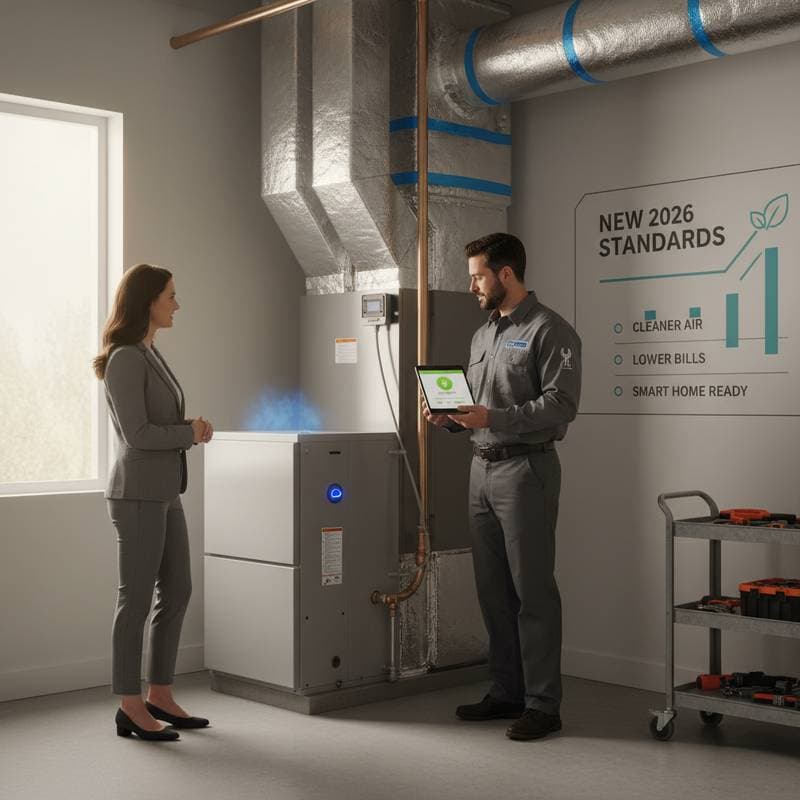
When the first warm weekend arrives and you open your windows to let in the breeze, your home suddenly reveals what winter left behind. Dusty vents indicate that your HVAC system has been working harder than necessary. The upcoming national HVAC efficiency standards represent more than a policy change; they provide a clear path to cleaner air and reduced energy costs. Regardless of whether your current system operates reliably or shows signs of age, spring presents an ideal moment to integrate comfort, expense management, and environmental responsibility.
Essential Changes in the Standards
- The regulations establish higher minimum efficiency ratings for heating and cooling equipment.
- Compliant systems enable homeowners to lower annual energy expenses by as much as 20 percent.
- Features such as smart thermostats and variable-speed compressors shift from optional enhancements to standard inclusions.
- Proactive steps now position homeowners to claim rebates and tax incentives ahead of high-demand installation periods.
Significance of the Regulatory Updates
These regulations elevate the definition of energy efficiency. Systems installed before these changes frequently waste up to 30 percent of their energy due to suboptimal design or neglected upkeep. The standards increase requirements for the Seasonal Energy Efficiency Ratio (SEER) and Heating Seasonal Performance Factor (HSPF), guaranteeing that basic models deliver equivalent comfort with reduced power consumption.
Homeowners experience tangible financial benefits from this evolution. For a typical mid-sized residence with annual heating and cooling costs of approximately one thousand dollars, a qualifying system could yield savings of two hundred dollars annually. Across a decade, these savings accumulate to cover minor home improvements or buffer against escalating utility rates. Additionally, the rules favor refrigerants with diminished global warming potential, yielding environmental advantages that enhance air quality in every conditioned space.
Steps to Assess and Optimize Your HVAC System
Spring serves as an optimal period to review your HVAC configuration prior to the onset of intense heat. Arrange a professional evaluation encompassing airflow assessments, refrigerant level verifications, and examinations of duct integrity. Such measures can enhance performance substantially, even if full replacement remains unnecessary.
- Clean or replace air filters at intervals of one to three months; clogged filters impede circulation and overburden components.
- Examine ducts for breaches or separations; applying sealant or engaging experts can recover up to 20 percent of lost efficiency.
- Install a smart thermostat designed to adapt to occupancy patterns and automate temperature adjustments.
- Verify insulation integrity in ductwork and attic areas to preserve consistent internal climates.
These interventions not only facilitate adherence to the new benchmarks but also prolong equipment durability. In many cases, targeted modifications allow aging units to satisfy interim compliance criteria.
Navigating Installation Expenses and Incentives
Costs for advanced HVAC installations fluctuate based on geographic location and system size. A complete replacement, including labor, generally falls between six thousand and twelve thousand dollars. Although initial outlays appear substantial, available rebates and programs substantially mitigate them. Utility providers frequently provide incentives from three hundred to one thousand dollars for approved installations, while federal and municipal tax credits further diminish net expenses.
During consultations with contractors, inquire about the following:
- Specific SEER and HSPF values for recommended equipment.
- Extent of warranty protection for key elements like compressors and components.
- Credentials for installation practices, as flawed execution undermines efficiency objectives.
- Applicable rebate initiatives specific to your locale.
Professionals versed in the updated standards assist in selecting configurations that balance regulatory needs with personalized comfort requirements.
Innovations Driving Efficiency Improvements
Future HVAC designs emphasize responsive performance. Variable-speed compressors modulate operation according to immediate needs, avoiding abrupt energy surges and fostering uniform temperature distribution. When integrated with intelligent thermostats, these units process data on weather forecasts, home occupancy, and utility pricing to optimize settings dynamically.
Refrigerant advancements form another cornerstone. Legacy substances release potent greenhouse gases upon leakage. The standards prioritize eco-friendly substitutes that maintain effectiveness across diverse conditions. Consequently, homeowners gain superior cooling during heat extremes without compromising ecological integrity.
Prioritizing Safety in Upgrades
HVAC modifications demand specialized knowledge, even for those with hands-on experience. Tasks involving electrical wiring, refrigerant management, and system calibration necessitate certified intervention. Unauthorized attempts risk invalidating guarantees or introducing dangers such as electrical faults or refrigerant exposure.
Owners can contribute through basic upkeep, including debris clearance around exterior units, vigilant monitoring of consumption patterns, and periodic filter servicing. When selecting service providers, confirm possession of active Environmental Protection Agency credentials for refrigerant procedures. This verification upholds adherence to safety protocols and ecological mandates.
Strategic Timing for System Replacements
Opting for spring upgrades typically incurs lower fees compared to summer rushes. Service providers enjoy greater availability, and distributors prioritize stock clearance in anticipation of seasonal peaks. For units exceeding ten years in age, timely renewal averts disruptions during high-demand periods. Modern installations also complement integrations like solar energy systems or digital monitoring platforms, enhancing enduring sustainability.
Individuals deferring full overhauls may benefit from service agreements. Routine annual servicing, priced at one hundred to two hundred dollars, extends operational longevity by multiple years. Consistent maintenance aligns older equipment with progressive efficiency expectations post-implementation.
Maximizing Long-Term Performance Benefits
Adopting standards-compliant HVAC yields advantages beyond financial relief. Spaces achieve more stable climates, humidity regulates effortlessly, and operational sounds diminish. The resulting ambiance promotes a sense of natural equilibrium, harmonizing with everyday routines.
Sustain these outcomes through regular professional checkups, consistent vent maintenance, and utility usage analysis. Gradual adjustments, such as thermostat recalibrations during absences, amplify cumulative efficiencies over time.
Practical Strategies for Ongoing Maintenance
- Swap filters immediately prior to significant seasonal shifts.
- Ensure exterior units remain unobstructed by foliage or clippings to support unrestricted ventilation.
- Program thermostats to moderate settings during unoccupied periods, easing system workload.
- Document all service records and warranty specifics for prompt access.
- Annually reassess objectives in light of emerging technologies and funding opportunities.
Embracing these standards transforms regulatory compliance into a foundation for responsive, eco-conscious home environments.