
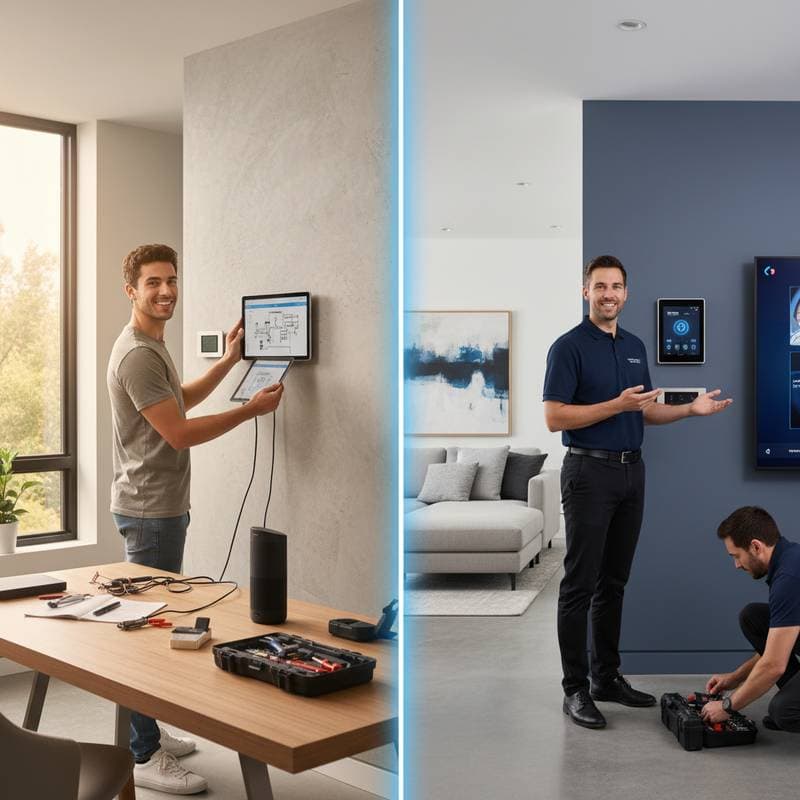
DIY vs Professional Smart Home Installation: Efficiency or Potential Pitfalls?
Imagine settling into your living room as lights automatically dim for movie night, triggered by your voice command. Moments later, the smart thermostat fine-tunes the room temperature, while a security camera captures a delivery at the door. This effortless automation stems from thoughtful choices that distinguish a convenient smart home from one plagued by issues. Homeowners often debate whether to handle installations personally or engage experts, a decision that influences daily comfort, expenses, and satisfaction.
Benefits of a DIY Smart Home Approach
The draw of DIY smart home projects lies in empowerment and customization. Modern devices feature user-friendly apps and wireless setups that simplify the process. Start with a basic kit including a central hub, door sensors, and light controls, typically priced from 200 to 400 dollars based on brand and capabilities. Expanding to cover several rooms, incorporating thermostats, cameras, and speakers, may total 800 to 2,000 dollars.
This method provides unmatched adaptability. Experiment with various gadgets, apply software updates at convenient times, and refine automation sequences to suit preferences. Homeowners often experience satisfaction when witnessing self-installed motion sensors activate lights precisely. Such involvement fosters technical proficiency and a deeper connection to the system.
However, challenges lurk beneath the surface. Troubleshooting demands significant time, as a faulty hub configuration or spotty Wi-Fi can disrupt operations. Pairing products from multiple manufacturers proves tricky without prior experience. Consider if dedicating weekends to compatibility research and device resets aligns with your lifestyle.
Advantages of Professional Smart Home Services
Engaging a certified installer transforms the setup into a streamlined endeavor. Initial consultations reveal potential obstacles, with experts assessing home layouts, Wi-Fi robustness, and integration needs. Basic professional setups range from 1,500 to 5,000 dollars, scaling with system intricacy and device volume. Extensive projects in larger residences, featuring security and audio integrations, exceed this range.
Reliability stands out as a key return on investment. Installers rigorously test components, manage updates, isolate networks for security, and adhere to protocols that casual users might miss. Certified providers extend warranties and maintenance services, reducing future interruptions. When issues arise, such as a malfunctioning camera, contact the support team rather than navigating forums independently.
Safety considerations further justify professional involvement. Elements like smart locks, electrical integrations, and cabling must comply with local regulations. Experts mitigate hazards and ensure code adherence. For those contemplating resale, documented professional installations boost home appeal by showcasing quality workmanship over ad-hoc efforts.
Integrating DIY and Professional Elements
Optimal outcomes emerge from hybrid configurations. Delegate core infrastructure, including hubs, Wi-Fi extenders, and hardwired cameras, to professionals while managing user-friendly items like smart bulbs, outlets, and sensors personally. This strategy cuts expenses by up to 40 percent versus comprehensive services, while securing essential reliability.
Hybrids support scalable growth. With a solid network foundation, incorporate additional components effortlessly. Begin with lighting automation, then advance to climate control or outdoor systems. This phased method controls initial outlays and maintains system harmony.
The hybrid path excels in skill development. Professional interventions at pivotal stages equip you with insights for ongoing management and expansions. Automation evolves as a skill honed over time, rather than a singular, overwhelming task.
Assessing Total Costs and Long-Term Value
Beyond upfront fees, smart homes yield ongoing benefits. Thermostats optimize energy use, potentially lowering bills by 10 to 20 percent. Automated lighting conserves resources and prolongs bulb durability. Qualifying security setups may qualify for insurance discounts.
Account for ancillary expenses, including cloud subscriptions, device upkeep, and hardware upgrades. Professionals highlight these during planning, whereas DIY users may encounter them unexpectedly. Evaluate total ownership costs to inform choices that maximize returns.
Practical Strategies for Effective Implementation
For DIY ventures, prioritize a robust mesh Wi-Fi network prior to device deployment. Position the hub within optimal signal range and assign labels to each connected item. Record automation settings in a dedicated log for swift issue resolution.
If opting for professionals, request detailed proposals outlining device compatibility and scalability. Verify certifications from platforms like CEDIA to ensure quality standards.
Achieving Seamless Smart Home Integration
A well-executed smart home operates intuitively, enhancing routines without drawing attention. Prioritize objectives, balance finances with quality, and select the approach that matches your expertise. This foundation allows your system to adapt and deliver sustained improvements in security, efficiency, and comfort.