
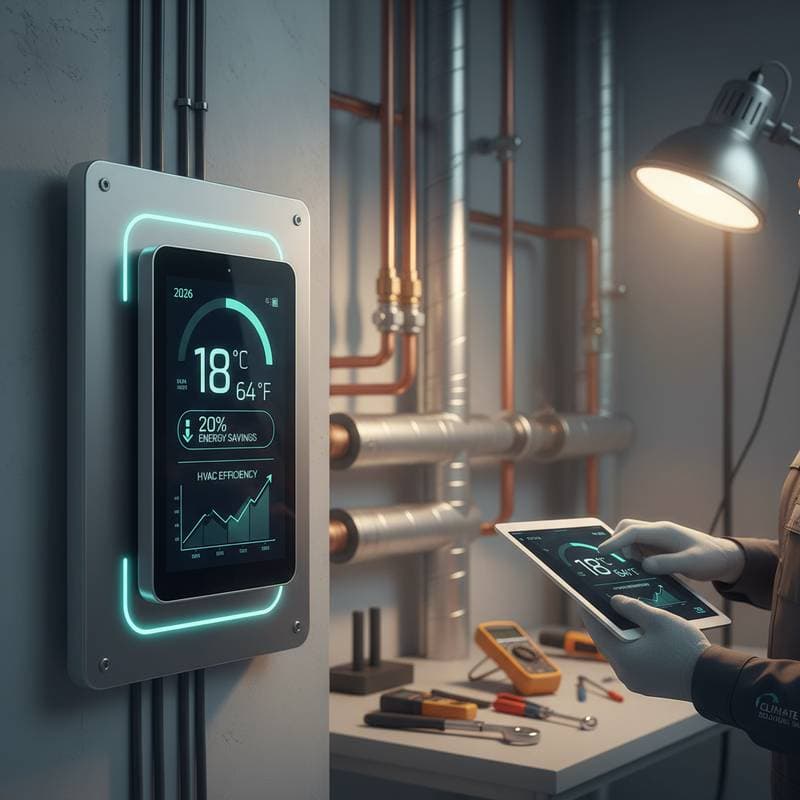
Optimize Savings: Preparing Your HVAC System with Smart Thermostats for 2026
Smart thermostats offer a straightforward solution for reducing energy expenses while maintaining home comfort without frequent manual interventions. These devices function as the central hub for advanced HVAC systems, promoting energy efficiency, consistent seasonal comfort, and substantial long-term savings. Upgrading your HVAC configuration with a smart thermostat represents one of the most accessible improvements to enhance overall home efficiency and decrease utility costs.
The Role of Smart Thermostats in Spring HVAC Preparation
Spring provides an ideal opportunity to assess your HVAC system. Mild weather facilitates maintenance tasks, while variable conditions underscore the importance of precise control. A smart thermostat adapts to your daily routine, detects unoccupied periods, and implements subtle adjustments to conserve energy without compromising comfort levels.
Traditional programmable thermostats demand manual setup, whereas smart models adjust automatically and interface directly with the HVAC equipment. Homeowners typically achieve energy reductions of 10 to 20 percent post-installation, influenced by local climate and usage habits. These savings manifest as tangible monthly decreases that accumulate significantly over time. In addition, smart thermostats prolong HVAC equipment lifespan by minimizing excessive operation cycles and averting temperature fluctuations that stress system components.
Selecting the Appropriate Smart Thermostat for Your Residence
Compatibility varies among smart thermostats and HVAC systems. Prior to purchase, verify that your setup accommodates low-voltage control wiring or supports a suitable adapter. High-efficiency furnaces, heat pumps, and multi-zone configurations often necessitate models engineered for intricate setups.
Evaluate these essential criteria when reviewing options:
- Compatibility: Confirm wiring and voltage specifications for your system.
- Smart Home Integration: Select a unit that integrates with your chosen ecosystem, such as voice assistants, central hubs, or smartphone applications.
- Geofencing and Sensors: Opt for devices equipped with motion and occupancy detection to modulate temperatures according to presence.
- Energy Reports: Prioritize models that deliver usage analytics and optimization suggestions.
- User Interface: Seek straightforward displays and responsive app functionalities.
Prices range from $130 to $300, varying by manufacturer, capabilities, and integration features. DIY installation suits simple wiring arrangements, though professional services, costing $100 to $250, guarantee proper alignment and safety.
Installation Guide: Step-by-Step Process for Smart Thermostats
Individuals proficient in basic electrical work can complete installation in less than one hour. Follow this secure procedure:
-
Disconnect Power: Switch off the HVAC system at the circuit breaker to prevent electrical hazards.
-
Detach Existing Thermostat: Label wires during disconnection and capture a photograph for guidance.
-
Secure Base Plate: Install the new thermostat's mounting plate and attach wires per the provided schematic.
-
Install Display: Reconnect power, affix the display, and complete initial configuration via on-screen prompts.
-
Establish Wi-Fi Connection: Link to your network and fine-tune settings through the accompanying application.
Halt operations if you encounter damaged wires, unstable voltage, or diagnostic alerts, and consult an HVAC specialist. Defective wiring risks harm to the thermostat and HVAC control mechanisms.
Analyzing Costs and Investment Returns
The enduring benefits of a smart thermostat center on sustained financial gains. An average 10 to 20 percent drop in monthly energy expenditures enables most users to recoup initial costs within one to two years. Subsequent annual savings provide ongoing financial advantages.
These devices enhance property marketability upon sale, as energy-conscious features appeal to prospective buyers prioritizing ease and eco-friendliness. Certain utilities provide incentives that offset installation expenses, further improving affordability.
Assess return on investment by considering:
- Regional Energy Pricing: Higher rates amplify savings potential.
- Existing HVAC Performance: Efficient systems yield greater relative benefits.
- Home Dimensions and Insulation: Larger or poorly insulated spaces benefit more from optimizations.
- Occupancy Habits: Variable schedules maximize adaptive features.
In temperate regions, remote monitoring prevents energy loss during absences, such as extended trips or daily commutes.
Deciding Between Professional Installation and DIY Approaches
Installation proves manageable for many, yet complex systems demand expert intervention. Absence of a common wire or multi-stage HVAC setups require precise professional configuration to avoid operational issues. Incorrect connections may lead to inefficient cycling, connectivity failures, or complete system malfunctions.
Experts ensure firmware compatibility and adherence to safety standards tailored to your equipment. Manufacturers may require certified installation to uphold warranty terms, so verify requirements prior to attempting self-installation.
Achieving Peak Performance Through Seasonal Adjustments
Smart thermostats demand minimal routine upkeep, but periodic seasonal tuning enhances efficiency. Conduct these evaluations each spring:
- Inspect Air Filters: Replace or clean them ahead of intense cooling periods.
- Update Firmware: Install the newest versions to unlock enhanced functionalities.
- Verify Sensor Positions: Position away from sunlight or airflow disruptions for precise readings.
- Analyze Usage Data: Identify opportunities for incremental improvements.
- Customize Schedules: Align settings with seasonal routines, like moderating cooling during open-window periods.
Such refinements promote seamless operation and mitigate expensive disruptions during peak usage.
Identifying Issues and Resolution Strategies
Connectivity interruptions, inaccurate temperature detection, or HVAC short cycling signal the need for recalibration or wiring inspection. Additional indicators include:
- Erratic Heating or Cooling: Suggests sensor or integration problems.
- Sudden System Halts: May indicate power or compatibility faults.
- Faulty Humidity Measurements: Affects overall climate control.
- Non-Functional Interfaces: Points to hardware or software glitches.
Common causes involve network instability or loose connections. Begin troubleshooting by assessing Wi-Fi strength and securing all attachments. Persistent challenges warrant assistance from manufacturer support or a qualified technician.
Expert Recommendations for Optimal Use
- Activate Geofencing: Automatically adjust based on location data for away-mode efficiency.
- Engage Adaptive Learning: Allow the device to refine schedules over time.
- Incorporate Smart Vents or Sensors: Balance temperatures across rooms for uniform comfort.
- Track Humidity: Maintain ideal levels to boost well-being and ease system workload.
- Leverage Notifications: Use app alerts for real-time usage monitoring and adjustments.
Sustaining Long-Term Benefits
Adopting a smart thermostat ranks among the most effective choices for home energy management. This upgrade delivers cost reductions, superior comfort, and extended HVAC durability with little ongoing involvement.
Incorporating intelligent controls into your annual HVAC maintenance establishes a responsive environment tailored to your needs. Through self or professional setup, this enhancement secures efficient, comfortable living and diminished energy expenses well into the future.