
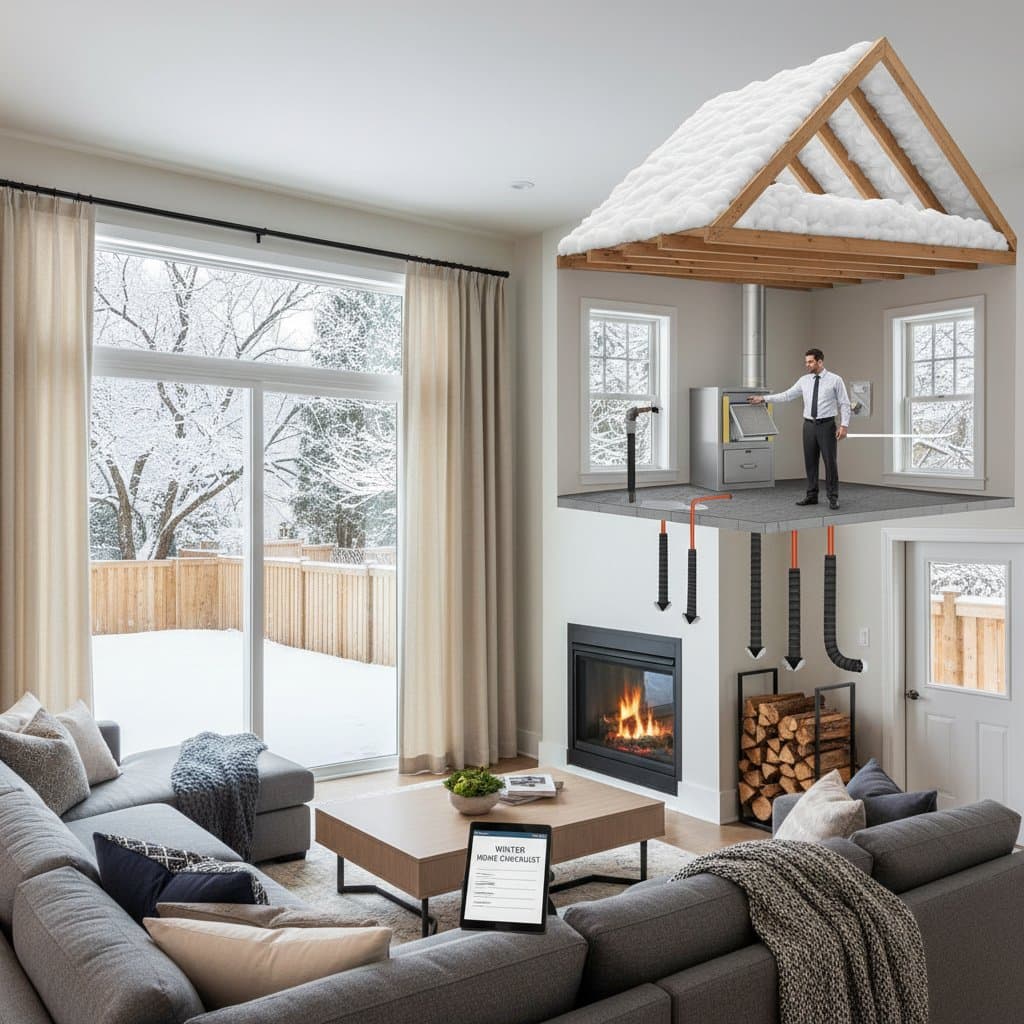
Essential Steps to Winterize Your Home Before Cold Weather Arrives
Windows that rattle in the wind or hallways that carry chills signal the need for immediate action. Winter arrives subtly, yet it soon demands extra layers indoors and prompts questions about escalating heating costs. Fortunately, preparing your home requires straightforward efforts, achievable over a weekend with limited spending and basic tools.
This guide outlines effective, economical measures to maintain warmth, optimize performance, and equip your residence for seasonal challenges.
1. Seal Air Leaks and Add Insulation for Optimal Warmth
Detectable cold air around baseboards, electrical outlets, or window edges indicates significant heat loss. Such leaks account for up to 25 percent of a home's energy consumption, impacting both livability and finances.
Identifying Drafts
Circulate through your living spaces holding a lit incense stick or a narrow tissue strip close to potential breach sites. Movement in the smoke or paper reveals air infiltration. Frequent sources encompass window casings, door sills, and access points to the attic.
Effective Sealing Solutions
- Apply weatherstripping: This measure, priced at $10 to $25 per door, blocks drafts promptly and durably.
- Caulk openings: Use acrylic latex caulk to fill fissures near windows and moldings, providing a smooth, paint-compatible seal.
- Enhance attic insulation: Install fiberglass batts or blown-in cellulose to yield annual savings of several hundred dollars on heating. Materials for a modest attic typically cost $300 to $600 for a self-directed effort.
Attics with less than 10 inches of existing insulation benefit from additional layers. Warm air ascends, and inadequate barriers allow it to dissipate through the roof structure.
2. Safeguard Pipes and Plumbing Against Freezing
Exposed pipes in unheated areas like basements, crawl spaces, or exterior walls risk bursting when temperatures drop. Proactive insulation prevents water damage and unexpected repair bills.
Key Protection Methods
- Insulate vulnerable pipes: Wrap exposed lines with foam sleeves or fiberglass tape, available for $20 to $50 per kit. Focus on sections near exterior walls or in garages.
- Disconnect and drain outdoor faucets: Shut off valves and allow water to empty from hoses and spigots to avoid ice expansion.
- Add heat tape if needed: For persistently cold zones, install self-regulating heat cables along pipes, following manufacturer guidelines for safe operation.
These steps require minimal time and ensure plumbing reliability, especially in regions prone to subfreezing conditions.
3. Service and Optimize Your Heating System
Furnaces and heat pumps endure peak demands in low temperatures, making preseason care essential to avert failures.
Routine Maintenance Procedures
- Install new air filters: Exchange them monthly during active seasons. Dirty filters hinder performance and increase system stress.
- Examine vents and registers: Confirm they remain unobstructed and fully accessible.
- Clear the blower and ductwork: Remove accumulated dust to promote unrestricted airflow.
- Arrange a professional inspection: Engage a certified technician for a comprehensive checkup, costing $100 to $200. This investment far outweighs the expense of urgent fixes.
For residences featuring fireplaces or wood-burning stoves, secure a chimney cleaning from a specialist to eliminate creosote deposits, a potential fire risk. Services generally range from $150 to $300 based on setup intricacy.
4. Maintain the Exterior and Gutters for Structural Integrity
The outer shell of your home endures harsh elements, and timely upkeep thwarts water intrusion, ice buildup, and foundational issues.
Roof and Gutter Care
- Clear gutters completely: Accumulated leaves and refuse hold moisture that freezes into damaging dams.
- Assess roof shingles: Secure or replace any that appear damaged or displaced.
- Fit gutter guards: These devices minimize ongoing debris collection and facilitate smooth drainage.
Comprehensive Exterior Review
- Prune overhanging tree limbs away from the roofline.
- Scan siding for separations or compromised sections.
- Verify functionality of exterior lighting for secure navigation.
- Secure or store outdoor furnishings and equipment to resist corrosion and displacement.
5. Verify Safety Equipment and Assemble Emergency Resources
Severe weather events may disrupt electricity or access, underscoring the importance of readiness. These verifications demand under an hour yet provide substantial security.
- Test smoke and carbon monoxide alarms: Swap out batteries as necessary.
- Position flashlights with spare batteries in accessible spots.
- Reserve salt or sand for treating slick pathways.
- Compile an emergency supply kit: Incorporate bottled water, shelf-stable meals, warm coverings, and basic medical supplies.
- Examine portable heaters: Ensure wiring integrity and maintain clearance from combustibles.
6. Assess and Improve Overall Energy Performance
With seals in place and preparations complete, analyze broader consumption patterns. A certified energy assessment, priced at $200 to $400, identifies overlooked waste areas. Numerous providers subsidize or waive fees for such evaluations. Resulting analyses typically suggest targeted actions, such as improving attic airflow, tightening ducts, or adopting automated temperature controls.
For independent efforts, connect a digital power tracker to monitor appliance draw and detect excess usage. Basic adjustments, including disconnecting standby devices or converting to energy-efficient lighting, further curb demands while elevating comfort levels.
Practical Strategies for Effective Implementation
- Initiate preparations promptly: Address tasks well ahead of initial freezes.
- Proceed outward to inward: Block external cold sources prior to internal adjustments.
- Organize supplies efficiently: Designate storage for sealants, strips, and wraps to enable swift reapplications.
- Record all efforts: Capture images of completed work to support insurance claims or property evaluations.
- Prioritize safety: Consult professionals for any electrical or load-bearing concerns, as expert intervention ensures reliable outcomes.
Achieve Sustained Comfort Through Proactive Measures
Following the completion of these preparations, enhancements become evident without delay. Indoor air stabilizes, surfaces retain warmth, and heating equipment operates with reduced noise. Your home emerges resilient, efficient, and inviting amid winter's demands.