
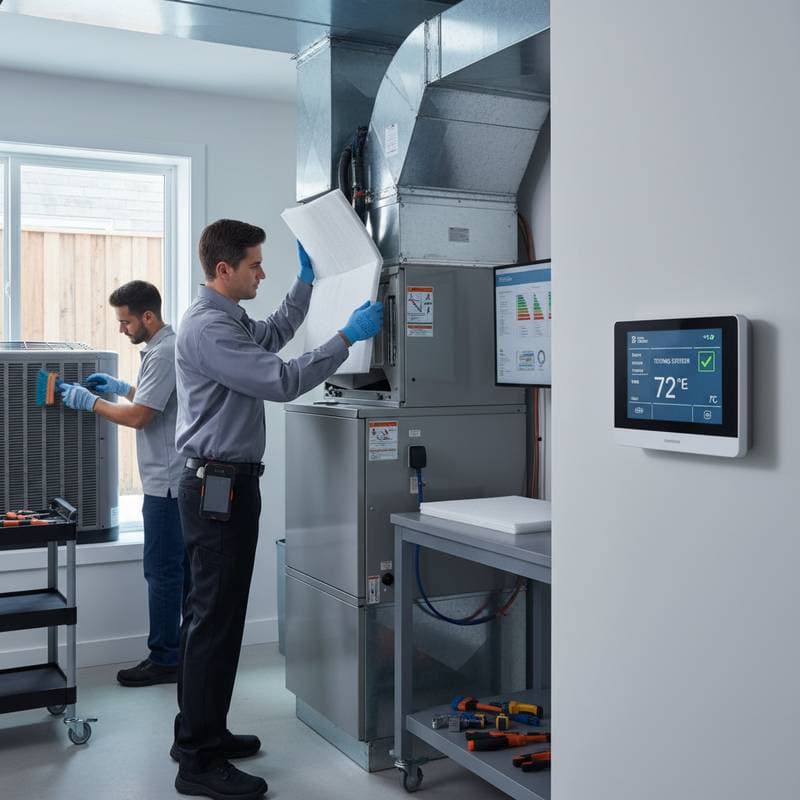
Essential HVAC Preparation for Spring Efficiency
The first warm day arrives, and you activate the air conditioning only to encounter dusty air or unusual noises. Such experiences highlight the importance of spring HVAC preparation. Following a winter of heating demands, the system requires care to transition effectively to cooling. Investing time in maintenance now prevents discomfort, elevates costs, and avoids emergency repairs during peak summer heat.
This guide provides a structured approach to spring HVAC tasks. Homeowners with varying skill levels will discover suitable options, from basic DIY efforts to professional services, ensuring optimal performance and savings.
Step 1: Replace or Clean the Air Filter
Air filters serve as the first line of defense against dust and debris in your HVAC system. A dirty filter impedes airflow, compels the unit to operate with greater effort, and increases energy consumption by up to 15 percent. Regular attention to this component delivers immediate improvements in efficiency and indoor air quality.
Actions to take:
- Determine the filter size and type by consulting your unit manual or removing the existing filter.
- Select disposable filters, priced from 10 to 30 dollars each, or invest in reusable models that endure for years with routine cleaning.
- Exchange disposable filters or rinse reusable ones every one to three months, adjusting frequency based on household factors such as dust accumulation, pet presence, or allergy concerns.
A well-maintained filter enhances system operation and promotes healthier air circulation throughout the home.
Step 2: Clean the Outdoor Condenser Unit
The outdoor condenser unit expels heat from your home, but debris like leaves, dirt, and grass clippings can obstruct its performance. Accumulated buildup reduces cooling capacity and strains the compressor, leading to higher energy use and potential failures. Clearing this area restores proper function and extends equipment durability.
Cleaning procedures:
- Turn off power to the unit at the breaker to ensure safety.
- Gently remove vegetation and debris from the unit's exterior and surrounding area, maintaining at least two feet of clearance.
- Straighten bent fins on the coils using a fin comb tool, available for under 10 dollars at hardware stores.
- Hose down the coils with a garden hose on low pressure, avoiding high-force sprays that could bend components.
For units in hard-to-reach locations or with heavy soiling, consider professional cleaning services, which typically cost 100 to 200 dollars. This step alone can boost efficiency by improving heat dissipation.
Step 3: Inspect Ducts and Vents
Ducts and vents form the pathways for conditioned air, yet leaks and dust accumulation compromise their effectiveness. Sealed ducts prevent the loss of up to 30 percent of cooled air, while clean vents minimize allergen distribution. Addressing these elements ensures even temperature control and reduced operational strain.
Inspection and maintenance steps:
- Detach vent covers and use a vacuum with a brush attachment to remove dust and lint.
- Examine duct connections at walls, ceilings, and floors for gaps, separations, or deterioration.
- Apply foil-backed tape to seal minor leaks; avoid standard cloth duct tape, which degrades over time.
- Engage a certified technician for comprehensive duct cleaning and sealing if access proves difficult or issues appear extensive, with services ranging from 300 to 600 dollars.
Enhanced duct integrity accelerates cooling times and conserves energy, contributing to noticeable bill reductions.
Step 4: Test and Calibrate the Thermostat
The thermostat regulates your HVAC system's operation, and inaccuracies can lead to overworking or inefficient cycles. A malfunctioning unit might maintain incorrect temperatures, resulting in unnecessary energy expenditure. Proper calibration optimizes control and supports consistent comfort.
Testing methods:
- Verify the thermostat setting against an independent thermometer placed nearby.
- For programmable models, confirm schedules align with your daily routines and adjust for energy savings during unoccupied periods.
- Clean the thermostat surface and replace batteries if the display dims or functions erratically.
- If discrepancies persist or the unit fails to respond, install a new smart thermostat, costing 50 to 250 dollars, or seek professional recalibration.
An accurate thermostat fine-tunes system performance, preventing excessive runtime and promoting precise climate management.
Step 5: Clean the Condensate Drain Line
Air conditioners dehumidify indoor air, directing excess moisture through a drain line. Blockages from algae or debris cause water backups, fostering leaks, mold, and structural damage. Routine clearing safeguards the system and maintains hygienic operation.
DIY clearing techniques:
- Identify the drain line, typically a PVC pipe exiting the indoor evaporator coil.
- Flush the line with one cup of distilled vinegar or a diluted bleach solution to dissolve buildup.
- Attach a wet-dry vacuum to the end of the line and suction out stubborn obstructions if water pools or odors emerge.
- Install a drain line tablet, available for 5 to 10 dollars, to inhibit future algae growth.
Prompt attention to the drain line averts water-related repairs, which can exceed 500 dollars if ignored.
Safety Considerations and Professional Boundaries
DIY maintenance offers empowerment, yet certain tasks demand expert intervention to avoid hazards. Refrigerant handling requires certification due to environmental regulations and health risks; electrical diagnostics prevent shocks or fires; and coil repairs necessitate specialized equipment. Homeowners should limit efforts to accessible cleaning, filter changes, and inspections.
When signs of complex problems appear, such as persistent leaks or unusual performance, contact licensed HVAC professionals. They possess the training and tools to diagnose and resolve issues safely, often under warranty protections.
Professional Recommendations for Optimal Results
- Mark installation dates on filters to maintain a regular schedule.
- Monitor startup sounds for deviations, as alterations may indicate component wear.
- Inspect insulation on refrigerant lines for wear, replacing sections as needed to prevent energy loss.
- Document all maintenance activities and service history to inform future decisions and warranty claims.
Regular adherence to these practices yields compounding benefits, far outweighing occasional oversights.
Achieve Lasting Comfort and Efficiency
Spring HVAC preparation transforms potential vulnerabilities into strengths. Through these steps, homeowners secure reliable cooling, healthier air, and substantial savings. Implement them to enjoy a seamless transition into warmer months, free from the disruptions of neglected systems.