
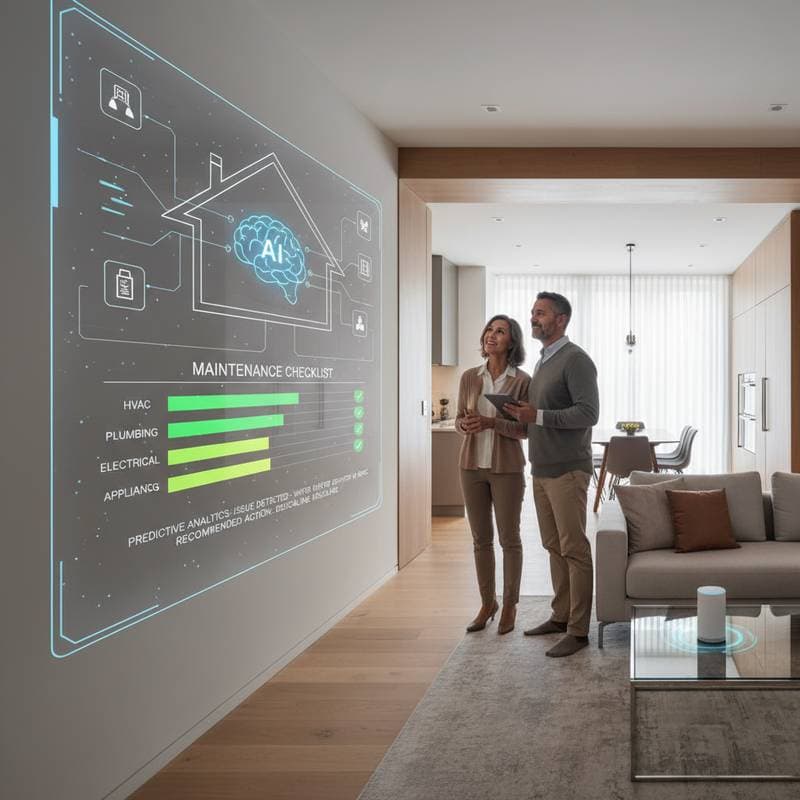
AI Checklists Revolutionizing Home Maintenance in 2026
Homeowners often face the challenge of identifying minor issues like a dripping faucet or a flickering light before they escalate into major problems. These overlooked details can lead to overwhelming maintenance demands and significant repair expenses. AI-powered home maintenance checklists address this by proactively flagging potential issues through integrated sensors, predictive analytics, and real-time monitoring. This approach enables homeowners to maintain their properties efficiently, reduce costs, and prolong the lifespan of essential systems.
The AI checklist represents a comprehensive solution that merges automation, data analysis, and informed decision-making. Homeowners receive targeted notifications, such as alerts for HVAC air filter replacement or a ten percent decline in water heater efficiency. These tools foster confidence in the safe and optimal operation of home systems, transforming routine upkeep into a streamlined process.
How AI Checklists Function
AI checklists rely on three integrated components to develop an adaptive maintenance strategy.
Data Collection via Smart Sensors
Sensors installed across the home gather continuous data on variables including temperature, humidity, vibration, water flow, and energy usage. These devices identify subtle anomalies that routine human checks might overlook. For instance, a gradual rise in water pressure could indicate an emerging leak, while minor voltage variations might suggest electrical wiring concerns. The system compiles this information into a centralized dashboard for comprehensive oversight.
Predictive Analysis and Task Prioritization
Machine learning algorithms process the collected data to detect patterns signaling wear, reduced efficiency, or impending failures. Based on this analysis, the system generates a dynamic checklist that prioritizes tasks according to urgency and financial implications. Rather than issuing fixed reminders like gutter cleaning twice annually, the checklist adapts to factors such as local rainfall patterns, debris accumulation detected by roof-mounted sensors, or the material age of the gutters.
User Engagement and Guidance
Interaction occurs via a mobile application or voice-activated assistant, allowing users to approve, postpone, or assign tasks with ease. The system provides recommendations for simple do-it-yourself solutions or referrals to qualified professionals for intricate repairs. Advanced integrations connect with service networks to automate scheduling when critical issues arise.
Building an Effective AI Maintenance System
Homeowners can maximize the benefits of AI technology by adopting a methodical framework that integrates automation with personal oversight.
Identify Key Maintenance Areas
Segment the home into primary categories: structural elements, heating and ventilation systems, plumbing, electrical infrastructure, and household appliances. The AI platform monitors each area separately, producing tailored checklists that align with specific requirements. This zoning approach ensures focused attention on high-priority zones.
Deploy Integrated Smart Devices
Opt for sensors and controllers compatible with the chosen AI ecosystem. Install water flow monitors in plumbing lines, vibration detectors on large appliances, and climate sensors in attics or basements. A more extensive sensor array enhances the precision of predictive insights and overall system reliability.
Set Personalized Notifications
Adjust alert parameters to reflect individual preferences for maintenance responsiveness. Configure thresholds, such as triggering HVAC filter notifications at a defined efficiency threshold instead of fixed intervals. This customization minimizes unnecessary interruptions while emphasizing essential actions.
Incorporate Feedback for Continuous Improvement
AI platforms evolve with user input. After completing a task, log the details in the application and note any observations on results. Through this process, the system adapts to the homeowner's routines, favored service providers, and environmental specifics, thereby sharpening future recommendations.
Addressing Typical AI System Challenges
Advanced systems require occasional adjustments to perform optimally. The following outlines prevalent issues and resolution strategies.
Managing Inaccurate Notifications
Frequent alerts for negligible concerns warrant sensitivity recalibration. Establish sensor baselines aligned with standard home conditions, accounting for normal variations in humidity or electrical usage. This refinement reduces alert fatigue and improves relevance.
Resolving Device Compatibility Problems
Smart devices often employ varied protocols like Wi-Fi or Zigbee. During initial setup, confirm interoperability across all components to facilitate seamless data exchange. A unified platform prevents disruptions in sensor-to-hub communication.
Safeguarding Data Security
These systems amass extensive operational details about the home. Select providers offering robust encryption and clear privacy protocols. Prioritize options that enable local data storage or grant users complete authority over cloud-based sharing.
Balancing Automation with Personal Oversight
Automation enhances efficiency but serves best as a supplement to human evaluation. Rely on the AI checklist for guidance while maintaining periodic visual assessments and hands-on verifications. This hybrid method ensures comprehensive home care.
Adapting to Local and Seasonal Variations
AI checklists tailor recommendations to geographic and temporal influences. In high-humidity areas, emphasis falls on mold prevention through moisture tracking and corrosion safeguards. Colder climates prompt focus on insulation integrity and pipe freeze protection via predictive modeling.
Examples of Seasonal Adjustments:
- Spring: Evaluate roofs post-storm activity, clear gutters, and tune HVAC units for warmer weather.
- Summer: Optimize irrigation setups and audit energy consumption for peak efficiency.
- Fall: Prepare furnaces, seal windows against drafts, and inspect exterior surfaces for protective coatings.
- Winter: Monitor for pipe freezing risks and test emergency power sources.
Such flexibility renders the system versatile for diverse locations and ensures year-round applicability.
Implementing AI for Long-Term Home Benefits
Adopting an AI maintenance checklist demands no comprehensive smart home retrofit. Initiate with a single area, like HVAC surveillance, and scale gradually upon observing tangible outcomes. As the system familiarizes itself with the property's patterns, it delivers increasingly precise foresight into upkeep requirements. Homeowners ultimately enjoy reduced expenses, enhanced safety, and sustained property value through proactive care.