
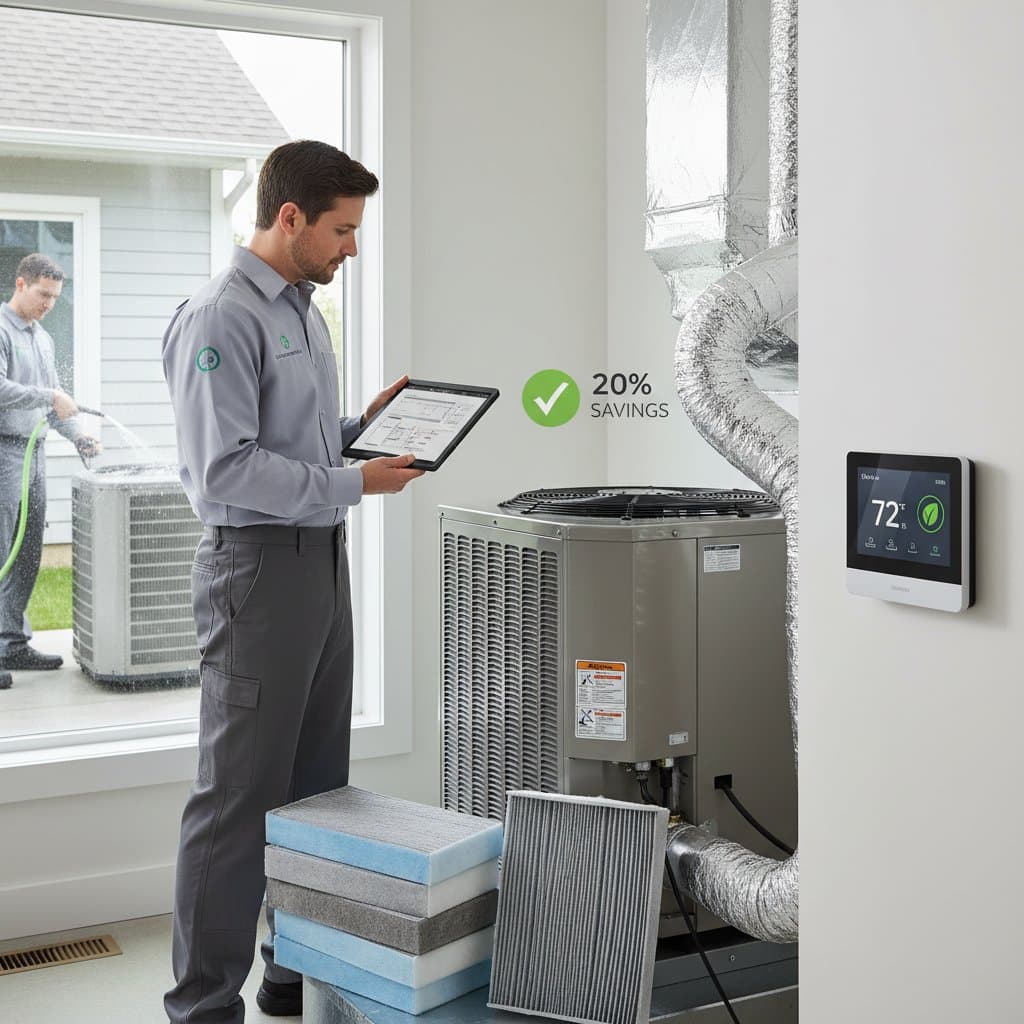
Spring HVAC Checklist: Cut Energy Costs Now
The first warm breeze of spring always seems to carry a quiet invitation to reset. You open the windows, shake out the rugs, and maybe even think about repainting that hallway. But there is one system in your home that deserves just as much attention as your décor, and it rarely gets it until something goes wrong. Your HVAC system is about to become the hardest working appliance in your home again, and a little early care can trim energy bills while keeping your space comfortable.
Key Points
- A clean, tuned HVAC system can reduce energy costs by up to 20 percent.
- Most homeowners can complete basic maintenance tasks in a single afternoon.
- Professional inspection once per year can extend system life by several seasons.
- Small upgrades, such as smart thermostats or better filters, pay for themselves quickly.
Start with the Filter
The air filter is your system’s first line of defense against dust and debris. When it is clogged, your HVAC unit has to work harder to pull air through, wasting energy and wearing down components.
Replace your filter every one to three months, depending on your environment and usage. A standard fiberglass filter costs as little as ten dollars, while high-efficiency pleated models run closer to thirty. If you have pets or allergies, invest in a filter with a higher MERV rating for improved air quality.
Hold the old filter up to the light. If you cannot see through it, it is overdue for replacement. This simple step often lowers your monthly energy bill and improves airflow almost immediately.
Clean the Outdoor Unit
Once temperatures rise, debris around your outdoor condenser can cause serious efficiency issues. Fallen leaves, sticks, and dirt block airflow, forcing the system to overheat.
Turn off power at the breaker before any cleaning. Then remove the top grille carefully and use a soft brush or vacuum to clear out visible debris. You can rinse the coils gently with a garden hose, but never use a pressure washer. Maintain at least two feet of clearance around the unit for adequate ventilation.
This small effort prevents expensive compressor strain and can extend the system’s life by several years.
Inspect Ductwork for Leaks
Leaky ducts are one of the most common causes of wasted energy. Even tiny gaps allow cooled air to escape into attics or crawl spaces.
Look for visible connections where ducts meet, especially near vents or bends. If you feel air escaping, seal those spots with foil tape or mastic sealant. Avoid cloth-backed duct tape, which breaks down easily.
Professional duct sealing typically costs between three hundred and six hundred dollars, but the savings can reach two hundred dollars per year in energy costs, making it a worthwhile investment.
Check the Thermostat
Smart thermostats have become the quiet heroes of efficient homes. They learn your patterns, adjust temperatures automatically, and can cut energy use by ten percent or more.
If you already have a programmable thermostat, review your settings. Make sure cooling schedules match your current routine. A simple adjustment, like raising the temperature by two degrees when you are away, can make a noticeable difference without sacrificing comfort.
For homeowners still using a manual thermostat, upgrading to a smart model costs around one hundred to two hundred fifty dollars, and many utility companies offer rebates.
Schedule a Professional Inspection
Even a confident DIYer should schedule professional maintenance once per year. A licensed technician checks refrigerant levels, cleans internal coils, calibrates controls, and ensures safety systems operate correctly.
This service usually costs between one hundred and two hundred dollars, depending on your region and the system’s size. It is a small upfront cost that prevents thousands in potential repairs later. Ask your technician to measure system efficiency so you can track performance over time.
Pro Tips for Success
- Keep vents open and unobstructed to promote balanced airflow.
- Replace thermostat batteries to prevent unexpected shutdowns.
- Listen for rattling or grinding noises, which often signal a loose part.
- If your system is more than fifteen years old, start researching energy-efficient replacements before it fails.
Living with a More Efficient System
Once your HVAC system is tuned and clean, you will notice subtle improvements beyond lower bills. Air feels fresher, temperature changes feel smoother, and the hum of the unit seems quieter.
Keep this checklist handy for seasonal tune-ups. A few hours of preventive care every spring can preserve thousands of dollars in equipment value and energy savings.