
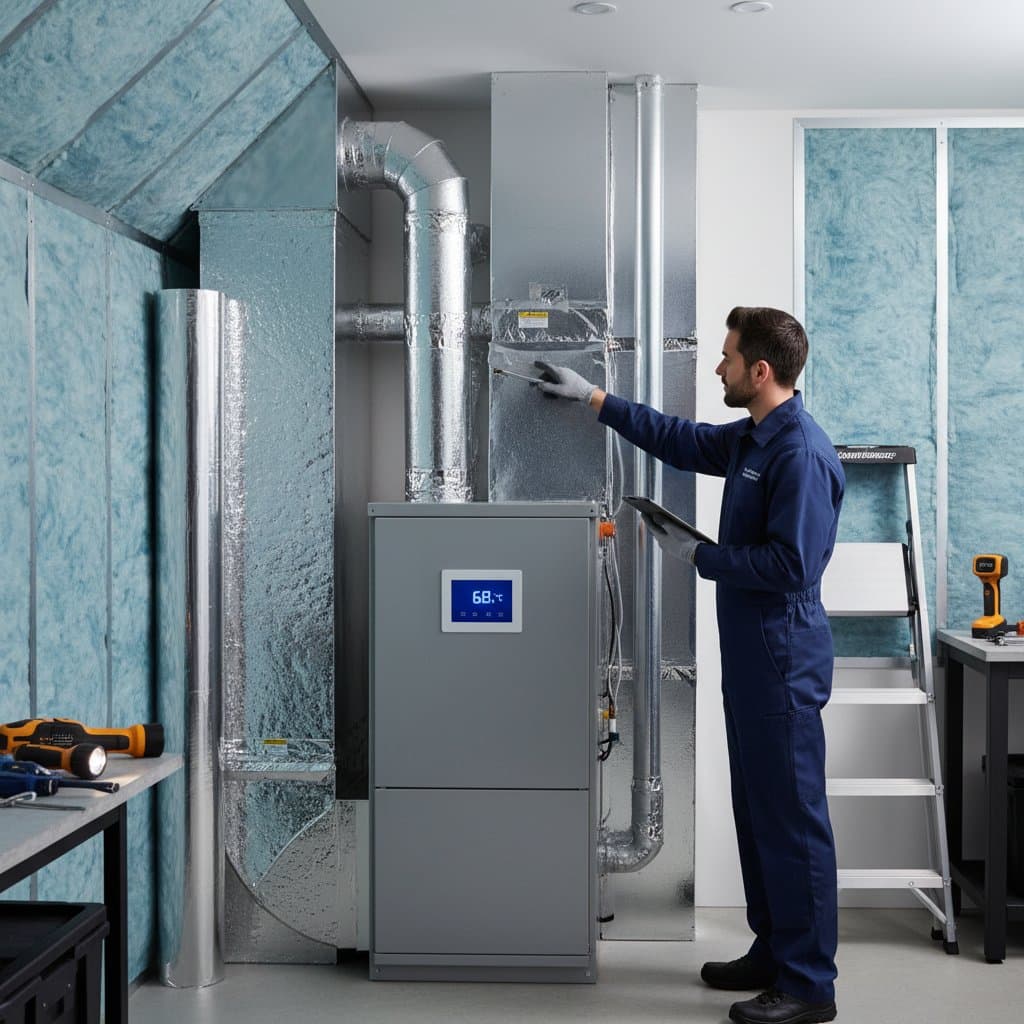
Essential Steps to Prepare Your HVAC and Insulation for Winter
The arrival of the first cold snap often catches homeowners off guard. When you activate the heating system, a rattle or inadequate warmth serves as a stark reminder that reliable comfort requires proactive effort. Addressing your HVAC system and insulation ahead of freezing temperatures ensures safety, optimizes efficiency, and safeguards your home investment.
Core Preparation Elements
- Arrange professional HVAC servicing prior to seasonal temperature declines.
- Evaluate and enhance insulation in high-loss areas such as attics and walls.
- Identify and seal drafts at windows, doors, and other entry points.
- Refresh air filters and examine duct integrity for potential leaks.
- Integrate smart thermostats and zoning to harmonize comfort and energy use.
Understanding Heat Retention and Distribution
Picture entering your home on a crisp winter day, where steady warmth envelops the space without drafts or uneven temperatures. This seamless experience results from deliberate seasonal maintenance rather than chance. Homeowners who routinely assess their heating infrastructure and insulation barriers report reduced utility expenses and minimal disruptions during peak cold periods.
Effective heat management relies on balanced circulation throughout the living areas and robust barriers to prevent escape. When these elements falter, energy escapes via fissures, inadequate coverage, or compromised pathways, leading to higher costs and discomfort.
Step 1: Arrange Professional HVAC Servicing
Annual wear can introduce subtle problems even in systems that performed adequately the previous season. A thorough inspection by a qualified technician, priced from $80 to $250 based on regional rates and inspection depth, includes examining drive belts for wear, clearing burner components, verifying thermostat precision, and assessing air volume. Such foresight averts extensive breakdowns that frequently exceed $1,000 in repair fees.
Between expert appointments, homeowners can perform routine tasks like swapping air filters every 30 to 60 days during active operation and clearing debris from exterior units. Indicators such as inconsistent room temperatures, unusual sounds, or frequent on-off cycles signal the need for immediate professional evaluation to avoid escalation.
Step 2: Enhance Insulation for Optimal Retention
Insulation functions as an unseen shield against heat loss in residential structures. Focus initial efforts on the attic, the primary site of thermal escape, aiming for 10 to 14 inches of material thickness adjusted for the specific product. Supplemental insulation installation generally ranges from $1.50 to $3.50 per square foot, with payback through energy reductions often occurring in two to four years.
Extend inspections to walls, crawl spaces, and basements, particularly in pre-1980s constructions where legacy materials prove insufficient. Options like spray foam or blown-in cellulose offer substantial improvements with minimal disruption; always equip yourself with gloves, masks, and goggles during handling, and maintain adequate airflow to mitigate irritation.
Step 3: Detect and Seal Air Infiltration Points
Superior insulation alone cannot compensate for pervasive gaps that permit cold intrusion. Conduct a systematic perimeter check using a lit candle or smoldering incense on a windy afternoon; flame disturbances near frames or sills reveal infiltration sites. Apply weatherstripping, silicone caulk, or adhesive foam seals to these areas, with material costs seldom surpassing $100 for an average residence, yielding 10 to 15 percent annual reductions in heating expenditures.
Extend scrutiny to concealed locations including attic access panels, wall outlets, and pipe entries. Though individually minor, these cumulative vulnerabilities can undermine thermal stability across multiple rooms, amplifying overall inefficiency.
Step 4: Maintain Duct Integrity and Cleanliness
The efficacy of any heating setup hinges on the ducts that transport conditioned air. Accumulated particulates, disconnected segments, and perforations can diminish performance by as much as 20 percent. Expert duct cleaning services cost $300 to $600, scaled to property dimensions and access challenges; for self-managed efforts, detach register covers, employ a vacuum for accessible sections, and inspect for breaches, securing joints with aluminum foil tape rather than cloth varieties that deteriorate over time.
Persistent temperature disparities between rooms suggest the need for duct balancing. Specialists adjust internal dampers and measure flow rates to achieve uniform delivery, enhancing system longevity and occupant satisfaction.
Step 5: Implement Advanced Thermostat Controls
Transitioning to a smart thermostat represents a straightforward path to energy optimization without sacrificing livability. These devices adapt to occupancy patterns, modulating settings to conserve power while preserving desired conditions, with setup fees of $150 to $400 and potential utility incentives offsetting initial outlay.
In expansive properties, zoning configurations enable independent climate control per section, curtailing waste in unoccupied zones and alleviating operational stress on the central unit. This targeted approach not only trims bills but also promotes equitable comfort distribution.
Step 6: Conduct Comprehensive Safety Verifications
Prior to seasonal activation, test all carbon monoxide alarms and install fresh batteries as required. For fuel-burning appliances, confirm unobstructed exhaust routes and monitor initial operation for transient dust odors, which prove benign; lingering scents necessitate expert intervention.
Restrict hands-on adjustments to certified personnel for fuel lines, compressors, or wiring assemblies, as errors in these domains pose severe risks that eclipse service expenses. Prioritizing professional oversight upholds household security throughout the heating period.
Step 7: Explore Upgrades and Incentive Programs
Numerous regional energy initiatives subsidize enhancements to insulation and heating components. Consult utility provider portals for rebates that can offset 20 to 40 percent of qualified expenditures when paired with licensed installations.
Opt for sustainable alternatives such as denim from recycled textiles or paper-derived cellulose, which match conventional fiberglass in efficacy while minimizing ecological impact. These selections bolster thermal performance alongside broader environmental benefits.
Practical Strategies for Ongoing Performance
- Set recurring reminders for filter changes aligned with usage intensity.
- Position furnishings away from registers to facilitate unrestricted circulation.
- Leverage scheduling features on thermostats to deactivate heating during absences.
- Install sweeps beneath doors to impede ground-level cold entry.
- Book an interim assessment in climates prone to severe freezes.
Realizing Lasting Comfort and Savings
With these preparations complete, subsequent cold fronts will find your home resilient. The heating system engages reliably, temperatures remain consistent, and fiscal statements mirror the diligence invested in fortifying your living environment.