
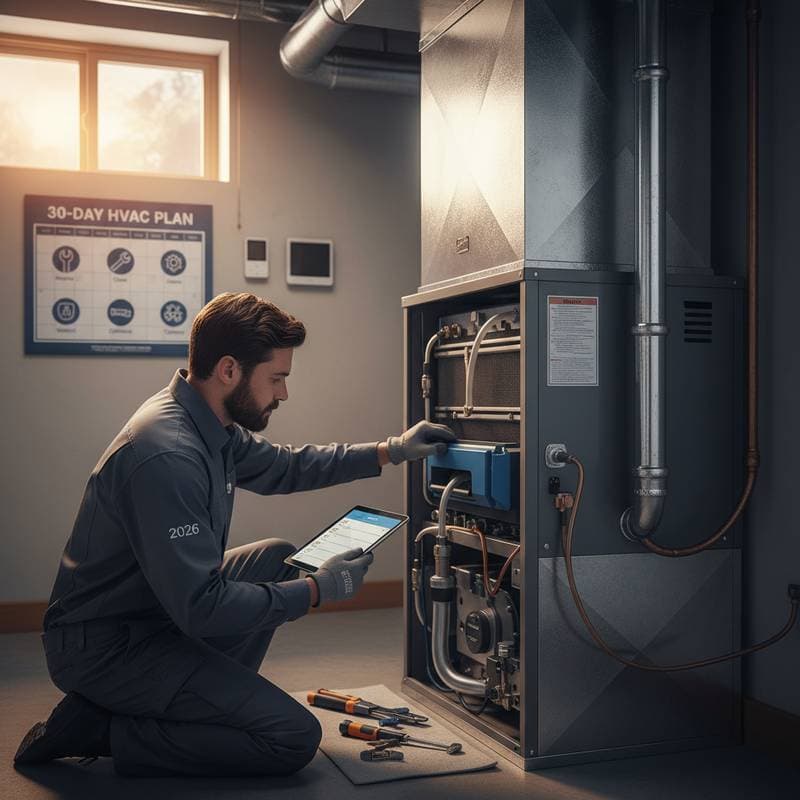
Prepare Your HVAC System for Winter: A Structured 30-Day Maintenance Plan
Key Point: Proactive preparation of your HVAC system for winter eliminates stress. This 30-day plan distributes tasks evenly, safeguards the equipment, reduces energy expenses, and ensures consistent warmth without unexpected failures.
As temperatures drop, many homeowners encounter HVAC problems that could have been avoided. The furnace may hesitate to start, or air from vents arrives barely warm. Such indicators often go unnoticed until discomfort intensifies. Preventive measures through advance planning resolve these concerns. A methodical 30-day strategy divides responsibilities into daily segments, maintaining optimal performance throughout the season.
This guide details tasks for each day, covering inspections, cleaning, and professional arrangements. Upon completion, the furnace, ductwork, and thermostat stand ready for severe cold.
Week 1: Initial Inspection and System Familiarization
Week 1 establishes a foundation by helping you understand your HVAC components. Knowledge of the system enables effective maintenance.
Days 1-2: Identify and Label Key Components
Locate the furnace, thermostat, return air vents, and supply vents. Examine the circuit breaker and gas shutoff valve. Apply labels where helpful. These actions simplify future diagnostics or discussions with service providers.
Day 3: Examine the Air Filter
Remove the air filter and inspect it against light. Replace it if visibility through the material proves impossible. Filters range in price from $10 to $30 based on type. For reusable options, rinse with mild soap and water, then allow full drying prior to reinstallation. A clean filter enhances airflow and eases system workload.
Day 4: Monitor Operation Sounds and Airflow
Activate the system and note any atypical sounds like rattling, banging, or whistling. Assess airflow at each vent. Inconsistent heating or reduced pressure may indicate duct obstructions or motor problems. Document all observations.
Day 5: Test the Thermostat Function
Adjust the thermostat upward by several degrees and observe if the furnace activates quickly. Delays suggest low batteries or loose wiring. Verify settings on programmable models. If temperature fluctuations persist, evaluate a smart thermostat upgrade, which costs $100 to $250 including installation.
Days 6-7: Verify Safety Clearances and Devices
Clear the furnace surroundings of stored items, dust, or debris within a three-foot area. Confirm the venting pipe remains secure and uncorroded. Test the carbon monoxide detector and replace batteries as required. These measures mitigate fire risks and promote safe functionality.
Week 2: Cleaning and Basic Maintenance
Week 2 emphasizes cleaning to remove buildup that hampers performance. Regular removal of contaminants preserves efficiency.
Days 8-9: Clean Vents and Registers
Vacuum dust from return and supply vents using a soft brush attachment. Wipe registers with a damp cloth to eliminate surface grime. Avoid harsh chemicals that could damage finishes. Clean vents improve air circulation and system balance.
Days 10-11: Inspect and Clean Ductwork Access Points
Check accessible duct sections for visible dirt or damage. Use a vacuum with a long hose to suction loose debris from joints. Seal minor gaps with foil tape if found. Professional duct cleaning may prove necessary for extensive buildup.
Day 12: Clean the Furnace Exterior and Interior Surfaces
Wipe the furnace cabinet with a dry cloth to remove dust. If accessible, gently vacuum the blower compartment after turning off power. Refer to the manual for safe access instructions. This step prevents dust accumulation that reduces heat transfer.
Days 13-14: Test and Calibrate Thermostat Placement
Ensure the thermostat location avoids drafts, direct sunlight, or heat sources. Relocate if needed for accurate readings. Program schedules to match occupancy patterns. Proper placement optimizes energy use and comfort levels.
Week 3: Performance Optimization and Safety Verification
Week 3 targets enhancements to system efficiency and confirmation of safety protocols.
Days 15-16: Examine the Blower Belt
For belt-driven blowers, inspect for cracks or wear. Replace if damaged; costs approximate $20, with installation requiring basic tools like a wrench and screwdriver. A worn belt diminishes airflow and increases energy consumption.
Days 17-18: Lubricate Accessible Components
Locate oil ports on older furnace motors and apply a few drops of appropriate motor oil. Avoid lubrication on sealed modern units; consult the owner's manual. Smooth operation reduces friction and extends equipment life.
Day 19: Detect Gas Leaks or Unusual Odors
If gas odors appear near the furnace, shut off the supply and ventilate the space immediately. Refrain from relighting pilots or operating switches. Summon the gas utility or a certified technician without delay. Prioritize safety in all scenarios.
Day 20: Eliminate Airflow Blockages
Confirm no furniture or drapes obstruct vents. Partial coverage disrupts system equilibrium. Adjust placements to allow unobstructed flow.
Day 21: Maintain the Outdoor Unit
For heat pumps or hybrid setups, remove leaves, soil, and debris from the exterior unit. Preserve two feet of clearance around all sides. This facilitates airflow and aids defrosting in low temperatures.
Week 4: Final Adjustments and Professional Scheduling
Week 4 completes preparations with advanced verifications and expert involvement.
Days 22-23: Balance Room Temperatures
Measure temperatures in multiple rooms with a thermometer. Adjust dampers in ducts to even out heating. Note rooms that remain cooler for further attention. Balanced distribution maximizes comfort and efficiency.
Days 24-25: Insulate Exposed Ducts
Identify uninsulated duct sections in attics or crawl spaces. Wrap with fiberglass insulation or foil-faced tape. This prevents heat loss and can recover up to 20% in efficiency. Wear protective gear during handling.
Day 26: Schedule Annual Professional Tune-Up
Contact a licensed HVAC technician for a comprehensive inspection. Request checks on the heat exchanger, electrical connections, and overall performance. Annual service costs $75 to $200 and identifies hidden issues.
Days 27-28: Review Emergency Protocols
Locate shutoff switches and valves again. Prepare a list of emergency contacts, including the technician and utility providers. Discuss system basics with household members. Readiness ensures quick response to problems.
Days 29-30: Perform a Full System Test
Run the furnace for 30 minutes and monitor all aspects: sounds, airflow, temperatures, and thermostat response. Address any lingering concerns. Celebrate completion with a note in your maintenance log.
Indicators Requiring Prompt Professional Intervention
Routine maintenance uncovers most issues, yet some demand immediate expert assistance. Engage a technician for these signs:
- Burning or metallic smells emanating from vents
- Repeated short cycling of the furnace
- Persistent banging, grinding, or squealing sounds
- Unexpected increases in heating costs
- Diminished or absent airflow with a clean filter
Such symptoms may point to motor failures, heat exchanger cracks, or wiring problems. Swift action averts dangers like gas leaks or complete failures.
Essential Safety and Regulatory Guidelines
HVAC installations adhere to local mechanical and safety regulations. For significant alterations like furnace replacement or duct modifications, obtain necessary permits. Unauthorized changes risk warranty invalidation or insurance denials during incidents.
Select contractors with valid state or local licenses and adequate insurance coverage. Request verification documents prior to commencing work. Established professionals provide credentials readily.
Practical Strategies for Ongoing Maintenance
- Maintain a detailed log of filter replacements, service dates, and repairs. This documentation tracks patterns and enhances property value during sales.
- Exchange filters every one to three months, adjusted for dust and household activity.
- Investigate unusual odors promptly. Musty scents suggest duct mold; burning indicates potential electrical faults.
- Modify vent openings by season. Slightly close lower-level vents in winter to direct heat upward; adjust for summer cooling.
- Address anomalies early. Small problems escalate without intervention.
Sustain Efficiency Through Consistent Care
Executing this 30-day plan invests in reliable heating, enhanced safety, and sustained cost reductions. Distributing tasks monthly avoids fatigue while thoroughly addressing each element.
Post-preparation, incorporate brief monthly reviews: filter checks, noise monitoring, and vent clearance. In spring, adapt the plan for air conditioning readiness.
Your HVAC system supports daily comfort unobtrusively. Consistent attention yields dependable operation, reduced expenses, and tranquility during harsh winters.