
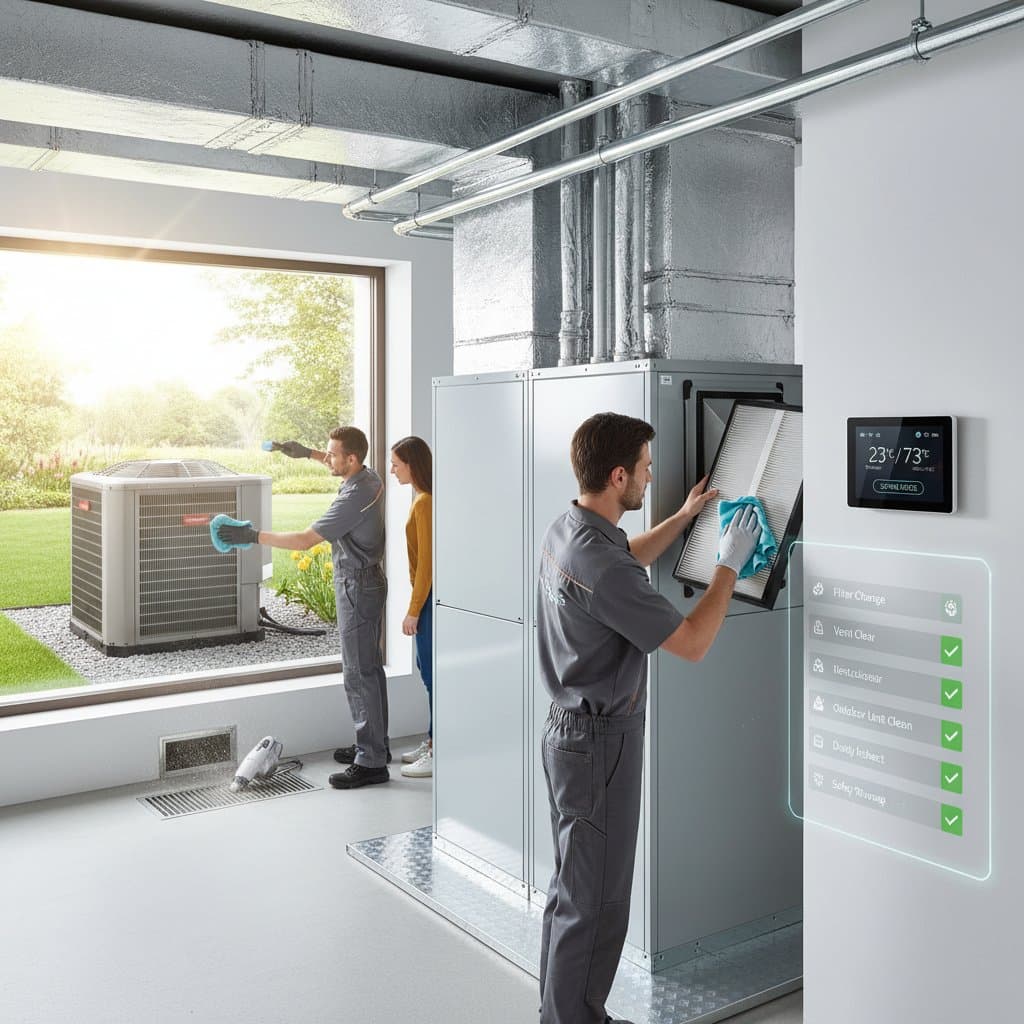
Essential Spring HVAC Maintenance to Slash Energy Costs
Homeowners often overlook the impact of routine HVAC maintenance on energy consumption. Simple inspections and adjustments in spring can restore optimal performance, prevent unnecessary strain on the system, and deliver noticeable reductions in utility bills. This guide outlines targeted steps to prepare your heating, ventilation, and air conditioning setup for efficient summer operation, emphasizing practical actions that yield immediate results.
Prioritize These Initial Indoor Inspections
As winter fades, HVAC systems accumulate dust, pet hair, and other particles that hinder airflow and increase energy use. Addressing these elements early ensures smoother operation when cooling demands rise. Focus on the following areas to establish a strong foundation for efficiency.
1. Replace or clean air filters.
Clogged filters impede airflow, compelling the blower motor to consume excess power. Experts recommend inspecting filters monthly and replacing disposable models every one to three months, or cleaning reusable ones with mild soap and water. Standard fiberglass filters cost ten to twenty dollars, while pleated versions offer superior filtration for twenty to forty dollars. Implementing this change alone can decrease cooling energy use by up to ten percent, translating to substantial monthly savings.
2. Examine and clear vents and registers.
Obstructions in supply and return vents disrupt air distribution, leading to hot spots and overworked components. Begin by vacuuming dust from grilles with a soft brush attachment, then reposition furniture or rugs that block access. Ensure all dampers remain fully open to facilitate even circulation. These minor adjustments improve overall system balance, reducing runtime and energy draw by enhancing natural airflow dynamics.
3. Calibrate the thermostat for precision.
An inaccurate thermostat triggers cycles at incorrect temperatures, wasting electricity on unneeded operation. Place a separate digital thermometer near the unit to compare readings; discrepancies exceeding two degrees warrant recalibration or battery replacement. For advanced control, install a programmable or smart thermostat, priced from one hundred to two hundred fifty dollars, which learns household patterns and optimizes schedules. Such devices typically reduce annual heating and cooling costs by twelve to fifteen percent through automated adjustments.
Address Outdoor Unit Performance
The condenser and compressor units outside endure exposure to weather, pollen, and debris, which compromise heat exchange and efficiency. Neglecting this area invites higher energy demands as the system struggles against restrictions. Regular attention here prevents common issues and supports long-term reliability.
1. Remove debris around the condenser.
Accumulated leaves, grass clippings, or shrubbery encroach on the unit, elevating operating temperatures and power usage. Maintain a minimum two-foot clearance by trimming back plants and raking away organic matter. Use a garden hose on low pressure to rinse the coil fins gently, dislodging dirt without damaging the structure. This cleaning restores full heat dissipation capacity, potentially lowering energy consumption by five to eight percent during peak cooling periods.
2. Evaluate insulation and refrigerant lines.
Exposed or deteriorated insulation on refrigerant lines allows heat gain or loss, diminishing cooling effectiveness. Inspect for cracks, gaps, or wear, and apply new foam pipe insulation sleeves, available for five to fifteen dollars at hardware stores. Secure them with zip ties for a snug fit. Persistent signs like ice formation or oily spots indicate refrigerant issues, requiring professional diagnosis to avoid legal and safety risks associated with handling refrigerants.
Conduct Thorough Indoor Safety and Efficiency Reviews
Beyond basic cleaning, internal assessments safeguard against hazards and optimize energy pathways. These steps integrate seamlessly with daily home routines, providing peace of mind alongside cost benefits.
1. Verify carbon monoxide detectors.
Gas-powered HVAC components produce potential risks if ventilation falters, making functional detectors critical. Test each unit by pressing the alarm button, and replace batteries annually or as indicated. Position detectors on every level, especially near sleeping areas and fuel-burning appliances. Reliable operation prevents silent dangers and ensures compliance with building codes.
2. Detect and seal ductwork leaks.
Leaky ducts release conditioned air into attics or crawl spaces, squandering up to thirty percent of energy in some homes. Visually scan accessible joints for separations or tears, then apply mastic sealant or foil tape designed for HVAC use, avoiding cloth-backed varieties that lose adhesion over time. For comprehensive evaluation, professionals employ blower door tests to quantify losses and apply targeted repairs. Sealing efforts can reclaim fifteen to twenty percent in efficiency gains.
3. Arrange for professional servicing.
While DIY measures handle routine care, an expert tune-up uncovers subtle problems like low refrigerant or faulty capacitors. Technicians charge one hundred to one hundred eighty dollars for a full diagnostic, including coil cleaning, lubrication, and electrical inspections. This investment often recoups costs within one season through enhanced performance and averted breakdowns, extending system lifespan by years.
Implement Strategies for Lasting Results
Timing matters in maintenance; complete these tasks in early spring to sidestep service backlogs during heat waves. Document all activities in a dedicated log, noting dates, filter types, and technician findings to track patterns and support warranty claims. Complement HVAC efforts with broader efficiency upgrades, such as caulking window frames or adding weatherstripping to doors, which amplify overall savings.
A well-maintained system not only trims energy bills but also enhances indoor air quality and reliability. By investing time now, homeowners secure consistent comfort, fewer disruptions, and financial advantages that persist through summer and beyond.