
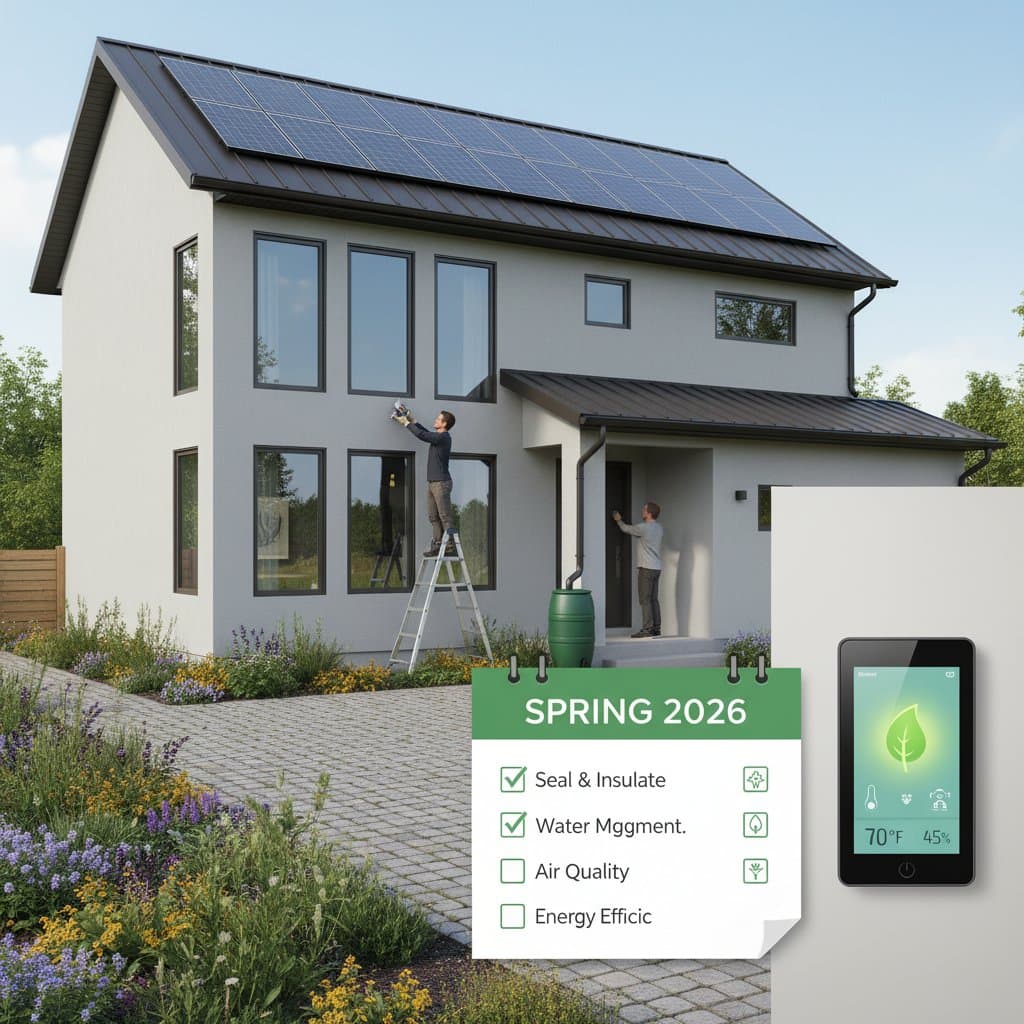
Climate-Proof Your Home: The 2026 Spring Checklist
Spring brings the first hints of warmth, often exposing the subtle damages inflicted by winter. Water may gather near the foundation, paint might peel from window frames, or a roof shingle could shift out of place. These indicators highlight the ongoing interaction between weather and home structure, emphasizing the need for continuous preparation rather than seasonal fixes.
Forward-thinking homeowners go beyond routine tasks like clearing gutters or replacing air filters. They embrace climate-proofing, an approach that integrates comfort, safety, and sustainability. This strategy anticipates heavier rainfall, extended droughts, and erratic temperature fluctuations, equipping the home to withstand them effectively.
The following spring checklist addresses contemporary challenges, draws from proven practices, and safeguards your property for the long term.
Fortify the Building Envelope: Insulation and Ventilation
A resilient home maintains stable indoor conditions amid extreme outdoor variations. Insulation serves more than winter warmth; it eases energy demands during spring's variable climate.
- Attic Inspection: Examine for inconsistent insulation levels or darkened areas signaling air leaks. Supplement with R-30 to R-49 blown-in fiberglass to enhance comfort and lower cooling expenses by 10 to 15 percent.
- Sealing Wall and Floor Penetrations: Apply expanding foam around pipes and electrical wires. Such measures block air infiltration and deter pests.
- Ventilation Assessment: Clean and evaluate exhaust fans in kitchens and bathrooms. Effective airflow curbs condensation, a covert threat to building integrity.
Estimated Costs: Do-it-yourself insulation enhancements range from 500 to 1,500 dollars. Professional energy audits with thermal imaging cost 200 to 400 dollars and uncover concealed issues ripe for correction.
Optimize Water Management Across Conditions
Effective water handling underpins climate adaptability, whether confronting floods or shortages. Spring offers an ideal period to verify systems that direct moisture appropriately.
- Install Rain Barrels or Cisterns: Collect rooftop drainage for landscape irrigation. A 50-gallon barrel conserves up to 1,000 gallons of water over a growing season.
- Upgrade to Smart Irrigation: Deploy controllers that modify schedules using soil sensors and forecast data. These reduce exterior water consumption by approximately 30 percent in varied regions.
- Test Sump Pumps: Introduce a bucket of water to the sump pit and confirm activation. Remove debris from screens and ensure discharge pipes remain unobstructed.
Estimated Costs: Rain barrels vary from 100 to 400 dollars based on capacity and construction. Smart controllers average 150 to 350 dollars. Installing a new sump pump costs around 1,200 dollars.
Secure Electrical Systems and Power Reliability
Power disruptions tied to weather events increase in frequency, prompting a spring review of backups and protections.
- Add Whole-Home Surge Protection: Position a device at the primary electrical panel to shield against lightning strikes or voltage surges.
- Evaluate Backup Power Options: Portable generators sustain key appliances during brief outages, whereas integrated generators or solar batteries deliver uninterrupted supply for extended durations.
- Label Essential Circuits: Mark breakers for items like refrigerators, sump pumps, and health equipment. Clear identification streamlines emergency responses.
Estimated Costs: Panel surge protectors range from 300 to 800 dollars with installation. Whole-home generators cost 5,000 to 10,000 dollars, while solar storage exceeds 12,000 dollars yet provides eco-friendly performance.
Gear Up for Imminent Storms
Spring's shift often heralds abrupt severe weather. Proactive measures reduce potential harm from intense events.
- Prune Overhanging Branches: Maintain at least ten feet of clearance from the roof to avoid wind-induced failures.
- Anchor Outdoor Elements: Use weighted stands for umbrellas and relocate or secure light furnishings.
- Inspect and Repair Siding: Address minor fissures to halt water entry. Scrape affected zones, apply primer, and refresh paint prior to wet conditions.
- Assemble Emergency Supplies: Position flashlights, batteries, water, and medical kits in readily accessible spots.
Estimated Costs: Professional tree services charge 200 to 800 dollars according to scope. DIY exterior painting materials run 50 to 150 dollars.
Expert Strategies for Lasting Results
- Build Gradually and Persistently: Develop climate resilience through targeted projects. Address one key area per season to avoid overwhelm.
- Record All Enhancements: Document changes with images and invoices. These records bolster property value and validate warranties.
- Engage Professionals for Complex Tasks: Involve certified experts for structural, electrical, or drainage alterations.
- Time Work with Favorable Conditions: Selectants and coatings perform optimally under defined temperature and humidity levels. Plan sessions wisely.
- Integrate Style and Utility: Opt for durable, attractive materials that preserve function while enhancing visual appeal.
Maintain Resilience Year-Round
Implementing these steps establishes a foundation for enduring home protection. Regular attention to climate-proofing not only mitigates risks but also elevates daily living. Your proactive efforts today yield security and savings in the face of evolving weather challenges.