
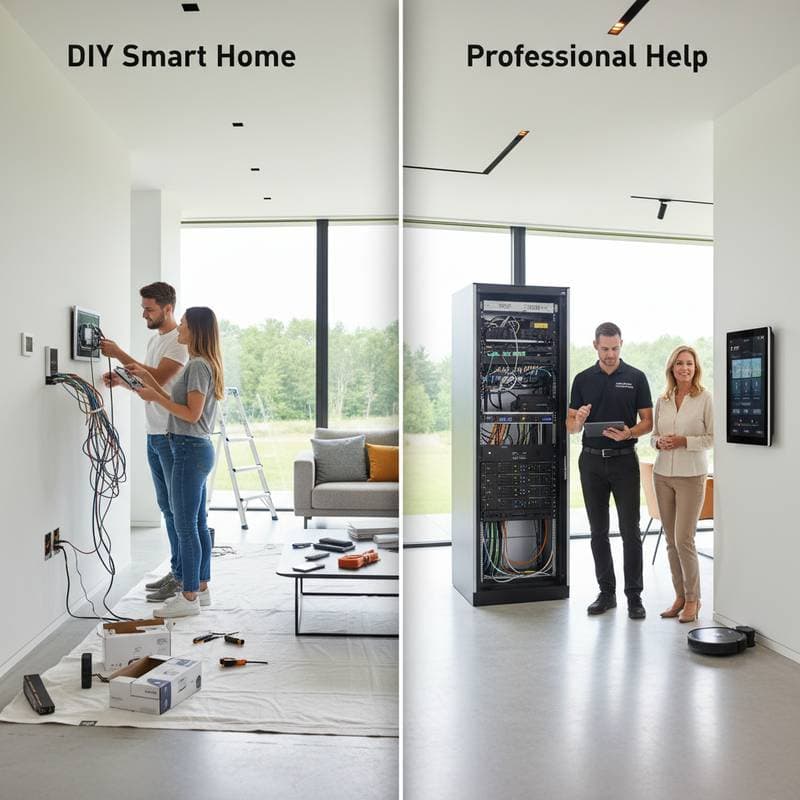
DIY AI Remodels: Handle Solo or Engage Tech Experts?
Homeowners increasingly explore AI-powered remodels to create intelligent living environments. These projects range from simple device additions to comprehensive systems that manage lighting, climate, security, and energy use. The key challenge lies in determining whether to proceed independently or involve specialists skilled in both construction and technology.
Starting with basic enhancements remains feasible for many, provided the scope stays within personal expertise. As integration deepens, involving multiple devices, networks, and protocols, professional intervention becomes essential to avoid complications.
Defining an AI Remodel
An AI remodel extends beyond installing individual gadgets; it establishes an interconnected network that adapts to user patterns and optimizes home functions. Examples include lighting systems that adjust to ambient light levels, heating and cooling that respond to room occupancy, or alerts for impending equipment failures.
Standalone installations, such as smart plugs or programmable thermostats, suit DIY efforts. Projects escalate in difficulty when combining devices with voice interfaces, secure data transmission, and electrical integrations, demanding knowledge of wiring standards and software compatibility.
Evaluating Costs and Time Investment
DIY smart home upgrades typically cost between $200 and $2,000, varying by device type and project extent. Installing basic components like switches, motion sensors, or video doorbells requires only common tools and a single weekend.
In contrast, comprehensive automation systems installed by professionals range from $5,000 to $25,000, encompassing custom wiring, central controllers, and configuration services. Such investments often include warranties and maintenance support, offsetting potential long-term expenses from errors or outdated setups.
For isolated features like automated lighting or entry notifications, self-installation proves economical. A centralized control panel overseeing heating, ventilation, lighting, and appliances, however, benefits from expert oversight to prevent inefficiencies and rework.
Prioritizing Safety and Regulatory Compliance
Electrical modifications demand strict adherence to safety standards, as smart devices interact with active circuits. Incorrect wiring poses risks of electrical shorts, overheating, or fires, making compliance with local building codes imperative.
Many jurisdictions mandate licensed electricians for alterations involving junction boxes or main electrical panels. Professionals ensure installations meet these requirements, reducing liability and enhancing system reliability.
Network security introduces additional layers of concern, where vulnerable configurations invite unauthorized access. Experts implement encrypted connections, segmented networks, and robust firewalls, protections that exceed typical homeowner capabilities.
Individuals experienced in low-voltage cabling and basic networking may proceed independently for minor tasks. Interventions affecting critical safety features or primary power systems necessitate certified assistance.
Framework for Informed Decisions
- Define project boundaries. Determine if the initiative features isolated devices or a unified home-wide network.
- Project time requirements. A single thermostat installation requires about two hours; extensive multi-zone setups demand a full week, even for specialists.
- Review regulatory obligations. Connections to primary circuits often require permits from electrical authorities.
- Assess infrastructure readiness. Confirm sufficient Wi-Fi strength and isolated network segments for optimal performance.
- Consider ongoing maintenance. Decide between self-managed troubleshooting or structured support agreements.
This structured approach reveals alignment with personal skills. Frequent reliance on online tutorials for technical details signals the need for professional involvement.
Pitfalls to Sidestep in Smart Home Projects
Incompatible devices from different manufacturers frequently result in communication gaps, leading to unreliable automation zones. Selecting unified platforms or verified interoperable products prevents such disruptions.
Neglecting initial sensor and camera adjustments impairs accuracy, causing erratic responses or false alerts. Dedicate time to precise setup and periodic recalibration for sustained effectiveness.
Overlooking privacy measures, such as retaining factory passwords or disabling encryption, exposes data to breaches. Prioritize immediate updates to secure credentials and enable protective protocols.
Failing to verify circuit capacities can overload existing wiring when adding multiple powered devices. Consult load calculations or professional assessments to maintain safe operational margins.
These oversights often lead to operational failures or hazards, yet thorough preparation or expert guidance mitigates them effectively.
Strategies for Effective Implementation
For independent projects, begin with targeted areas like a single room's lighting or temperature controls. Document all device specifications, application access details, and installation records in a centralized digital repository for easy reference.
When selecting professionals, confirm credentials in electrical systems and certified smart home platforms. Request evidence of specialized training from leading automation providers to ensure quality workmanship.
Gradual expansion allows testing and refinement, building toward a cohesive system without overwhelming complexity.
Sustaining Your Intelligent Home System
Post-installation, regular upkeep preserves functionality and adaptability. Schedule firmware updates to incorporate security patches and performance enhancements, while routine sensor cleaning ensures precise data collection.
Track energy consumption patterns to refine automation rules, aligning the system more closely with household routines. This ongoing attention transforms the home into a responsive entity that evolves alongside technological advances.
Ultimately, successful AI remodels deliver enhanced security, efficiency, and convenience, whether achieved through personal initiative or collaborative expertise. Focus on scalability to accommodate future innovations, securing lasting value in your living space.