
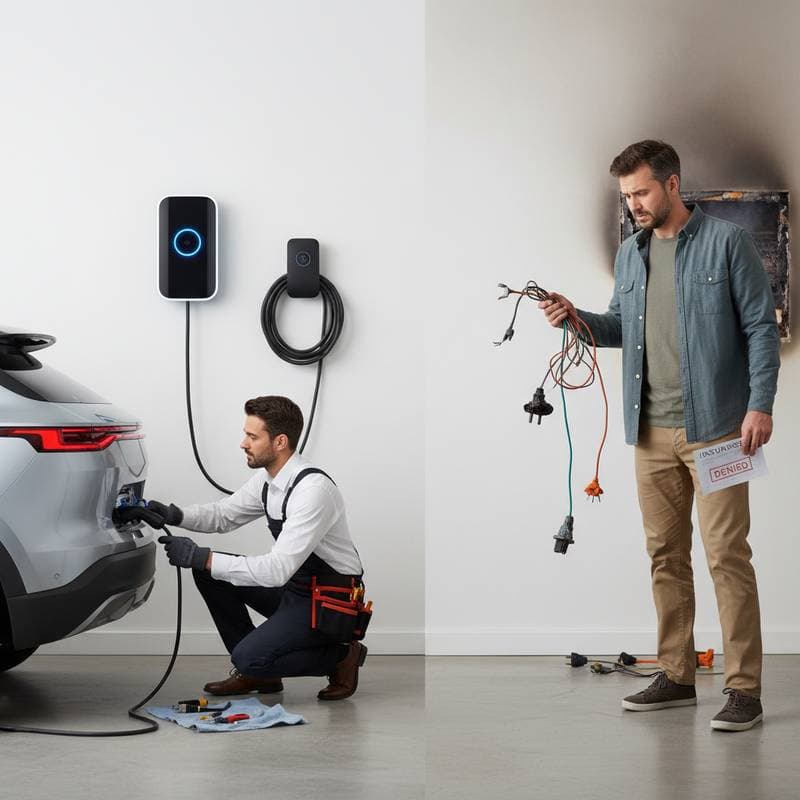
The Hidden Dangers of DIY EV Charger Installation for Your Home
Emma purchased her first electric vehicle with visions of serene morning drives and environmentally conscious travel. She envisioned the convenience of charging at home as a step toward greater independence. However, during one weekend, she relied on online guides and a rented drill to set up a Level 2 charger. Soon, uncertainty arose regarding breaker capacities, grounding requirements, and load assessments she had not mastered. That evening, the breaker panel activated twice, and the odor of scorching insulation permeated the garage. Her initial sense of accomplishment shifted to a stark recognition of electrical intricacies.
Electrical Complexities Beyond the Surface
An EV charger installation appears simple at first glance. The components include a wall-mounted device, a connecting cable, and basic mounting hardware, which suggest accessibility for those with basic tool skills. The true challenge resides in the home's electrical framework, which distinguishes secure setups from those prone to failure.
A Level 2 charger demands a 240-volt dedicated circuit with an appropriate breaker. Many residences lack this setup, necessitating panel modifications that range from $500 to $2,000 based on the structure's age and current capacity. Wires or breakers that do not match the charger's specifications lead to excessive heat buildup, a primary factor in household electrical fires. Electricians account for factors such as amperage demands, proper grounding, conduit pathways, and adherence to local codes. An individual attempting the task alone might overlook that prolonged charging requires wiring superior to typical household outlets. Such oversights result in gradual wear that remains undetected until a critical malfunction emerges.
To mitigate these issues, professionals conduct thorough evaluations. They measure the charger's continuous power draw, often 30 to 50 amps, and select wiring like 6-gauge copper to handle the load without voltage drop. Homeowners undertaking DIY efforts rarely perform these calculations, increasing the likelihood of inefficient or unsafe performance over time.
Navigating Codes and Insurance Protections
Local authorities mandate that EV charger installations conform to established electrical standards. Certified electricians possess the expertise to analyze these regulations and secure necessary permits. Bypassing this process offers initial cost reductions, yet it invites substantial long-term repercussions.
Should a fire or fault occur linked to an unauthorized setup, homeowners face claim rejections from insurance providers. Policies frequently stipulate proof of work by qualified specialists for electrical modifications. Absent such evidence, individuals bear full responsibility for damages, repairs, and any associated liabilities.
Permits function as essential oversight mechanisms. Building inspectors review elements including wire thickness, breaker specifications, and grounding integrity to confirm alignment with safety benchmarks. Although permits may appear as administrative hurdles, they provide critical assurances for the property and its residents.
Furthermore, compliance extends to emerging standards for EV infrastructure. In regions with updated codes, installations must incorporate features like ground-fault circuit interrupters tailored for high-amperage use. Professionals stay informed on these evolutions, ensuring the system meets both current and future requirements without costly retrofits.
Unseen Hazards in Everyday Operation
DIY electrical endeavors pose threats through gradual deterioration rather than immediate alerts. Insecure connections produce frictional heat that erodes insulation progressively. A marginally inadequate wire performs adequately initially but degrades after repeated charging sessions, heightening failure risks.
Environmental factors compound these concerns. Garages and outdoor locations encounter varying moisture levels, demanding sealed conduits and protective enclosures. Experts route cables to avoid water ingress, preventing rust and short circuits from accumulated condensation.
Additional risks include improper mounting that stresses connections during vehicle attachment. Professionals secure units to studs with appropriate anchors and position them to minimize cable strain. Neglecting these practices can lead to intermittent faults, such as intermittent power loss or unexpected shutdowns, which compromise charging reliability.
Calculating the Real Financial Impact
Budget constraints often drive DIY decisions, but initial economies prove illusory when errors surface. Expert installation fees for an EV charger span $800 to $1,800, influenced by the model's features and wiring demands. A botched self-installation might necessitate complete rewiring, permit resolutions, or panel overhauls, escalating expenses beyond professional rates.
The advantages extend past monetary aspects. A well-executed system functions seamlessly, optimizing energy use without overburdening circuits. This dependability proves invaluable for routines reliant on consistent vehicle readiness.
Consider also potential rebates and incentives. Many utilities and governments offer credits for code-compliant installations by licensed contractors. DIY approaches disqualify participants from these benefits, further diminishing any perceived savings.
Determining the Need for Expert Assistance
Homeowners with aging electrical panels or existing power-intensive devices, such as central air units or induction cooktops, require a specialist's assessment prior to adding an EV charger. Electricians execute precise load calculations to gauge system capacity and identify upgrade necessities.
These evaluations involve reviewing the service entrance rating, typically 100 to 200 amps in standard homes, against cumulative demands. If margins prove tight, solutions range from subpanel additions to full service enhancements, all planned to avoid future disruptions.
Site preparation falls under professional purview as well. They confirm mounting surfaces withstand the unit's weight, position chargers at ergonomic heights of 18 to 48 inches, and ensure airflow prevents overheating. These considerations enhance usability and extend equipment lifespan.
Maintaining Your EV Charging Setup Securely
A correctly installed charger requires minimal upkeep for sustained performance. Regularly uncoil cables to prevent kinks and examine plugs for signs of fraying or discoloration. Wipe the enclosure with a dry, non-abrasive cloth and clear surrounding areas of dust or obstructions.
Monitor for indicators of trouble, including dimming lights during operation, frequent breaker trips, or warmth emanating from electrical components. Cease use immediately upon detecting these symptoms and arrange a professional review to address underlying issues promptly.
Routine checks, performed quarterly, include verifying connections remain tight and testing the ground-fault protection. Such habits preserve safety and efficiency, allowing the charger to support your electric vehicle lifestyle without interruption.
Essential Guidance for Optimal Installation
- Confirm your electrician's licensing and experience with EV-specific installations through state verification services.
- Select chargers bearing certifications from organizations like Underwriters Laboratories or Intertek for verified safety.
- Insist on a post-installation load assessment to validate the circuit's stable operation under full demand.
- Retain documentation of permits, inspections, and warranties to support insurance needs and future reference.
With these measures, your EV charger integrates reliably into your home, promoting safety while advancing sustainable transportation.