
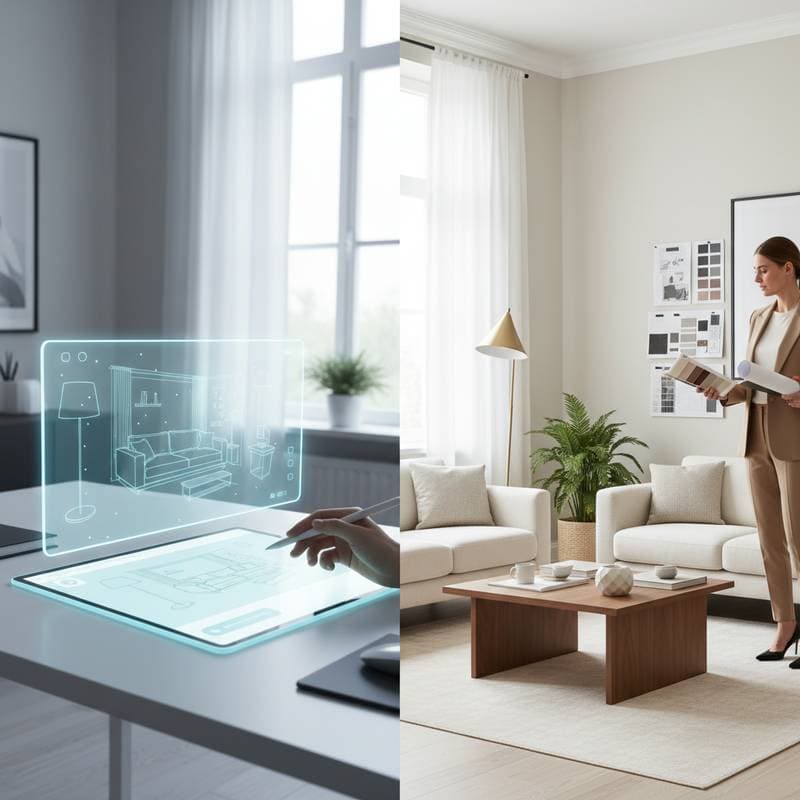
Comparing AI Design Tools and Professional Designers for Home Projects
Deciding how to approach your next home design project involves weighing options between artificial intelligence software and hiring an interior design professional. Each method can produce an attractive and functional space, yet they differ significantly in process and outcomes. The essential factor lies in evaluating your priorities, such as maintaining control and minimizing expenses or gaining specialized knowledge and tailored adjustments.
Essential Considerations
- AI tools produce design ideas rapidly by processing images of your space and your stated preferences.
- Professional designers contribute human perspective, familiarity with regulations, and skills in overseeing projects.
- Expenses range from no cost for basic applications to thousands of dollars for comprehensive professional services.
- The optimal selection aligns with your project's magnitude, available funds, and confidence in making choices.
The Mechanics of AI Interior Design Tools
AI-driven design platforms employ algorithms to evaluate your room's configuration, illumination, and furniture dimensions. Users typically submit several photographs or a floor plan. The system then creates multiple visual prototypes aligned with your selected aesthetic, color scheme, and financial limits. Advanced features include lifelike 3D visualizations and curated lists of items with purchase guidance.
Such tools suit homeowners seeking immediate outcomes. In one afternoon, individuals can experiment with various aesthetics and observe the impact of altering elements like seating arrangements or paint shades. Many platforms incorporate machine learning to adjust recommendations according to user input, enhancing precision with repeated interactions.
For instance, consider uploading images of a dated kitchen. The AI might propose layouts that optimize counter space while suggesting affordable cabinet alternatives in neutral tones. This iterative process empowers users to refine visions without external consultation, fostering confidence in personal style choices.
Analyzing Costs and Timelines
Subscriptions for AI design software generally fall between free access and several hundred dollars annually for enhanced features. This affordability appeals to modest undertakings, such as refreshing a single area. Most participants develop a complete conceptual outline within one to two hours.
In contrast, professional interior designers bill through hourly rates or fixed project charges. Fees might start at a few hundred dollars for initial advice and escalate to thousands for end-to-end design and oversight. The timeline extends over weeks, encompassing tasks like procuring supplies, liaising with builders, and verifying adherence to construction standards and safety protocols.
To illustrate, a basic AI session could cost under fifty dollars and yield a mood board in minutes, ideal for quick inspiration. A professional consultation for the same space, however, might involve a two-hour meeting at one hundred dollars per hour, followed by detailed drawings that ensure long-term durability.
Scenarios Favoring Professional Designers
Opt for a licensed designer when your overhaul includes building modifications, bespoke woodworking, wiring updates, or alterations to the building's framework. These experts grasp principles of spatial harmony, local ordinances, and seamless coordination with tradespeople. They mitigate risks of errors, such as selecting oversized fixtures that impede access or materials incompatible with safety norms.
The advantages of a professional extend to operational aspects. Designers handle supplier negotiations, timeline coordination, and on-site supervision. They bridge the gap from preliminary ideas to tangible results, an area where AI falls short. For properties destined for sale, their insight into current market preferences can elevate resale value and attract potential buyers through strategic enhancements like improved lighting or flow.
Professionals also consider holistic factors, such as how a redesign integrates with your lifestyle. They might recommend durable fabrics for households with pets or energy-efficient options to lower utility bills, ensuring the space serves practical needs alongside visual appeal.
Situations Where AI Tools Excel
AI platforms excel when users desire autonomy in creativity without substantial investment. They prove valuable for refreshing leased properties, testing hue combinations, or mapping out rearrangements. Upload existing item photos to preview integrations with potential additions, streamlining decision-making.
These resources assist those hesitant about commitments by clarifying options prior to expert involvement. Arrive at a design meeting equipped with defined tastes and sample visuals, which can shorten consultation duration and overall expenses. For example, generate ten variations of a bedroom layout to identify favorites, then present them to a professional for refinement.
Moreover, AI democratizes design access, enabling beginners to explore trends like minimalist decor or biophilic elements without prior knowledge. This empowerment encourages experimentation, turning abstract ideas into concrete plans efficiently.
Potential Drawbacks and Precautions
Despite advancements, AI tools exhibit limitations. Representations of light diffusion, surface qualities, and movement through spaces may not mirror real-world dynamics. Recommendations could include items mismatched to regional guidelines or everyday usability. Verify measurements and stock status prior to any acquisitions.
In extensive renovations, bypassing professional validation risks regulatory violations or unprotected installations. For endeavors touching on water systems, power setups, or load-bearing elements, secure approval from a qualified expert before proceeding. Cross-check AI outputs against physical constraints, such as ceiling heights or doorway widths, to avoid disappointments.
Combining Approaches for Superior Outcomes
The most successful designs often merge technological innovation with expert guidance. Initiate withprototypes to survey options, then engage a professional to polish and implement the selected scheme.
Ultimately, your residence ought to embody your personal narrative, transcending mere computation. By drawing on digital aids, seasoned advice, or a hybrid model, achieve an environment that integrates seamlessly into daily routines while delivering enduring aesthetic pleasure.