
AI vs Pro Designers: Which Wins Your Home Redesign?
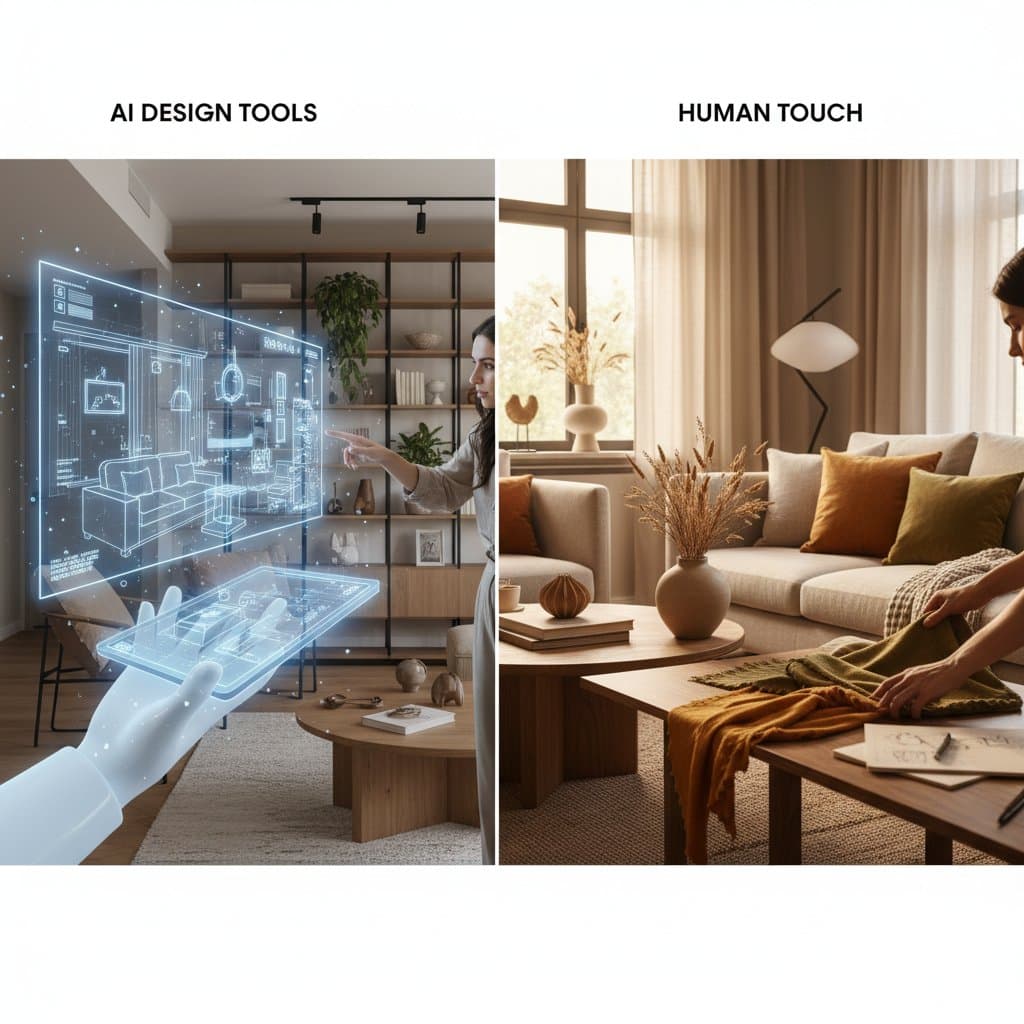
When a friend recently showed me a living room design created entirely by an AI program, I was amazed by how polished it looked. The virtual design featured perfectly balanced lighting, a cohesive color palette, and furniture that fit as if measured by a laser. Yet, when she turned her laptop around and compared it to the actual space, something felt off. The room looked almost identical to the rendering, but it lacked a certain warmth. That missing piece captures the central tension of modern design: can technology truly match the intuition and artistry of a professional designer?
The Rise of AI in Home Design
AI-driven design tools have become a staple for homeowners exploring quick makeovers or full remodels. These platforms use algorithms to analyze room dimensions, lighting, furniture placement, and even personal style preferences. In minutes, you can visualize multiple layouts that once required hours of manual sketching.
Popular software options like virtual staging apps and room planners often provide free or low-cost packages. Homeowners can expect to pay between 20 and 100 dollars for premium access, compared to the 2,000 to 8,000 dollars that a professional designer might charge for a full-service project. For budget-conscious renovators, that difference proves hard to ignore.
The appeal extends beyond cost. AI tools promise speed, convenience, and creative freedom without the intimidation of design jargon. You can experiment with paint colors late at night or test bold furniture combinations without fear of expensive mistakes. The technology even helps calculate material quantities, which can prevent overbuying or waste. For instance, input your wall measurements into a tool like Planner 5D, and it generates precise estimates for paint coverage based on brand-specific formulas.
Where Human Designers Still Excel
Yet, there are dimensions of design that algorithms struggle to capture. Professional designers bring emotional intelligence, cultural awareness, and tactile experience that no software can replicate. A designer can stand in your living room, notice how afternoon light hits a wall, and suggest a matte finish that softens glare. That kind of sensory detail remains outside the reach of digital prediction.
Pro designers also act as project managers, coordinating contractors, sourcing sustainable materials, and ensuring compliance with building codes. They know which fabrics resist fading, which finishes last longest in humid conditions, and how to balance functionality with beauty. Their value often lies in preventing costly missteps, which can make their fees feel more like insurance than extravagance. Consider a kitchen remodel: a designer might recommend quartz countertops over granite for easier maintenance in a family home with young children, drawing from years of observing real-world wear.
A well-trained designer also reads a client’s personality in subtle ways. A minimalist AI layout may look perfect on screen, but a professional might sense that you crave a little imperfection, a space that feels lived in and loved. That human touch transforms a house into a home. To achieve this, designers often conduct in-home consultations, asking targeted questions about daily routines, such as where family members gather most, to infuse personal stories into the layout.
Bridging the Two Worlds
The real power emerges when AI and human creativity work together. Many designers now use AI tools as part of their workflow, treating them as assistants rather than replacements. A layout can serve as a starting point, allowing designers to focus on personalization, material selection, and storytelling.
Imagine uploading your kitchen dimensions into an AI planner. Within minutes, the software suggests three possible layouts. You send those to your designer, who refines the lighting plan and swaps out synthetic finishes for reclaimed wood. The collaboration saves time and money while preserving artistic nuance. Homeowners benefit from both efficiency and expertise, often reducing project timelines by 20 to 30 percent.
This hybrid model also encourages sustainability. AI tools can analyze energy efficiency, recommend eco-friendly materials, and simulate natural light exposure. Designers can then interpret those insights to choose finishes that age gracefully and reduce waste. The result is a design that proves both environmentally responsible and emotionally resonant. For example, AI might flag low-VOC paints, while a designer selects shades that harmonize with your existing wood tones for a seamless, green upgrade.
Cost, Time, and Experience Compared
To understand which approach fits your needs, consider three key factors: budget, timeline, and personal involvement.
Cost Range:
- AI software: Free to around 100 dollars for advanced features
- Professional designer: Typically 2,000 to 8,000 dollars for full-service projects, sometimes more for luxury renovations
Time Commitment:
- AI tools: Instant visualization, but execution still depends on your ability to implement the design
- Designers: Longer planning phases, but smoother overall coordination from concept to completion
User Experience:
- AI tools: Great for visual experimentation and early planning
- Designers: Essential for complex projects, custom builds, or homes with structural challenges
If your goal is a quick refresh, such as updating a bedroom palette, AI might serve as your best ally. If you are reimagining your entire home or working with unique architectural details, a designer’s expertise becomes indispensable. Start by assessing your project scope: for a simple powder room update, AI suffices; for an open-concept living area, blend both.
Safety and Professional Boundaries
AI tools can help visualize electrical layouts or plumbing modifications, but they should never replace certified expertise. Always consult licensed professionals before altering wiring, load-bearing walls, or gas lines. A professional designer often works alongside architects and contractors to ensure compliance with safety codes. Even the most advanced software cannot guarantee that level of accountability.
For instance, when planning recessed lighting, AI can suggest placements, but an electrician must verify circuit loads to avoid fire hazards. Designers bridge this gap by integrating AI visuals into permit-ready plans, ensuring your vision aligns with local regulations like those from the National Electrical Code.
Living with Your Design
Once the redesign is complete, the true test begins. How does the space feel on a quiet morning or during a lively dinner party? AI can predict symmetry and scale, but it cannot anticipate the emotional rhythm of your life within those walls. Designers often revisit completed projects months later, evaluating how clients interact with the space and adjusting details for comfort and flow. That ongoing relationship builds a design that evolves with you.
Homeowners who start with AI often find themselves returning to professionals for finishing touches. A designer can layer textures, lighting, and subtle imperfections that bring realism to digital perfection. In contrast, designers who use AI gain faster visualization tools that help clients make confident decisions. Both paths prove strongest when they intersect, creating spaces that adapt to changing needs, such as adding flexible furniture for remote work setups.
Making It Happen
If you are planning a redesign soon, begin by defining your priorities. Experiment with AI design tools to explore your style preferences and budget limits. Save your favorite layouts and share them with a professional designer for refinement. Schedule a consultation to discuss how to integrate AI outputs with custom elements, like artisanal hardware or site-specific artwork.
Over time, the smartest homes will not be those designed entirely by technology or by human intuition alone. They will be the ones shaped by collaboration, where algorithms handle logistics and designers craft emotion. The future of home design lies in choosing integration over division, delivering spaces that enhance daily life with efficiency and heart.