
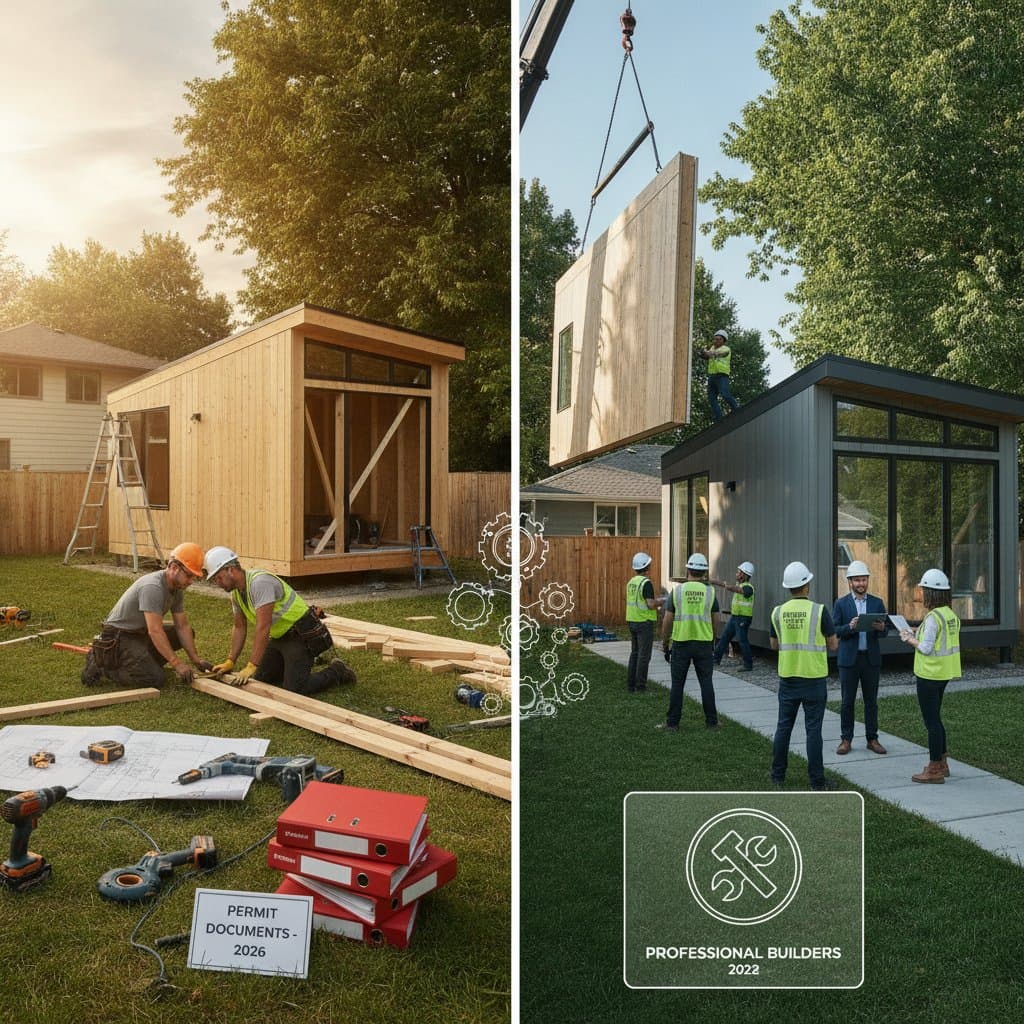
Should You DIY or Hire Pros for Your ADU in 2026?
The idea usually begins as a quiet thought. Maybe you are sipping coffee in your backyard and looking at that unused corner of the lot. You imagine a small guest cottage or rental suite. An accessory dwelling unit, often called an ADU, can transform underused space into real value. Yet once the sketching starts, so does the question that keeps many homeowners awake at night.
Understanding What an ADU Really Involves
An ADU is more than just an extra building. It is a complete living space with its own foundation, plumbing, electricity, and often a kitchen and bathroom. Whether it is a detached cottage, a converted garage, or a unit above the garage, each version comes with the same core challenge. It must meet residential building codes and local zoning requirements.
A professional builder already knows these regulations. A DIY builder must study them carefully. Permitting alone can take several weeks, especially if the design requires adjustments to meet setback, height, or parking rules. Some cities make the process easier with pre-approved plans, but coordination between trades remains complex.
What a DIY ADU Really Demands
Choosing to build your ADU yourself appeals for several reasons. You might want to save on labor costs or enjoy the satisfaction of creating something tangible from the ground up. For some homeowners the DIY route can reduce total expenses by 25 to 40 percent depending on scope and materials. Those savings come at the cost of time, skill, and patience.
A realistic timeline for a self-managed ADU build ranges from six months to over a year. You will need to coordinate subcontractors for plumbing, electrical, and structural work unless you hold those licenses yourself. Material costs for a small detached ADU typically range from 120 to 250 dollars per square foot. That figure does not include tools, permits, or specialty finishes.
DIY success usually depends on prior experience. If you have completed smaller projects like deck construction, drywall installation, or minor rewiring, you may be prepared for some parts of the job. The coordination effort of an ADU is closer to managing a full home build. For many it becomes a hybrid effort. Self-manage while hiring licensed trades for complex portions.
The Case for Hiring Professionals
Hiring professionals means paying more upfront. It also means the project progresses with fewer delays and compliance issues. A licensed ADU builder can often complete a standard detached unit within three to six months once permits are approved. Full-service construction firms handle everything from design to inspections. This reduces stress and potential mistakes.
Expect to pay between 300 and 500 dollars per square foot for professional construction. That depends on finishes and regional labor costs. While that can double the DIY expense, it often leads to more predictable outcomes and higher appraised value. Lenders and appraisers tend to view permitted, professionally built ADUs as safer investments. This can help if you plan to refinance or rent the space.
Professionals also bring insurance, warranties, and code knowledge that protect homeowners from costly errors. A small misstep in waterproofing or electrical layout can turn into thousands in repairs later. Builders who specialize in ADUs understand how to maximize space efficiency within tight zoning rules. They often produce layouts that feel larger and more cohesive than what most DIY designers achieve.
Comparing ROI and Long-Term Value
Both paths can lead to strong returns. The type of return differs. DIY construction saves cash in the short term but demands immense time and risk tolerance. Professional builds cost more but create a stronger foundation for rental income or resale value. A well-built ADU can add 20 to 35 percent to a property value, particularly in high-demand housing areas.
If the goal is long-term rental income, reliability and compliance become key. Tenants expect safety, proper ventilation, and energy efficiency. Professional builders often achieve better energy performance through advanced insulation and mechanical systems. This lowers operating costs and appeals to eco-conscious renters. A DIY build can match that quality, but only with significant research and investment in materials.
Safety and Code Considerations
Safety is the most important factor in any ADU project. Electrical systems must meet residential standards. Plumbing must be pressure-tested. Structural elements must withstand local weather conditions. Unpermitted or improperly built units can lead to fines, insurance issues, or even forced removal. Always verify that your design meets local building codes before breaking ground.
If you are considering DIY work, schedule consultations with certified electricians, plumbers, and structural engineers early in the process. Many offer hourly consulting rates. This allows you to check your plans and methods without hiring them full-time. The hybrid approach can deliver savings while maintaining safety and compliance.
Practical Steps Before You Begin
- Start with the budget, not the blueprint. Determine how much you can invest before designing. Include a 15 percent contingency fund for unexpected costs.
- Get multiple bids. Even if you plan to DIY, compare quotes from licensed contractors to understand realistic pricing.
- Document everything. Keep receipts, inspection records, and design revisions organized. This documentation can simplify future refinancing or resale.
- Think about sustainability. Choose materials like fiber-cement siding, recycled insulation, and low-flow fixtures. They cost slightly more upfront but reduce maintenance and utility bills over time.
- Plan for maintenance. ADUs need the same care as main residences. Schedule regular roof inspections, HVAC servicing, and plumbing checks to protect your investment.
Weighing Your Options for 2026
The right choice depends on your skills, timeline, and goals. A hybrid path often balances savings with safety. Review your local rules first. Then decide how much of the work you can realistically handle yourself.