
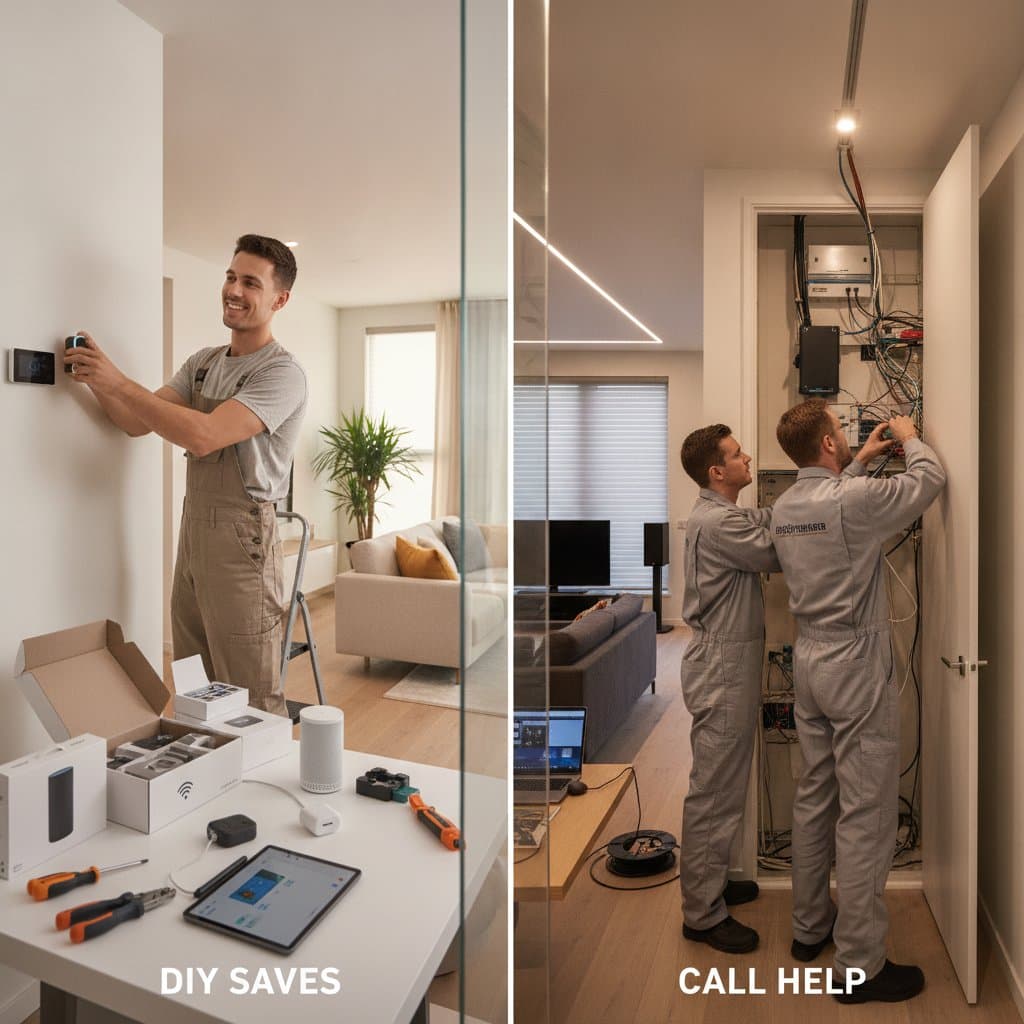
Smart Home Installation: Deciding Between DIY and Professional Help
Transforming a residence into a connected environment requires careful choices about installation methods. Homeowners often weigh the benefits of handling tasks independently against the need for specialized assistance. This decision hinges on project scope, technical skills, and long term goals.
Core Components of a Smart Home System
A functional smart home integrates multiple elements through a central network. Lighting, climate control, security, and appliances exchange data to automate routines. Categories range from basic lighting controls to advanced energy monitoring tools.
Typical elements include:
- Lighting systems with dimmable bulbs or motion sensors
- Climate devices such as programmable thermostats
- Security features like video doorbells and electronic locks
- Appliance managers including smart plugs and robotic cleaners
- Energy trackers that monitor usage patterns
Each element offers plug in versions or hardwired setups. Identification of the type guides the installation approach.
Projects Suitable for Independent Completion
Many initial upgrades lend themselves to self installation. Simple device additions require basic tools and network access. These efforts deliver immediate benefits such as reduced energy costs.
Suitable tasks include:
- Replacement of standard bulbs with smart equivalents
- Connection of Wi Fi thermostats to existing circuits
- Placement of wireless security cameras
- Setup of voice controlled speakers
Costs for these additions typically range from 100 to 600 dollars. Completion times average under one hour per item. Success depends on a robust wireless network capable of supporting multiple devices.
Situations Requiring Expert Installation
Complex integrations exceed basic capabilities and introduce risks. Hardwired panels or whole house controls demand knowledge of electrical codes and network configuration. Errors may result in malfunctions or hazards.
Recommended professional services cover:
- Centralized automation platforms
- Hardwired switches and integrated cameras
- Multi room audio and lighting systems
- Network expansions for larger properties
Professional fees generally fall between 800 and 3000 dollars. Technicians handle configuration, testing, and customization. Warranties often accompany these services.
Evaluation Criteria for Installation Method
Three factors determine the appropriate path. Complexity measures the technical demands. Safety assesses potential hazards. Scalability considers future growth.
| Factor | Independent Approach | Professional Approach |
|---|---|---|
| Installation demands | Plug in devices | Hardwired networks |
| Hazard level | Low voltage items | Electrical modifications |
| Expansion potential | Standalone units | Unified control systems |
A phased strategy allows gradual expansion. Begin with independent devices and transition to expert support for full integration.
Resolution of Installation Challenges
Network issues or pairing failures occur even in straightforward setups. Initial steps involve router restarts and firmware checks. Consistent communication protocols across devices prevent conflicts. Persistent difficulties warrant a specialist assessment of signal strength and wiring integrity.
Ongoing Management of Connected Systems
Effective operation relies on consistent maintenance. Automation routines should align with household patterns. Firmware updates occur regularly. Security reviews take place at set intervals to safeguard access points.
Proper planning yields a residence that enhances daily efficiency. Selection of the right installation method supports reliable performance over time.