
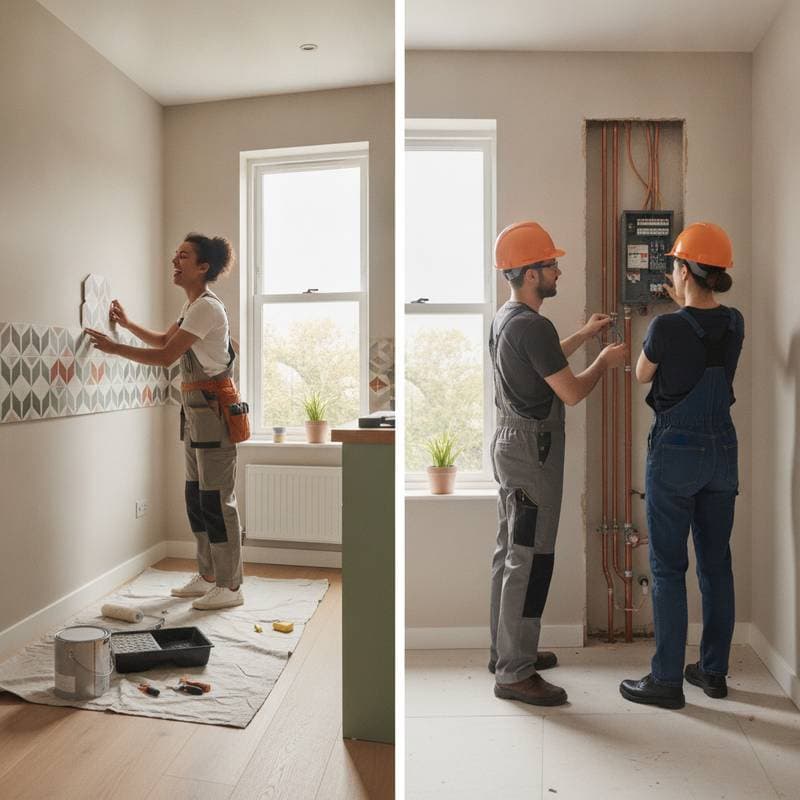
Gen Z First Home Renovation: Deciding Between DIY and Professional Help
If you have just moved into your first home and your renovation ideas fill multiple boards, you share this experience with many others. The main decision involves selecting projects for personal effort versus those assigned to licensed experts. A clear plan allows you to combine both approaches while controlling expenses and shaping a space that matches your preferences.
Assess Personal Skill Levels
Review your abilities before starting any work. Some individuals handle paint application with ease yet hesitate around wiring tasks. Others enjoy furniture assembly but avoid pipe repairs. Match each project to your current experience to reduce errors.
Focus initial efforts on tasks that demand patience over specialized tools. Painting interior walls, changing cabinet pulls, and applying peel and stick tiles suit beginners. These updates usually stay below several hundred dollars and produce visible results within a weekend.
Identify Projects for Licensed Contractors
Some improvements appear straightforward in videos yet involve risks not shown on screen. Work on electrical panels, gas connections, or load bearing elements requires certified professionals. A licensed contractor charges more at the start yet avoids future repairs and maintains compliance with local codes.
Minor service calls begin at a few hundred dollars. Larger jobs such as heating system upgrades or full bathroom replacements reach several thousand dollars. These payments function as safeguards for daily safety and future sale value.
Create a Categorized Budget
List every desired change and sort items into three groups. The first group covers solo work. The second group covers tasks needing occasional guidance. The third group covers work completed only by specialists. Attach cost ranges to each group.
Solo projects include painting, shelf installation, and simple yard changes with budgets from fifty to five hundred dollars. Tasks with partial support include floor laying and cabinet updates with budgets from five hundred to two thousand dollars. Specialist only work includes full rewiring and roof replacement with budgets starting at two thousand dollars.
Build Skills Through Practice
Small projects provide opportunities to learn new methods. Online videos, nearby classes, and shared tool collections supply the necessary guidance. Begin with fixture swaps or surface refinishing to record steady progress.
Always use eye protection and gloves when operating powered equipment. Follow every safety step listed by the manufacturer. Avoid any structural or wiring work until you hold proper certification.
Weigh Both Financial and Personal Returns
A balanced approach delivers more than reduced invoices. Completed projects generate daily satisfaction upon entering the finished rooms. Professional handling of complex items supplies assurance that systems operate correctly.
Stress decreases when plans stay realistic and surprises remain few. The process becomes more enjoyable when effort aligns with capability.
Practical Steps for Each Phase
- Record exact dimensions before purchasing materials.
- Apply test patches of paint on multiple walls to observe changes under different light.
- Collect three written estimates from contractors and verify recent references.
- Pair low cost solo updates with one or two higher impact professional features.
- Document each stage with dated photographs for later review.
Maintain Completed Work
After final cleanup, follow a simple schedule of inspections to preserve results. Check seals, touch up surfaces, and replace filters on the recommended cycle. This routine extends the life of every improvement and supports continued comfort in the updated home.