
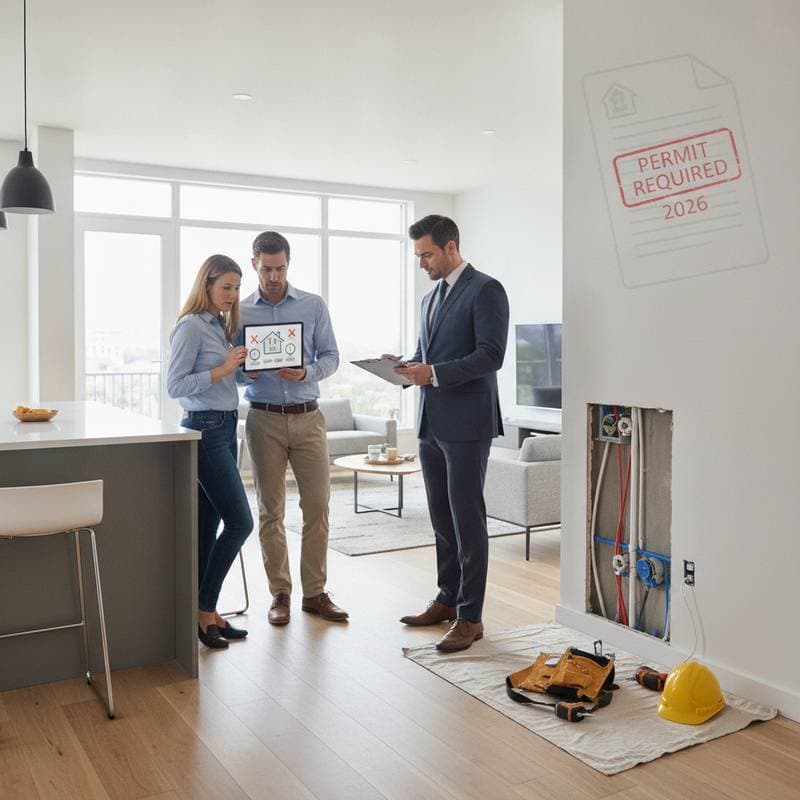
The New Rules Making Some DIY Home Projects Illegal
Homeowners cannot simply grab tools and begin major alterations without checking regulations. Updated federal and state rules now restrict many tasks that once qualified as routine homeowner work. These updates focus on safety, environmental standards, and insurance requirements.
Projects that affect structural elements, electrical systems, plumbing, or fire safety commonly trigger the need for permits or licensed contractors. Tasks such as replacing a bathroom exhaust fan or rerouting wiring fall under closer scrutiny than before.
Projects That Typically Require Permits
Homeowners may continue to handle painting, flooring installation, and cabinet hardware replacement without permits. Work that modifies mechanical, electrical, or plumbing systems usually demands oversight.
The following projects now require permits or licensed contractors in most jurisdictions:
- Electrical upgrades that add outlets, install new circuits, or replace fixtures on shared lines
- Plumbing changes involving supply lines, drains, or water heater replacement
- HVAC alterations such as duct rerouting or thermostat installation tied to central systems
- Structural modifications including removal of load-bearing walls, deck changes, or beam replacement
- Roof work that goes beyond minor surface patching
These requirements reduce risks of fire, water damage, and denied insurance claims.
Consequences of Skipping Required Permits
Local building departments increasingly verify compliance during property sales or refinances. Inspectors review records, permit histories, and imagery to identify unapproved changes.
Failure to obtain permits can produce several lasting effects. Insurance providers may reject claims connected to unpermitted work. Buyers often require corrections before purchase. Municipalities can impose fines or halt projects. Appraisals may decline when work lacks compliance documentation.
Permits establish a record that supports legal and financial protection if issues arise later.
Reasons for Stricter Oversight
Regulators cite increased safety incidents, updated climate standards, and licensing reforms as drivers for change. The goal includes lowering fire risks in older homes and improving energy efficiency.
Trade organizations support the shift because unlicensed work can undermine code compliance and expose owners to avoidable hazards.
Steps to Maintain Compliance
Homeowners retain freedom to complete many projects independently when they follow clear boundaries. Review these actions before beginning work:
- Consult local building department resources to identify permit thresholds and exemptions.
- Contact the insurance provider to determine which tasks could affect coverage.
- Record all receipts, material specifications, and progress photographs.
- Engage licensed professionals for tasks involving wiring, gas lines, or structural supports.
- Arrange required inspections at project milestones or completion.
Direct questions to inspectors often yield useful guidance by phone or email.
Indicators That Professional Help Is Advised
Certain conditions point to the need for licensed assistance. Alterations to shared utilities or structural supports fall into this category. Materials that require certified installation for warranty coverage also signal professional involvement.
Safety systems such as sprinklers or smoke alarms, along with changes that affect air quality, warrant extra caution. Assume that work concealed behind walls or connected to power and water needs review.
Protecting Property Value Through Compliance
Adherence to current rules safeguards long-term home value. Permitted work creates a verifiable history that supports smoother sales and stronger insurance positions. This approach combines homeowner initiative with regulatory awareness to maintain both safety and investment returns.