
When Robots Beat Contractors in AI Home Remodeling
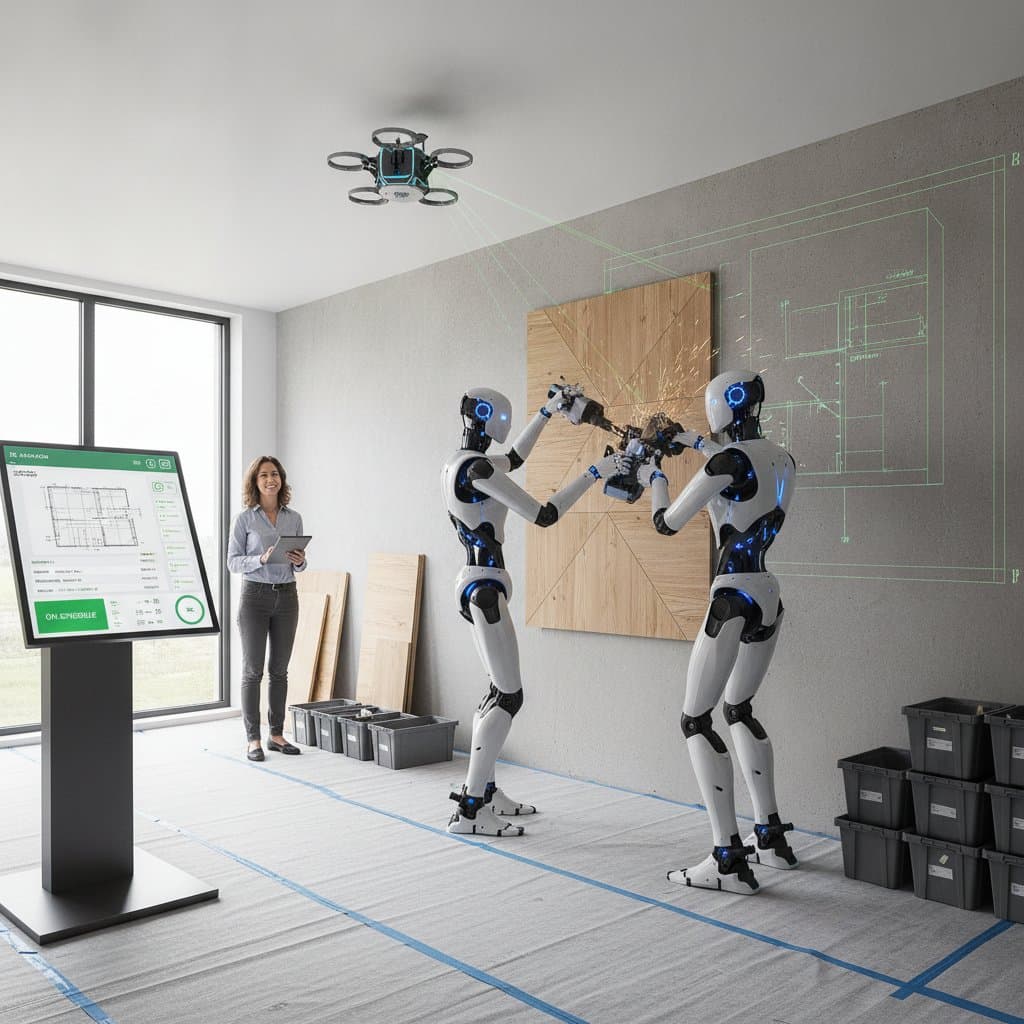
A compact robotic arm moves across a living room. It measures, cuts, and fits trim with precision to a fraction of a millimeter. No radio plays. No breaks interrupt the work. No tools sit forgotten on the floor. A project once scheduled for two weeks finishes in three days. Walls appear flawless. Joints fit tightly. Cleanup requires almost no effort. This outcome reflects the current state of AI-driven home remodeling. Automation now surpasses traditional contractors in speed, accuracy, and cost management.
AI remodeling does not eliminate human involvement. It changes how homes receive upgrades. Robotics, data analytics, and automation software combine to complete projects faster, at lower cost, and with improved safety compared to manual methods alone.
Robotic Construction Services in Residential Use
Robotic construction services combine machine learning, computer vision, and automation hardware. These systems perform tasks that once needed full crews. They install drywall, apply paint, and lay bricks with high accuracy. In homes they handle surface finishing, flooring installation, and cabinet placement.
The process starts with a detailed scan using LiDAR or photogrammetry. AI software turns the scan into a digital model of the space. The model records dimensions, wiring routes, and structural details. Robots then follow this model to cut, assemble, and install materials at millimeter-level precision.
Robotic painters use computer vision to map rooms and mask edges. They apply paint evenly without runs or overspray. Flooring robots set tiles at consistent spacing. Waste drops and alignment stays uniform. These systems already operate in higher-end renovation projects.
AI Remodeling Workflow
AI home remodeling follows a clear digital sequence. Homeowners benefit from understanding each stage before choosing automation.
Digital Scanning and Modeling
A scanning device records every surface. AI software builds a three-dimensional model that supports all later planning. Early detection of structural risks, uneven floors, and hidden obstacles reduces later surprises.
Predictive Project Planning
AI systems calculate required materials, labor hours, and task order. The resulting timeline updates automatically with supply data and site conditions. Homeowners see exact phase durations and costs in advance.
Robotic Execution
Robots perform repetitive or precision tasks once the plan is set. They cut materials to exact sizes, paint surfaces, sand finishes, and complete detailed assembly. Quality remains consistent on every surface.
Quality Verification
Sensors scan finished work for alignment, texture, and stability. Imperfections trigger automatic correction before the next phase starts.
Continuous Optimization
AI systems record results from each project. Adjustments to time or material estimates improve future forecasts. This learning loop refines cost and schedule predictions over repeated use.
Tasks That Still Require Human Oversight
Complex design choices, structural changes, and creative problem solving remain human responsibilities. Wall relocation, plumbing rerouting, and electrical upgrades demand licensed professionals to meet code requirements.
A hybrid model works best. Robots manage precision work while humans direct planning, inspection, and final details. This combination improves both quality and safety outcomes.
Energy Efficiency and Sustainability Gains
AI systems generate less waste through precise cutting and optimized material orders. Planning software can suggest lower-impact material alternatives based on environmental data.
Tighter installation tolerances for insulation, sealants, and windows reduce air leakage. Homes maintain steadier temperatures and lower utility costs. Eco-conscious owners gain measurable progress toward sustainable renovation goals.
Common Issues and Direct Responses
Software calibration errors require an immediate pause followed by recalibration against the original scan. Material compatibility problems appear most often with textured or reflective surfaces; select finishes tested for robotic application. Connectivity interruptions are prevented by maintaining a dedicated network link. Environmental changes such as dust or lighting shifts are controlled by keeping the workspace clean and evenly lit.
Homeowner Advantages Over Time
AI remodeling reduces uncertainty in cost and schedule. Homeowners monitor progress in real time, confirm quality at each step, and base decisions on measured data. Predictability turns renovation from a source of stress into a controlled process. As systems scale, access widens and overall project expenses continue to decline.