
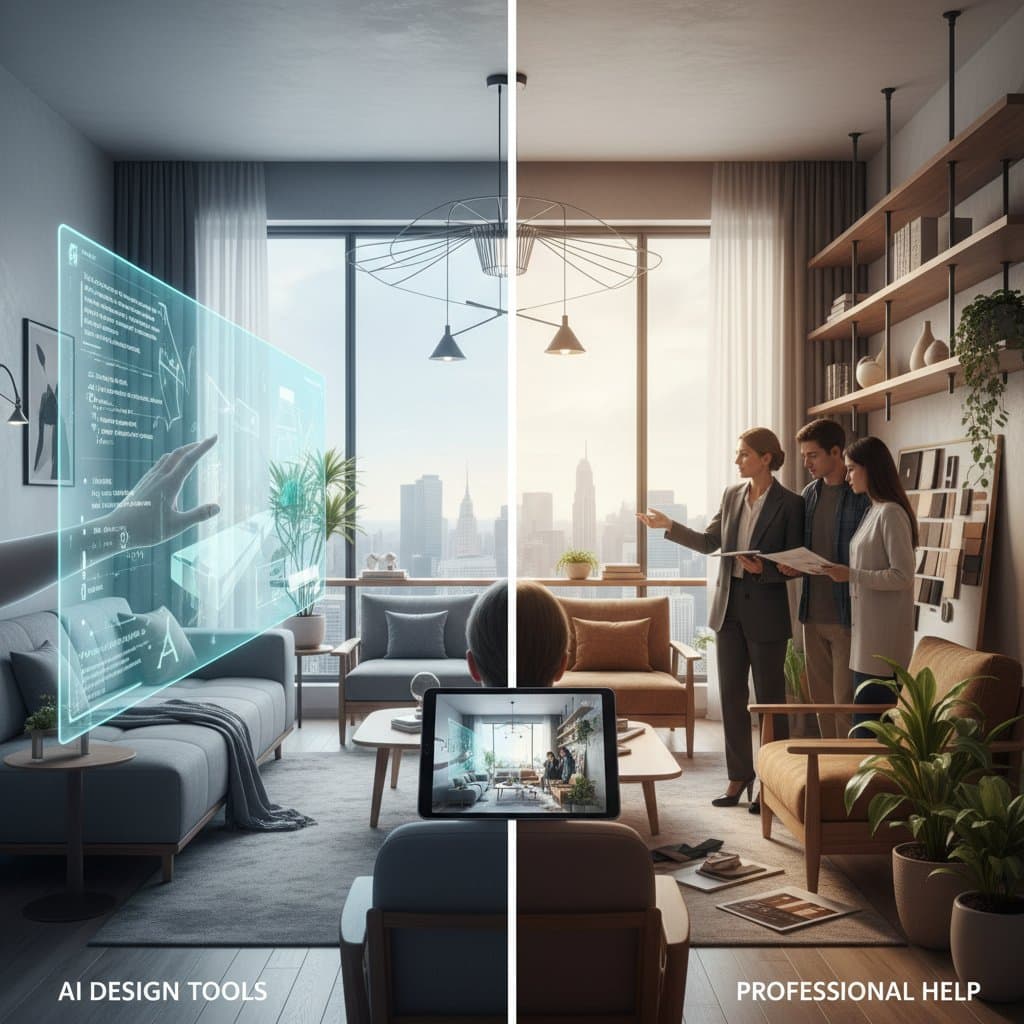
AI Design Tools versus Professional Designers: The Smart Choice for 2026 Homes
Imagine launching an app on your tablet, uploading a photograph of your living room, and receiving a redesigned layout in mere seconds. This includes furniture placements, lighting modifications, and wall color previews that appear remarkably precise. Such experiences highlight the rapid evolution of AI design tools, yet they prompt a crucial question: will these virtual suggestions translate effectively into real-world applications once materials arrive and installations begin?
This dilemma underscores the ongoing comparison between AI-driven design solutions and the expertise of professional interior designers. Each method aims to produce elegant and practical living spaces, but they vary significantly in methodology, expense, and enduring benefits. Homeowners who grasp the strengths of both can select options that harmonize innovation, finances, and individual needs for homes prepared for the future.
Advantages of Professional Designers
Professional designers offer far more than visual appeal; they integrate a homeowner's daily routines, sentimental attachments, and future aspirations into a unified and comfortable setting. Their training enables them to foresee changes like expanding households, mobility requirements, or enhancements for property sales.
Consider a family planning for an aging parent: a designer might recommend wider doorways and lever handles from the outset, avoiding later renovations. This foresight stems from years of observing how spaces influence well-being.
Key strengths include:
- Intuitive Understanding: Designers assess lifestyle patterns to predict needs, such as storage for hobby supplies or quiet zones for remote work.
- Knowledge of Materials: They evaluate how fabrics withstand sunlight, how woods resist humidity, and how layouts promote natural light flow for energy efficiency.
- Coordination Skills: Professionals manage timelines with builders, plumbers, and vendors to prevent delays and ensure seamless integration.
- Personalized Solutions: Every detail aligns with unique preferences, from eco-friendly selections to cultural motifs, rather than generic templates.
Rates for professionals range from 75 to 200 dollars per hour, or 8 to 15 percent of the overall project cost. Although this exceeds AI tool subscriptions, which often cost 10 to 50 dollars monthly, the investment yields savings through error prevention and increased home equity. For instance, a well-planned kitchen remodel can boost resale value by 50 to 70 percent of its cost.
The Hybrid Approach: Blending Technology and Expertise
For efficiency, many homeowners adopt a hybrid strategy that merges AI's speed with a designer's precision. Begin by exploring ideas through digital platforms, then consult a professional to polish and execute them.
This method empowers users while safeguarding quality. It also streamlines processes, potentially cutting professional fees by 20 to 30 percent.
A step-by-step hybrid process includes:
- Idea Exploration: Experiment with AI software to visualize themes, such as minimalist Scandinavian styles or vibrant mid-century modern arrangements, adjusting elements in real time.
- Expert Validation: Present top concepts to a designer, who checks for issues like uneven weight distribution on floors or incompatible fixture sizes.
- Sourcing Recommendations: The designer suggests sustainable options, like low-VOC paints or recycled metals, sourced locally to minimize shipping delays and costs.
- Implementation Oversight: Professionals handle permits, supervise installations, and perform final walkthroughs to confirm alignment with the original vision.
In practice, this workflow suits busy professionals. A young couple might use AI to mock up a nursery, then refine it with a designer to incorporate childproofing and growth-friendly features.
Addressing Safety and Practical Challenges
AI platforms excel at aesthetics but often overlook regulatory and physical constraints. A visually stunning open-plan layout might violate fire codes or demand costly reinforcements for load-bearing walls.
Professionals prioritize compliance, reviewing blueprints against local standards for outlets, ventilation, and emergency exits. They also advise on eco-conscious choices, like energy-efficient LEDs that reduce utility bills by 25 percent annually.
For DIY enthusiasts, consult resources like municipal guidelines before proceeding. Measure ceiling heights accurately for pendant lights, calculate circuit loads to avoid overloads, and select anchors rated for wall types. Even minor alterations, such as adding floating shelves, require verifying support capacities to prevent accidents.
Neglecting these steps can lead to hazards or inefficiencies. A designer ensures designs enhance safety, such as installing non-slip flooring in bathrooms or strategic smoke detector placements.
Achieving Lasting Comfort in Your Redesigned Home
Ultimately, the choice between AI tools and professionals depends on project scope and priorities. AI suits quick inspirations and budget explorations, while experts deliver reliability for complex transformations.
By integrating both, homeowners craft spaces that evolve with life changes, promoting joy and functionality. This balanced strategy not only saves time and money but also creates environments that reflect personal stories and withstand trends. Start small: test an AI feature today, and consider a consultation to elevate your vision into reality.