
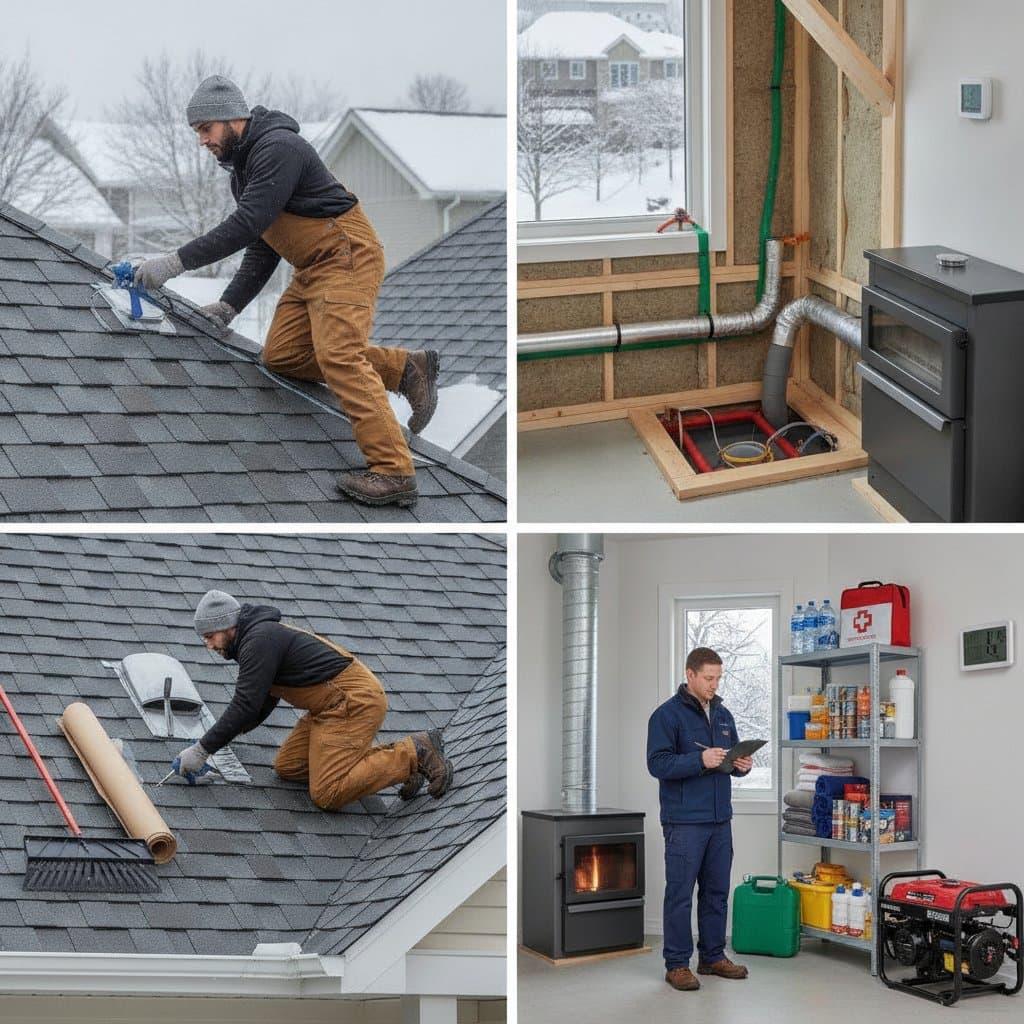
Winter Storm Home Preparation Checklist
- Inspect and seal the roof and attic to block ice dams and leaks.
- Insulate all exposed pipes in unheated areas.
- Service the furnace and replace filters.
- Assemble a three-day emergency supply kit.
- Disconnect outdoor hoses and protect exterior faucets.
- Clear gutters and downspouts of debris.
- Stock vehicles with winter emergency gear.
When forecasts predict freezing temperatures and heavy snow, prompt action protects every part of a house. Proper steps reduce the risk of burst pipes, roof leaks, and heating failures. The following sections move from exterior work to interior systems and conclude with safety supplies.
Inspect and Seal the Roof
Check shingles for damage and clear gutters before snow arrives. Add extra attic insulation to keep the roof surface cold enough to avoid melting and refreezing cycles that create ice dams. Use a roof rake after heavy snowfall to remove snow accumulation when safe access exists.
Protect Plumbing Systems
Focus first on pipes in garages, basements, and crawl spaces. Slide foam sleeves or wrap fiberglass insulation around each line. These materials cost under two dollars per foot yet prevent thousands of dollars in water damage.
Open sink cabinet doors to let warm air reach pipes along exterior walls. During the coldest nights, allow a thin stream of water to flow from those faucets. Disconnect garden hoses, close interior shutoff valves, and cover exterior spigots with insulated caps.
Service Heating Equipment
Replace furnace filters and confirm that the blower motor operates smoothly. Test carbon monoxide detectors and install battery backup units where outages occur often. Keep a spare filter on hand so replacement remains possible without a trip to the store during a storm.
Assemble Emergency Supplies
Store one gallon of water per person for three days along with nonperishable food, flashlights, batteries, blankets, and a battery or crank radio. Place the kit in a waterproof container near an exit. Add a first aid kit, prescription medications, and extra hygiene items. A battery powered carbon monoxide detector provides additional protection when alternative heat sources operate.
Prepare Vehicles and Outdoor Items
Fill fuel tanks, check antifreeze levels, and place blankets, jumper cables, and snacks in each car. Move patio furniture and grills indoors. Cover air conditioning units with breathable fabric that sheds snow yet permits airflow. Test snow blowers and keep extra fuel ready.
Quick Reference Table
| Problem | Likely Cause | Immediate Action |
|---|---|---|
| No furnace heat | Dirty filter or tripped breaker | Replace filter and reset breaker |
| Frozen pipe | Missing insulation | Apply heat tape or hair dryer to thaw slowly |
| Ice dam on roof | Warm attic air | Improve insulation and remove snow with a roof rake |
| Window leaks | Worn caulk | Reapply silicone caulk after temperatures rise |
| Extended power loss | Utility outage | Use a generator outdoors or relocate to a warming center |
Post Storm Inspection
After snow melts, examine vents, gutters, and sump pumps. Rinse de icing chemicals from concrete surfaces to avoid long term damage. Consistent preparation each season lowers energy costs, extends equipment life, and maintains property value.