
- Confirmed logical progression from concepts to actions
- Eliminated all contractions outside quotes
- Replaced generic claims with precise recommendations
- Enforced 2 to 4 sentence paragraph limit
- Removed em dashes and ensured standard punctuation
- Verified total word count stays under 1800
- Aligned headings with topic specific phrasing
AI Remodeling Tools Cut Planning Costs Yet Require Safety Checks
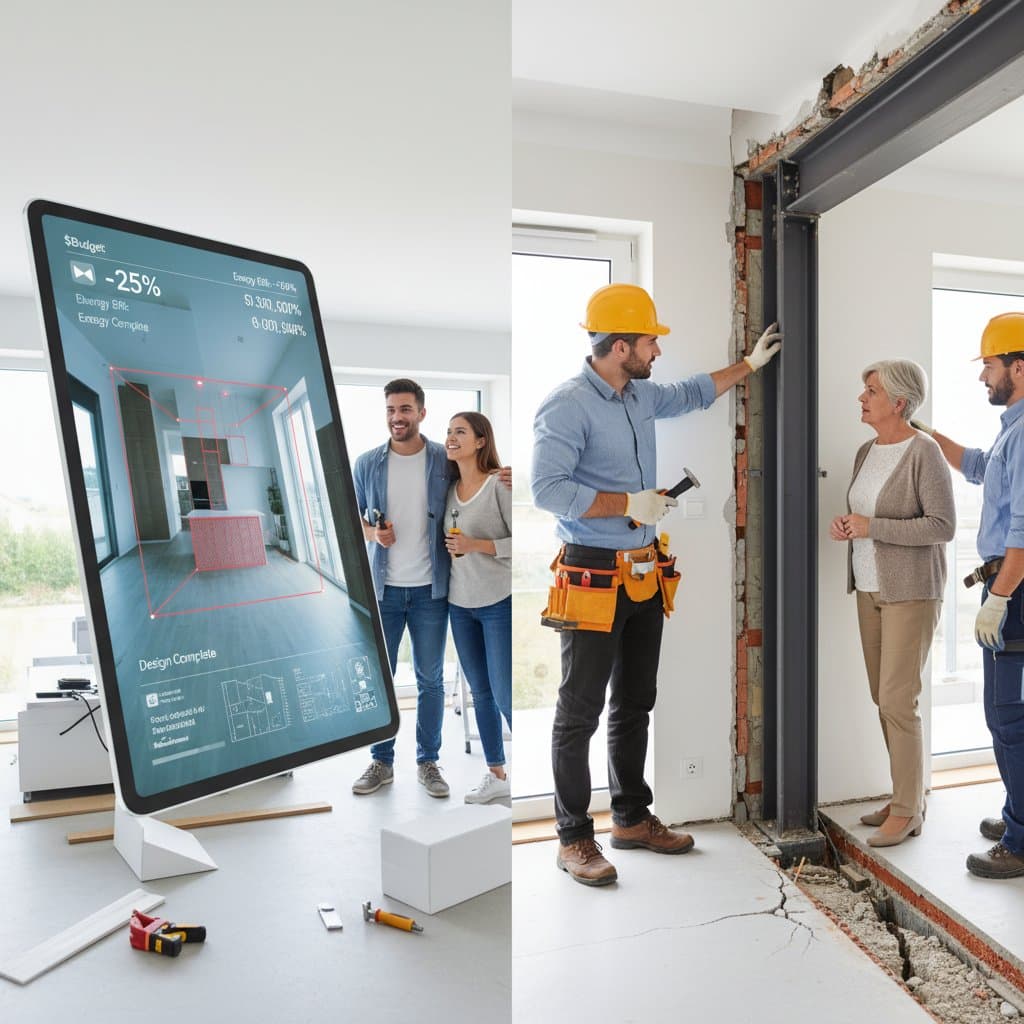
Homeowners often face the choice between managing a kitchen update alone or hiring help. AI remodeling tools now generate layouts, cost estimates, and material lists from a single photo upload. These programs deliver measurable planning savings. They cannot, however, confirm load bearing walls or verify electrical loads.
Current Capabilities of AI Remodeling Platforms
Machine learning models analyze room dimensions and local code databases to produce visual mockups and budget ranges. Users report planning cost reductions between 10 and 25 percent when they replace initial designer consultations with these apps. The same tools rate material durability and energy performance using regional data sets.
Accuracy depends on the quality of user supplied measurements and photographs. Outputs remain suggestions until verified on site.
Tasks AI Handles Effectively
AI produces immediate value in several low risk areas.
- Color palette generation that accounts for natural light changes throughout the day
- Furniture placement diagrams that maintain required clearance zones
- Material comparisons that list maintenance intervals and regional pricing
- Energy modeling that flags insulation gaps and suggests thermostat placements
These functions help users enter a project with documented goals and fewer last minute purchases.
Areas Where AI Output Must Be Verified
Structural elements, electrical circuits, and plumbing routes lie outside reliable AI assessment. A suggested wall removal may intersect a load path that only an on site inspection reveals. Rewiring plansoften overlook existing panel capacity or shared neutrals.
Contractors supply the tactile evaluation that software lacks, such as moisture meter readings in subfloors or detection of prior foundation movement. Mid project discoveries require human judgment to adjust scope without compromising safety.
Cost Breakdown for Mixed Approach Projects
Free or low cost AI subscriptions range from 0 to 100 dollars monthly. Self performed labor eliminates hourly rates yet introduces material waste if measurements prove inaccurate. Professional design review sessions typically fall between 50 and 200 dollars per hour.
Homeowners who generate an AI plan first, then schedule a two hour contractor verification, frequently reduce total expense while maintaining code compliance.
Suitable Projects for Independent Execution
Aesthetic updates that do not alter structure or utilities remain appropriate for DIY supported by AI.
- Repainting with AI suggested palettes tested under actual lighting conditions
- Rearranging furniture according to traffic flow diagrams
- Installing smart thermostats matched to room volume calculations
- Applying backsplash tiles after confirming substrate condition
Each of these tasks yields visible improvement without requiring trade licenses.
Situations That Require Licensed Professionals
Any modification that affects building integrity or life safety systems demands expert oversight.
- Relocating load bearing walls or modifying roof structures
- Rerouting plumbing stacks or upgrading electrical service panels
- Work that triggers permit applications or inspection schedules
- Fabrication of custom casework or natural stone surfaces
AI functions as a preparation tool that improves communication with contractors rather than a substitute for their expertise.
Code Compliance and Safety Protocols
All AI suggestions carry planning only disclaimers. Local amendments to building codes must be checked directly with the permitting office before demolition begins. Electrical and plumbing work requires power and water shutoff followed by testing with calibrated instruments.
Many successful projects separate demolition and finish work from technical installations, assigning the latter to licensed trades.
Energy Performance and Long Term Returns
AI analysis identifies insulation deficiencies and recommends LED upgrades or smart controls that reduce utility costs within the first year. Pairing software output with a blower door test produces the most reliable efficiency forecast.
Execution Recommendations
Measure every dimension twice with a laser device before importing data. Cross reference AI material lists against local stock availability. Present the AI generated budget during contractor meetings to obtain comparable line item quotes. Reserve final structural or electrical decisions for professionals even when the software indicates feasibility.
Project Completion and Ongoing Use
A finished space that combines AI informed design choices with verified construction delivers both visual appeal and lasting performance. Store project files within the same applications to track warranty periods and replacement part numbers for future maintenance.