
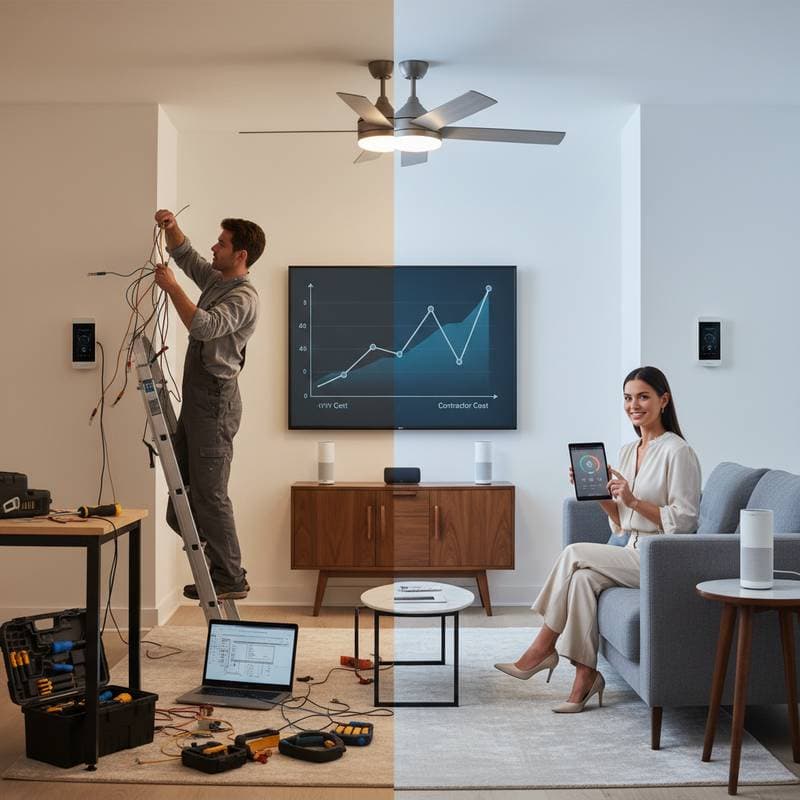
DIY Smart Home: Balance Savings with Reliability
The initial glow of a smart bulb responding to a voice command captures the essence of a connected home. This experience prompts a key decision: proceed with self-installation of additional devices or seek professional assistance? The decision hinges on factors such as enduring performance, financial implications, and safety measures rather than mere technical proficiency.
Appeal of Self-Installation
Homeowners often find the process of assembling a smart home device by device exhilarating and self-reliant. Unboxing a smart thermostat, scanning its QR code, and observing energy metrics appear on a smartphone screen delivers a sense of mastery. This approach promises oversight, personalization, and financial benefits. Many smart devices feature straightforward setup procedures, allowing installation of items like video doorbells or Wi-Fi plugs in less than one hour using basic tools and a robust internet connection.
Self-directed smart home initiatives mirror traditional tasks such as painting interiors or constructing furniture. Participants acquire practical knowledge of home systems and learn effective maintenance techniques. However, similar to other renovation efforts, initial simplicity can evolve into complexity upon examining underlying infrastructure.
Financial Analysis: Real Savings Assessed
Cost reduction drives many toward self-installation. Expert-led smart home configurations vary significantly by scope. A comprehensive system encompassing lighting, security, and energy controls may cost from $1,500 to $6,000. In comparison, personal setup of select devices ranges from $200 to $600, influenced by manufacturer and capabilities.
These reductions prove tangible yet primarily initial. Self-installation overlooks expenses for reserve power sources, extra cabling, or enhanced routers. Weak Wi-Fi coverage in areas like garages or patios necessitates mesh networks, adding $200 to $400. Diverse device applications or protocols may require central hubs for interoperability, increasing outlays.
Evaluate expenses over time per feature. A personally installed smart thermostat typically lowers energy costs by 10 to 15 percent yearly, based on regional weather and habits. Such reductions can recoup investment within two years. Conversely, an unreliable security camera during outages yields no benefit. Focus extends beyond immediate savings to ongoing viability.
Challenges in Self-Installation
Integration marks the juncture where self-directed efforts falter. Linking individual devices proves manageable, but achieving seamless interaction introduces difficulties. Voice systems, illumination controls, and detectors employ protocols such as Zigbee, Z-Wave, or Wi-Fi. Absent meticulous compatibility checks, extensive debugging ensues for non-communicating components.
Electrical integrations present further obstacles. Replacing switches or thermostats appears straightforward in demonstrations, yet miswiring risks outages, shorts, or infrastructure harm. Low-voltage items still pose dangers if mishandled. For hardwired elements, engage a certified electrician alongside personal efforts.
Privacy and cybersecurity warrant attention. Every networked device forms a potential network access. Inadequate passwords, neglected updates, or unsecured Wi-Fi expose systems to threats. Experts frequently incorporate network safeguarding and configuration, benefits apparent only post-incident.
Strategic Approach to Implementation
Adopt a phased methodology for self-installation, viewing the smart home as modular rather than monolithic. Initiate with low-risk, high-reward items like plugs, bulbs, and voice interfaces. These demand no cabling and permit easy adjustments.
Progress to intermediate components such as thermostats and cameras, which involve minor wiring or mounting yet remain accessible. Advance to locks, watering systems, and lighting managers after verifying interoperability and network stability.
Outline the ecosystem prior to purchases. Select open architectures for brand flexibility or proprietary platforms like Apple Home or Google Home for ease. Confirm device alignment with the platform to avert later complications.
Value of Expert Involvement
Professionals excel in scenarios requiring wall penetrations, HVAC linkages, or comprehensive automation. Specialists adhere to regulations, balance electrical loads, and guarantee expandable, secure designs.
Expert services augment device expenses by 20 to 30 percent, yet encompass guarantees and support. System failures prompt direct assistance. Professionally documented setups enhance property appeal to prospective buyers.
A blended strategy suits many: manage basic setups personally while delegating foundational tasks like cabling or programming. This hybrid yields 30 to 40 percent savings over complete outsourcing, preserving essential dependability.
Considerations for Safety and Durability
Smart devices enhance ease but affect energy use, protection, and ecology. Self-installers must evaluate efficiency impacts. Motion detectors curb lighting waste by activation only upon presence, while adaptive thermostats optimize based on routines to limit excess climate control.
Opt for rechargeable or wired sensors and cameras over battery-dependent models to minimize replacements and refuse. Adhere to producer directives, particularly for electrical ties and placements near moisture or exteriors.
Resolving Frequent Problems
Disruptions arise even in thoughtful setups, including signal weakness, protocol mismatches, and update clashes. Verify network robustness and router currency before deeming hardware defective. Sequence reboots from router to hubs to units for swift resolutions.
Flickering lights or spontaneous resets signal wiring or load issues. Examine outlet capacity and switch compatibility with smart components. For software glitches, execute factory resets and network reintegration methodically to regain equilibrium.
Essential Recommendations
- Establish a unified control interface, digital or tangible, to streamline operations.
- Tag all devices and cables for expedited upkeep and error prevention.
- Validate connectivity prior to securing installations like drilling.
- Schedule monthly firmware reviews to bolster security and efficiency.
- Record configurations with wiring images and safeguarded credential notes.
Evolving with Your Connected Space
A functional system reveals enhanced home interactions. Automated lighting welcomes arrivals, personalized climate maintains comfort, and vigilant alerts foster security. These elements integrate seamlessly, amplifying daily life without intrusion.
Refinements occur naturally: automate routines, incorporate innovations, or upgrade for superior efficiency. Prioritize flexibility to match changing needs. Effective designs operate unobtrusively, prioritizing user well-being and protection.