
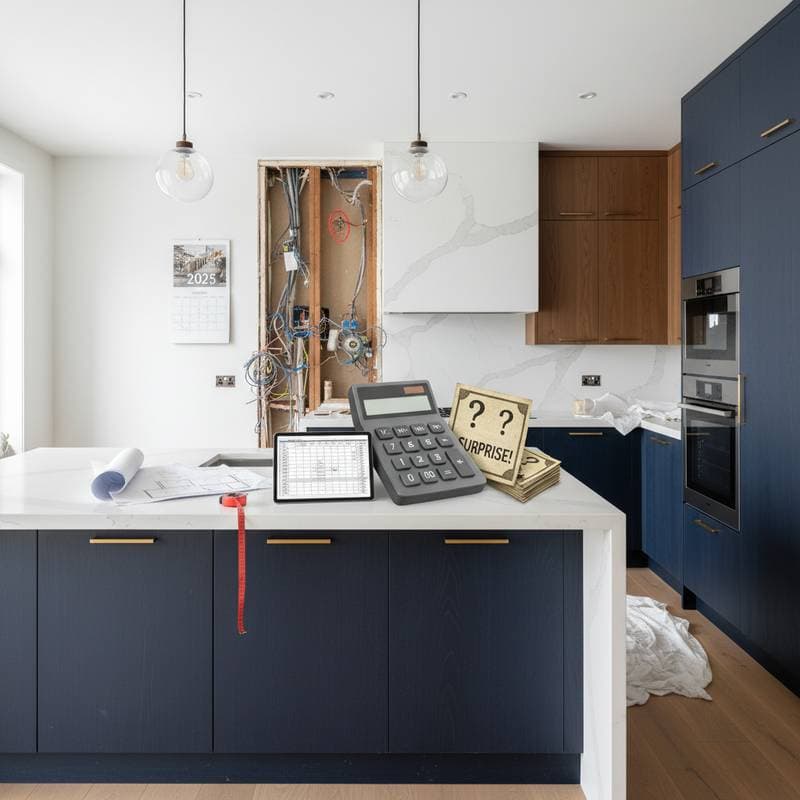
Hidden Costs in 2025 Kitchen Remodels
Homeowners often approach a kitchen remodel with a detailed budget for cabinets, countertops, and appliances. However, unexpected expenses arise once the project begins, such as electrical upgrades, permit fees, and plumbing adjustments. These hidden costs frequently increase the total budget by 15 to 30 percent, transforming a straightforward renovation into a financial strain. Awareness of these factors allows for better preparation and smoother execution.
Essential Insights
- Hidden costs typically add 15 to 30 percent to the overall remodel budget.
- Frequent sources include permits, structural issues, labor extensions, and material inefficiencies.
- Thorough planning and a dedicated contingency fund safeguard both finances and project timelines.
Understanding the Full Scope of Expenses
Online estimates place the average kitchen remodel between $12,000 and $50,000, varying by size and quality. These figures often overlook critical elements like code compliance for aging systems or unforeseen structural problems revealed during demolition. Homeowners benefit from allocating at least 20 percent above the base estimate as a buffer.
For example, a $30,000 project requires preparation for an additional $6,000 in potential surprises. This approach prevents interruptions or incomplete work due to insufficient funds. It ensures the renovation proceeds without compromising quality or deadlines.
Permit and Inspection Requirements
Local regulations mandate permits for most kitchen modifications, including electrical work, plumbing changes, and structural alterations. Individual fees range from a few hundred dollars each, but the aggregate can total $2,000 to $3,000 based on the project's complexity.
Delays from inspections compound the issue by extending timelines, which incurs costs for equipment rentals like dumpsters or repeated labor visits. Contractors should incorporate these elements into the initial proposal. This inclusion helps homeowners anticipate and budget accurately from the outset.
Electrical and Plumbing Modifications
In homes built decades ago, concealed wiring and pipes often fail to meet current standards. Demolition exposes these deficiencies, necessitating immediate corrections to proceed. Electrical rewiring for modern appliances can cost $2,000 to $5,000 if the existing setup lacks sufficient capacity.
Plumbing rerouting for relocated fixtures, such as a sink on an island, incurs comparable expenses. Assume these upgrades prove essential in older properties. Early assessment by professionals identifies needs before work commences, avoiding mid-project escalations.
Unforeseen Structural Challenges
Demolition frequently uncovers issues like water damage, pest infestations, or inadequate wall support. Remedying these can add thousands to the budget and extend timelines significantly. A planned cabinet update might evolve into extensive repairs, including subfloor replacement or foundation work.
One case involved a two-week installation stretching to months for structural fixes. Even smaller corrections impact costs and schedules. Contractors outline their discovery protocols in advance, providing clarity on handling surprises.
Material Waste and Excess Purchases
Professionals advise acquiring 10 to 15 percent more tile, flooring, or countertops to cover cuts, breaks, or errors. This precaution maintains uniformity but elevates upfront material expenses. Natural stone or patterned designs demand higher margins for seamless results.
Insufficient quantities lead to project halts and potential mismatches from later orders. Verify these estimates during the design phase. Integrating the buffer into the budget prevents disruptions and ensures consistent quality.
Appliance Setup and Ventilation Needs
Appliance pricing excludes installation, which varies by type. Built-in units or gas ranges require extra electrical, gas, or ductwork modifications, adding hundreds to thousands of dollars. Layout constraints influence the extent of these adjustments.
Disposal of outdated items involves hauling fees of $50 to $200 per piece, depending on location. Confirm if vendors or contractors cover this or charge separately. Proactive inquiries streamline budgeting for these ancillary services.
Design Adjustments and Supplemental Orders
Mid-project refinements, like adding outlets or extending backsplashes, accumulate expenses through added labor and materials. Contractors bill for these shifts, including any timeline impacts. Finalize designs prior to contract signing to minimize alterations.
For necessary changes, request documented cost breakdowns per modification. This practice tracks spending and maintains accountability. It fosters clear communication and reduces disputes.
Interim Relocation and Storage Solutions
Remodels disrupt daily routines, often requiring temporary setups or full moves. Storage units for displaced items cost $100 to $200 monthly, while frequent takeout elevates food spending. Establish a basic cooking area elsewhere in the home using portable appliances to cut these costs.
This setup, though basic, sustains functionality and trims unnecessary expenditures. Plan for these logistics early to maintain household normalcy without excess strain.
Effective Budget Management Techniques
- Require comprehensive estimates: Insist on breakdowns covering labor, materials, permits, and reserves.
- Solicit several proposals: Evaluate at least three to identify reasonable pricing.
- Clarify flexible allocations: Understand boundaries for categories like fixtures before selections.
- Emphasize essentials: Allocate resources to core functionality and safety over aesthetics.
- Establish a reserve fund: Reserve 15 to 20 percent for contingencies, reallocating unused portions as needed.
Practical Recommendations
- Time the project outside peak seasons to control labor costs.
- Confirm contractor licensing, insurance, and code adherence.
- Examine materials upon delivery to address flaws promptly.
- Scrutinize agreements for payment terms and modification procedures.
Implementing these measures secures financial stability and eases the renovation process. Projects launched with solid foresight conclude efficiently and affordably.
Preserving Renovation Value
Post-completion maintenance extends the kitchen's lifespan and protects the investment. Regular cleaning prevents wear on surfaces and appliances. Schedule professional inspections annually to catch minor issues early.
These habits ensure the space remains functional and appealing for years. They maximize return on the remodel while minimizing future costs.